
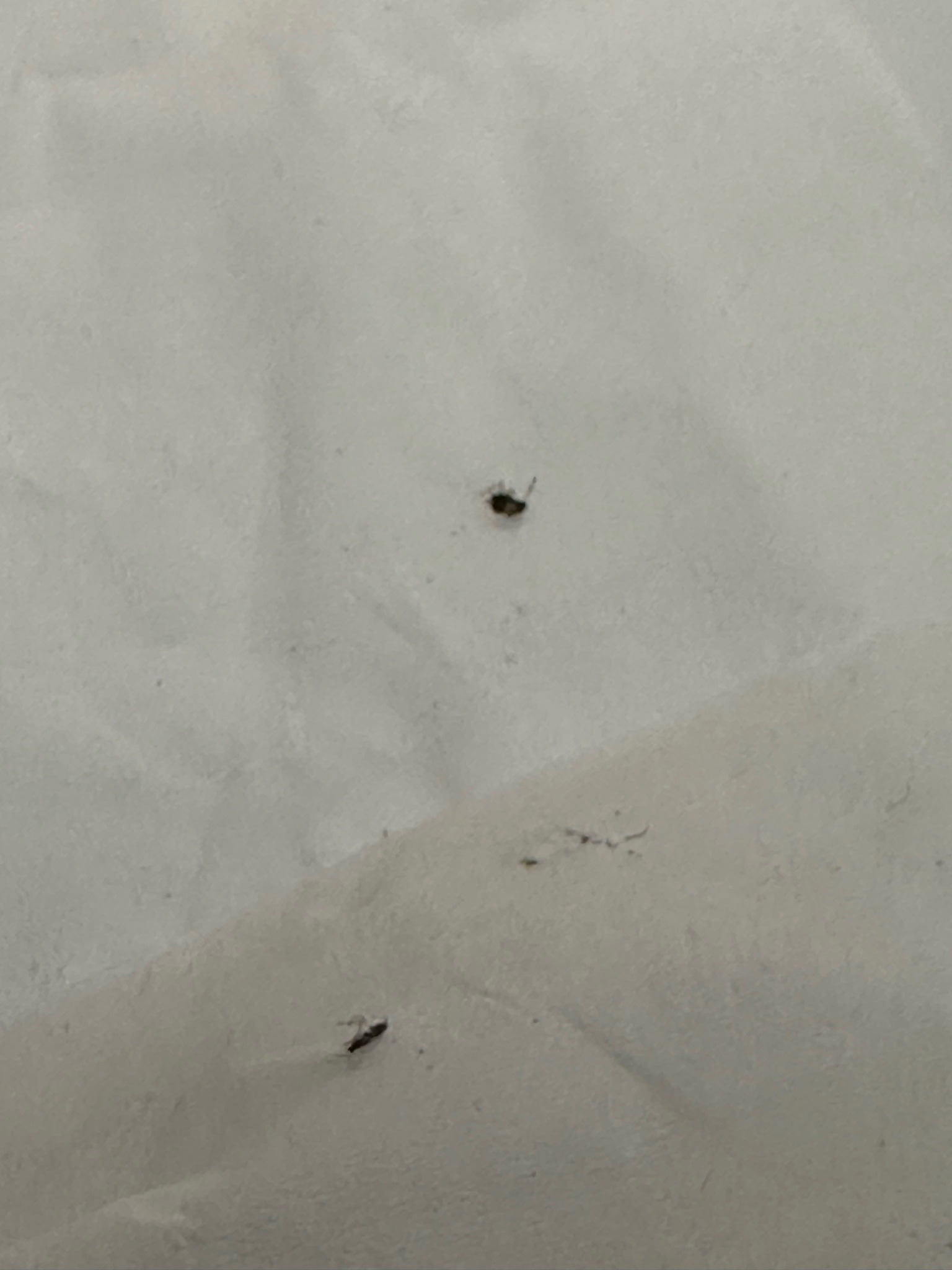
Community identification
Flea (likely cat flea)
Ctenocephalides felis
- Order & Family
- Siphonaptera; Pulicidae
- Size
- About 1.5–3.3 mm long; laterally flattened and dark brown.
Natural Habitat
Carpets, bedding, upholstery, cracks, and animal resting areas; adults live mainly on mammals.
Diet & Feeding
Adults consume blood from cats, dogs, wildlife, and occasionally humans. Larvae feed on dried blood and organic debris in the environment.
Behavior Patterns
Wingless but powerful jumpers; adults seek hosts through warmth, movement, and carbon dioxide. Eggs fall into the environment, where larvae and pupae develop before emerging as adults.
Risks & Benefits
Bites cause itchy, irritating lesions and may trigger flea-allergy dermatitis; fleas can transmit pathogens and, rarely, tapeworms. They have little direct ecological benefit in homes, though they form part of food webs outdoors.