
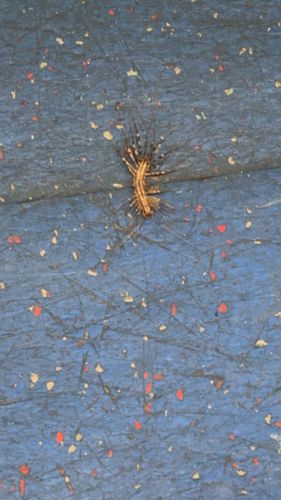
Tussock Moth Caterpillar (likely)
Lymantriidae (family level, specific species difficult to determine from image)
- Order & Family
- Lepidoptera (Order), Erebidae / Lymantriidae (Family)
- Size
- Typically 1-2 inches (2.5-5 cm) in length when fully grown as a caterpillar.
Natural Habitat
Found on trees and shrubs in various forests, woodlands, and urban landscapes; the image suggests it may have fallen onto an artificial surface.
Diet & Feeding
Herbivorous. These caterpillars feed on the leaves of a wide variety of deciduous and coniferous trees and shrubs. The specific plant hosts vary by species.
Behavior Patterns
Tussock moth caterpillars are known for their distinctive tufts of hair (tussocks) along their bodies. They are often seen crawling on host plants as they feed. Some species are solitary, while others may be found in groups. They undergo complete metamorphosis, forming a cocoon before emerging as a moth.
Risks & Benefits
Potential Risks: Many tussock moth caterpillars have urticating (stinging) hairs that can cause skin irritation, rashes, or allergic reactions if touched. They are not generally considered aggressive but can cause discomfort. In large numbers, some species can defoliate trees and shrubs, potentially causing damage to vegetation. Potential Benefits: As part of the food chain, they serve as a food source for birds and other predators. They also contribute to decomposition as they process plant matter.