
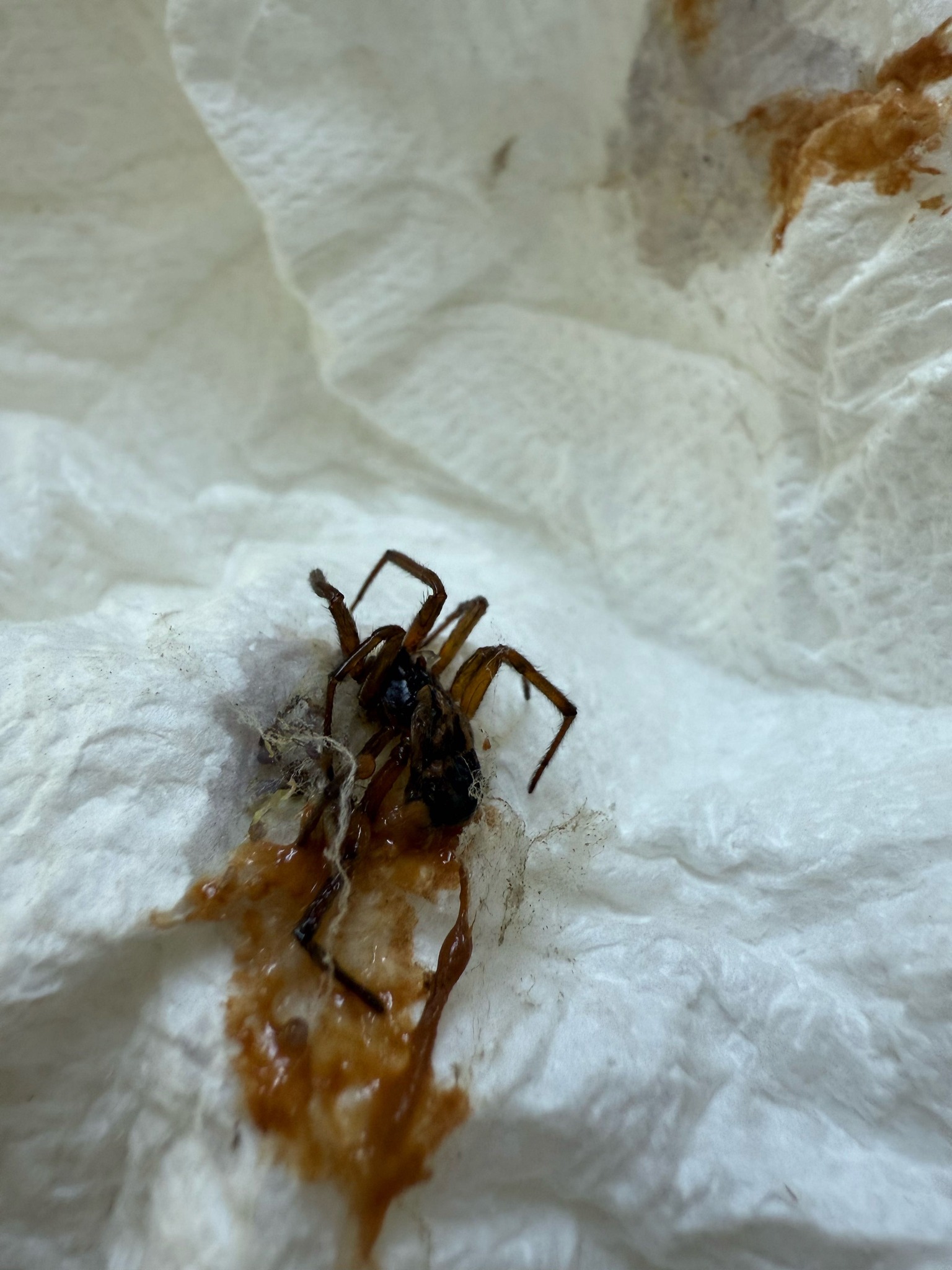
Community identification
False Widow Spider
Steatoda nobilis
- Order & Family
- Araneae, Theridiidae
- Size
- Body length typically 7-14 mm for females, 7-11 mm for males.
Natural Habitat
Commonly found in and around domestic buildings, garages, and sheds, as well as on garden fences and walls.
Diet & Feeding
Carnivorous; feeds on flying insects and other spiders, using a scaffold-like cobweb to capture prey.
Behavior Patterns
Nightly active; they build tangled webs and tend to stay near their retreat during the day. They have been known to live for several years in suitable conditions.
Risks & Benefits
Benefits: Helps control pest populations of flies and other insects. Risks: They are a biting species; while not usually dangerous, the bite can cause localized pain and swelling similar to a bee sting, or occasional systemic symptoms like lethargy.