
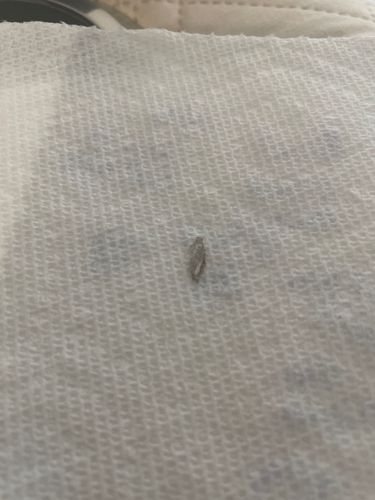
Community identification
Household Casebearer
Phereoeca utericella
- Order & Family
- Lepidoptera: Tineidae
- Size
- Case length is approximately 8-13 mm; larvae inside are smaller.
Natural Habitat
Typically found inside houses, particularly on walls in humid environments, bathrooms, kitchens, and garages.
Diet & Feeding
Larvae feed on spider webs, wool, hair, silk, and organic debris found in household dust.
Behavior Patterns
The larva constructs a flat, spindle-shaped case made of silk and covered with sand, soil, or lint. It can extend its head from either end of the case to feed or move, and eventually pupates inside the case to emerge as a small moth.
Risks & Benefits
Generally harmless to humans. They do not bite or sting but are considered household pests because they can damage natural fiber clothing, upholstery, and rugs.