
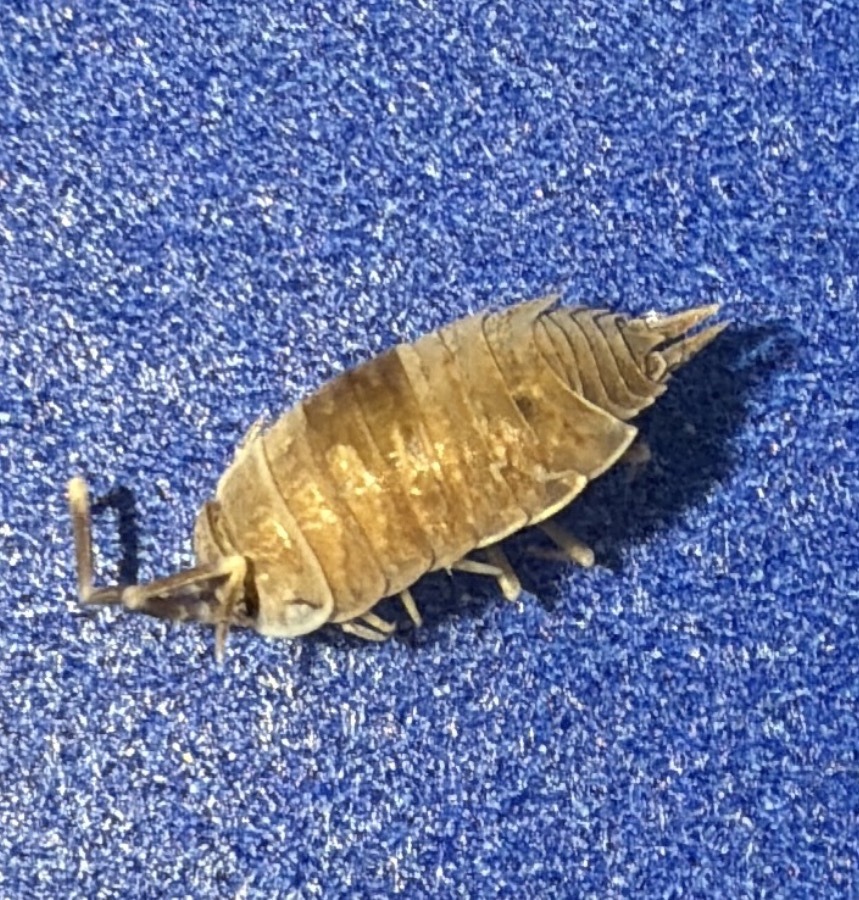
Marine isopod (likely cirolanid isopod)
Likely Cirolana sp. (species uncertain from image)
- Order & Family
- Isopoda; likely family Cirolanidae
- Size
- Usually 1–4 cm long; larger species may reach about 5 cm.
Natural Habitat
Marine or brackish coastal waters, especially beneath rocks, seaweed, driftwood, and debris. Some species inhabit beaches, estuaries, or submerged caves.
Diet & Feeding
Many are scavengers and omnivores, consuming carrion, algae, detritus, and small animals. Some cirolanids actively prey on or feed from fish and other marine organisms.
Behavior Patterns
Flattened, armored bodies and numerous walking legs suit crawling through sediment and crevices; they swim when disturbed. Females brood young in a ventral marsupium, producing miniature juveniles.
Risks & Benefits
Generally harmless to people and beneficial as scavengers that recycle organic matter. Certain marine isopods can damage or parasitize fish, but this specimen is not identifiable to species from the photograph.