
Community identification
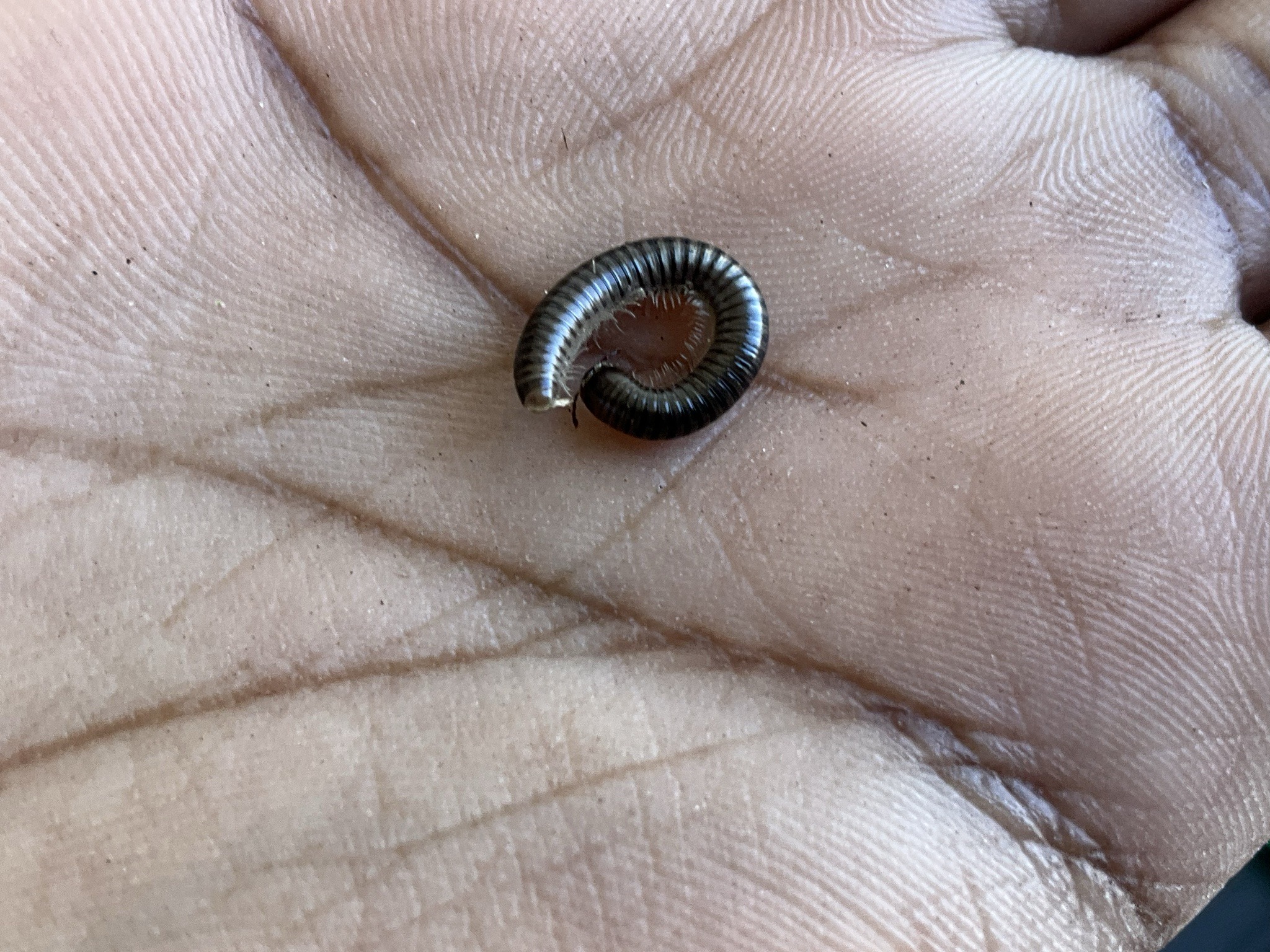
Shiny millipede (likely a flat-backed or cylindrical millipede)
Diplopoda; species cannot be determined reliably from this photograph
- Order & Family
- Class Diplopoda; order and family indeterminate without closer regional and anatomical details
- Size
- Common small species measure about 1–5 cm long; this individual appears approximately 1.5–2 cm.
Natural Habitat
Moist soil, leaf litter, rotting wood, gardens, and areas beneath stones or logs. They favor shaded, humid environments.
Diet & Feeding
Primarily decomposing leaves, fungi, and decaying plant material; some species also consume soft living vegetation.
Behavior Patterns
Usually nocturnal and slow-moving, often curling into a spiral when disturbed. They contribute to decomposition and generally avoid open, dry conditions.
Risks & Benefits
Typically harmless to people and do not bite or sting. Some species release irritating or foul-smelling defensive chemicals, while most benefit soil ecosystems by recycling organic matter.