
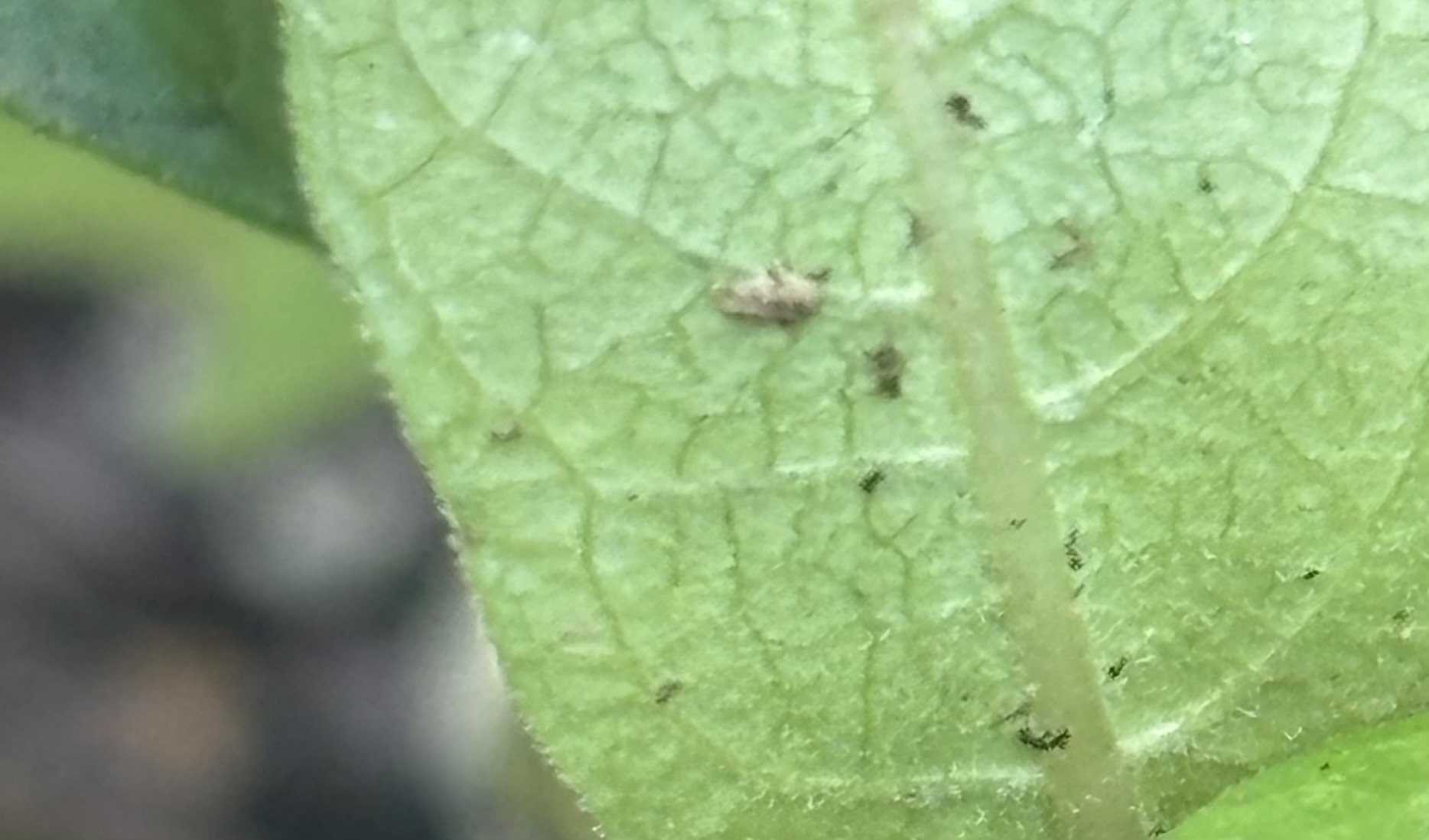
Community identification
Likely aphids (plant lice)
Aphididae sp.
- Order & Family
- Hemiptera; family Aphididae
- Size
- Usually 1–3 mm long; individuals may be wingless or winged.
Natural Habitat
Clusters occur on leaf undersides, stems, and tender new growth, especially in gardens and temperate vegetation.
Diet & Feeding
They pierce plant tissue with sucking mouthparts and consume phloem sap, often excreting sticky honeydew.
Behavior Patterns
Aphids reproduce rapidly, commonly parthenogenetically, and may form dense colonies; winged forms disperse when plants become crowded or stressed. Ants may tend them for honeydew.
Risks & Benefits
They can cause curling, yellowing, stunted growth, honeydew buildup, and transmit plant viruses. They also provide food for lady beetles, lacewings, hoverfly larvae, and parasitoid wasps.