
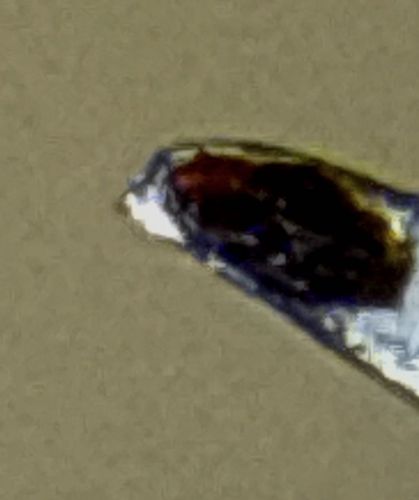
Community identification
Dragonfly (specifically the wing tip/pterostigma)
Anisoptera (Suborder)
- Order & Family
- Order: Odonata; Family: Varies (e.g., Libellulidae, Aeshnidae)
- Size
- Wingspan typically ranges from 2 to 5 inches (5 to 12 cm), though this varies by species.
Natural Habitat
Found near freshwater sources such as ponds, lakes, streams, and wetlands where their aquatic larvae (nymphs) develop.
Diet & Feeding
Carnivorous/Predatory. Adults feed on flying insects like mosquitoes, flies, and gnats. Aquatic nymphs feed on insect larvae, tadpoles, and small fish.
Behavior Patterns
Known for agile flight capabilities (hovering, flying backward); territorial behavior; incomplete metamorphosis with an aquatic nymph stage.
Risks & Benefits
Benefits: Highly beneficial predators that control pest populations, particularly mosquitoes. Risks: Harmless to humans; they do not sting, though large adults can pinch slightly if handled.