
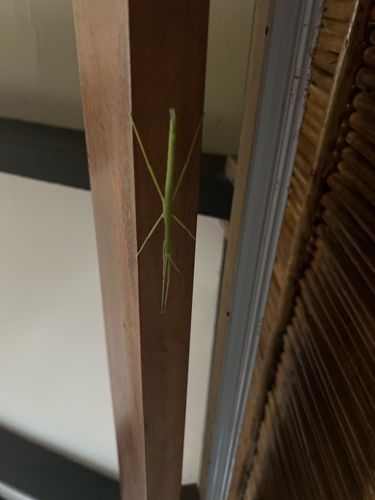
Stick Insect, Walking Stick
Phasmatodea (order)
- Order & Family
- Order: Phasmatodea, Family: Various (e.g., Phasmatidae, Diapheromeridae, Bacillidae)
- Size
- Typically 1.5 cm to 30 cm (0.6 to 12 inches), with some species reaching up to 60 cm (24 inches) in length.
Natural Habitat
Tropical and subtropical forests, woodlands, and grasslands, often found on trees, shrubs, and other vegetation. Some species are also found in temperate regions.
Diet & Feeding
Herbivorous. Stick insects primarily feed on the leaves of various plants, such as oak, rose, privet, eucalyptus, and bramble. They are generally selective eaters, with different species preferring different types of foliage.
Behavior Patterns
Stick insects are masters of camouflage, mimicking twigs or leaves to avoid predators. They are largely nocturnal, feeding at night and remaining still during the day. Many species reproduce parthenogenetically (without a male). When threatened, they may sway to mimic a branch in the wind, drop to the ground, or, in some species, secrete foul-smelling liquids or display bright warning colors.
Risks & Benefits
Generally harmless to humans. They pose no significant risks as they do not sting or bite. Their primary ecological benefit is their role as herbivores, contributing to plant decomposition and nutrient cycling. They are also an important food source for insectivorous animals. In some areas, large populations can cause defoliation of certain plants, but this is usually not a significant issue.