
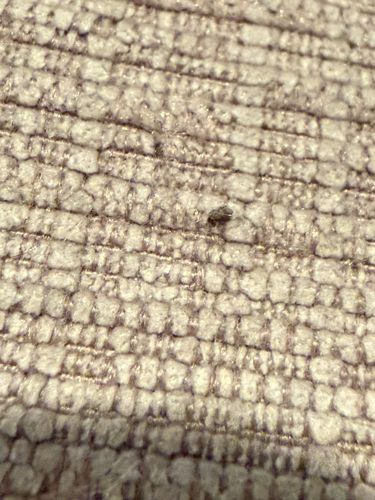
Psocid (Booklouse)
Various species in the order Psocoptera (e.g., Liposcelis spp.)
- Order & Family
- Order: Psocoptera, Family: Liposcelididae (for common indoor species)
- Size
- Typically 1-2 mm in length, very small and often go unnoticed.
Natural Habitat
Damp, humid conditions, often found in books, papers, stored food products, window sills, and around leaky pipes or areas with mold growth. They thrive in environments with relative humidity above 60%.
Diet & Feeding
They feed on fungi, mold, starch (especially from book bindings and paper), glue, grains, and other organic matter. They do not bite humans or animals.
Behavior Patterns
Psocids are mostly nocturnal and avoid light. They are often found in large numbers but are not very mobile. They can be found crawling slowly on surfaces. Their presence often indicates high humidity and the presence of mold or damp conditions.
Risks & Benefits
Risks: Can infest stored food products, books, and other paper goods, causing minor damage, especially to delicate items. They are generally harmless to humans, not transmitting diseases or biting. They can be a nuisance when present in large numbers, and their presence can be an indicator of moisture problems in a building. Benefits: They are part of the natural decomposition process, feeding on mold and other organic detritus.