
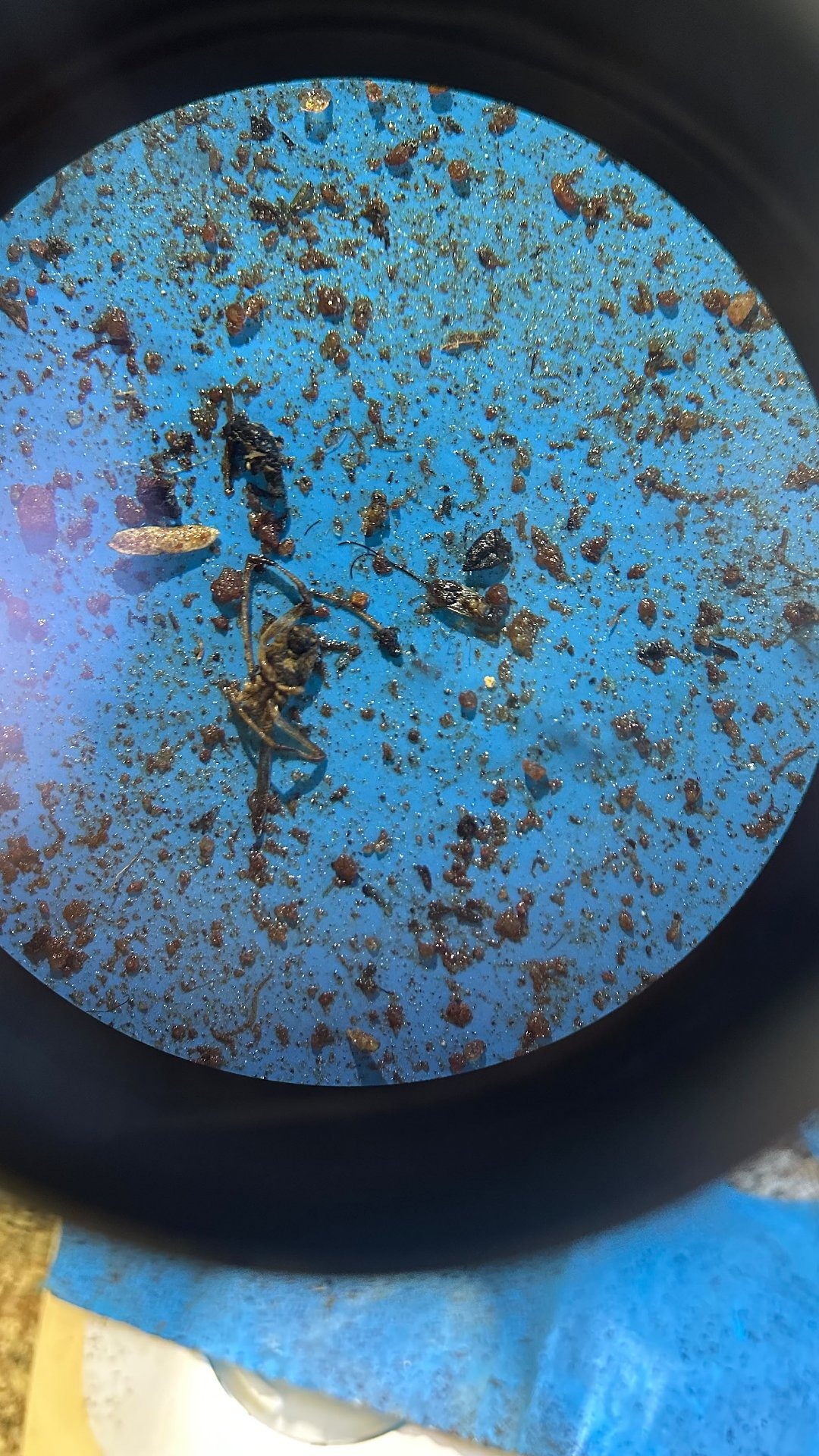
Community identification
Unidentified small arthropod; likely springtail or soil mite
Not determinable from this image; possibly Collembola or Oribatida
- Order & Family
- Likely Entomobryomorpha (springtails), family Entomobryidae, or Sarcoptiformes (mites), family Oribatulidae; image resolution prevents confirmation
- Size
- Most visible individuals appear roughly 0.5–3 mm long, though scale is uncertain.
Natural Habitat
Moist soil, leaf litter, compost, moss, and decaying organic matter; commonly collected in damp traps or beneath debris.
Diet & Feeding
Springtails consume fungi, algae, decaying plant material, and microbes; soil mites may feed on fungi, detritus, or other tiny organisms.
Behavior Patterns
Typically crawl through soil and litter, reproduce rapidly in moist conditions, and avoid light. Many springtails can jump using a forked furcula; mites generally move slowly and do not jump.
Risks & Benefits
Usually harmless to people, pets, plants, and buildings. They contribute to decomposition and nutrient cycling; predatory species can help regulate other soil microarthropods.