
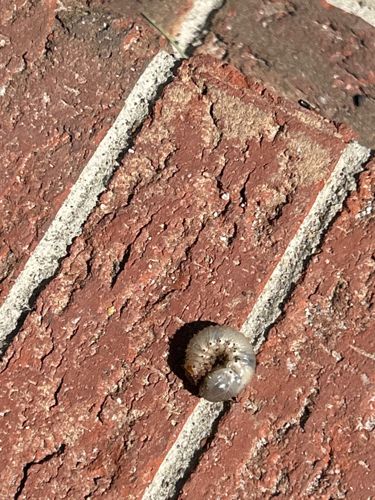
Community identification
White Grub
Phyllophaga ssp. (most common) or Popillia japonica
- Order & Family
- Order: Coleoptera; Family: Scarabaeidae
- Size
- 20mm to 30mm (approx. 1 inch) in length when fully grown
Natural Habitat
Found in soil under lawns, gardens, and pastures, typically near the root zones of grasses and plants.
Diet & Feeding
Larvae feed on the roots of grasses, ornamental plants, and vegetable crops. Adults feed on foliage and flowers.
Behavior Patterns
They exhibit a C-shaped posture when disturbed. They spend most of their life underground, overwintering deep in the soil and migrating upward in spring to feed. They undergo a multi-year life cycle (1-3 years) before pupating into beetles.
Risks & Benefits
Risks: Major agricultural and lawn pests that cause large dead patches in turfgrass by severing roots. Benefits: They serve as a vital food source for birds, moles, and other small mammals, and help aerate the soil through burrowing.