
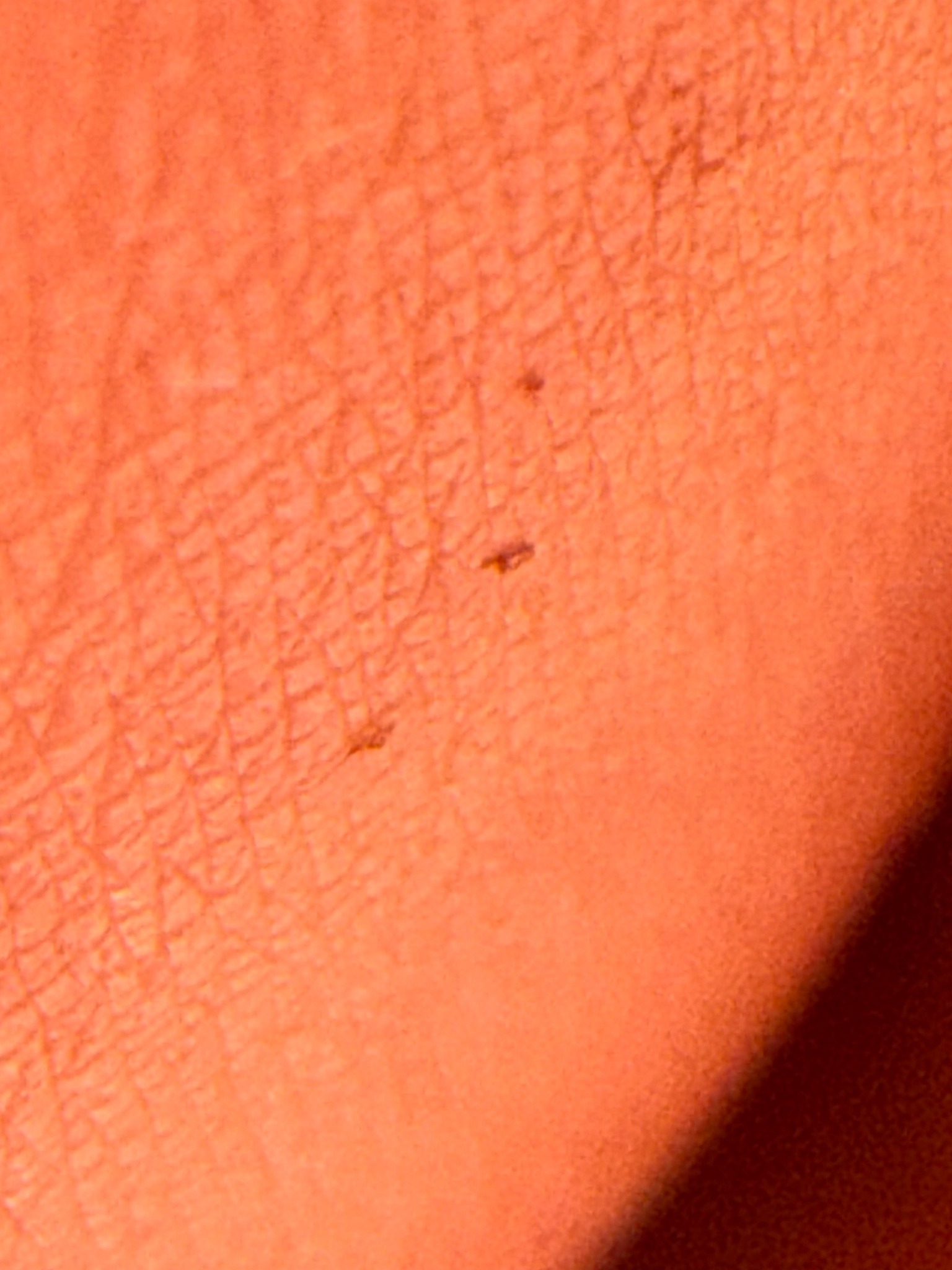
Likely flea (photograph too indistinct for certainty)
Order Siphonaptera; species undetermined
- Order & Family
- Siphonaptera; family likely Pulicidae
- Size
- Adults are typically 1.5–3.3 mm long.
Natural Habitat
Fleas live on mammals or birds and in nearby bedding, carpets, soil, and animal resting areas. The image appears to show tiny specimens on human skin.
Diet & Feeding
Adults consume blood, usually from mammals or birds. Larvae feed mainly on organic debris and dried fecal blood in the environment.
Behavior Patterns
Adults are wingless, laterally flattened, and capable of powerful jumping; they seek hosts through heat, movement, and carbon dioxide. Eggs and larvae develop off-host, while adults may remain hidden in fur, bedding, or carpets.
Risks & Benefits
Bites cause itchy, clustered papules and may trigger allergic dermatitis; fleas can transmit pathogens and, rarely, tapeworms. They have little direct ecosystem benefit beyond serving as prey and participating in host–parasite interactions.