
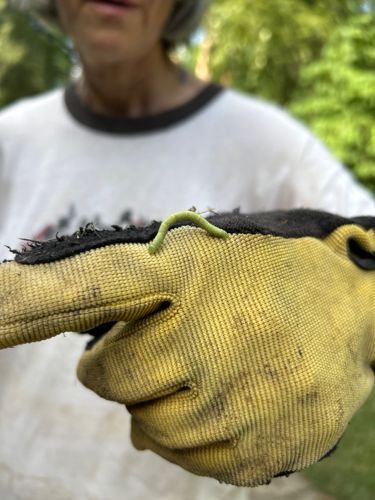
Inchworm (also known as Looper or Spanworm)
Various species within the family Geometridae (e.g., Paleacrita vernata, Alsophila pometaria, Lambdina fiscellaria)
- Order & Family
- Order: Lepidoptera, Family: Geometridae
- Size
- Typically 1-3 cm (0.4-1.2 inches) in length, depending on the species and stage of development. The adult moths vary greatly in size.
Natural Habitat
Found in diverse habitats where their host plants grow, including forests, woodlands, gardens, agricultural fields, orchards, and urban landscapes. They are widespread globally.
Diet & Feeding
Primarily herbivorous, feeding on the leaves of a wide variety of plants, including trees, shrubs, and herbaceous plants. Their diet is species-specific; some are generalists, while others specialize on particular host plants.
Behavior Patterns
Inchworms move by arching their bodies into a loop (like a measuring tape, hence "inchworm") and then extending forward. This is due to having fewer prolegs than most caterpillars, typically only at the rear of their body. They are generally solitary and can be found feeding on leaves. When disturbed, many species will drop from the plant on a silk thread or stand rigid, mimicking a twig.
Risks & Benefits
Risks: In large numbers, inchworms can be considered agricultural and horticultural pests as their feeding (defoliation) can cause significant damage to crops, ornamental plants, and trees. Benefits: They are an important food source for birds, parasitic wasps, and other predators, playing a role in the food chain. As adult moths, they can act as pollinators for some plants. Their presence often indicates a healthy ecosystem.