
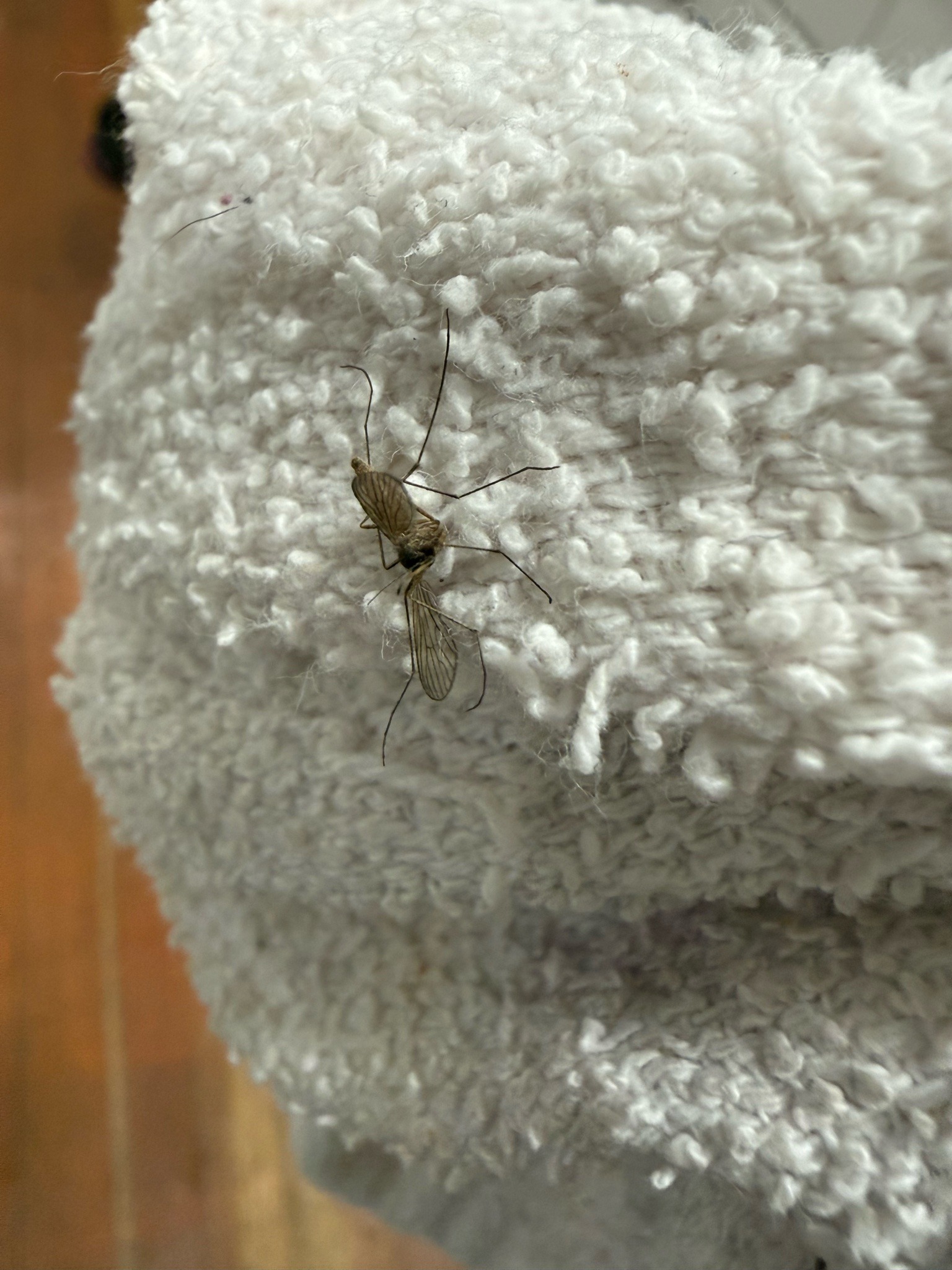
Crane Fly
Family Tipulidae
- Order & Family
- Order Diptera, Family Tipulidae
- Size
- Commonly 2 to 6 centimeters (0.75 to 2.5 inches) in wingspan, though some species are smaller or larger.
Natural Habitat
Found worldwide in moist environments such as woodlands, meadows, and near freshwater sources like streams and marshes.
Diet & Feeding
Adults typically feed on nectar or do not feed at all, as their primary goal is mating; larvae (leatherjackets) eat decaying organic matter, plant roots, and fungi.
Behavior Patterns
Known for their awkward, spindly legs and weak flight. They are often attracted to porch lights at night. The life cycle involves a lengthy larval stage in soil or water, followed by a very short adult stage lasting only a few days.
Risks & Benefits
They are harmless to humans as they do not bite or sting. Benefit the ecosystem as a food source for birds and bats, and larvae help decompose organic matter; however, high concentrations of larvae can occasionally damage turf grass or crops.