
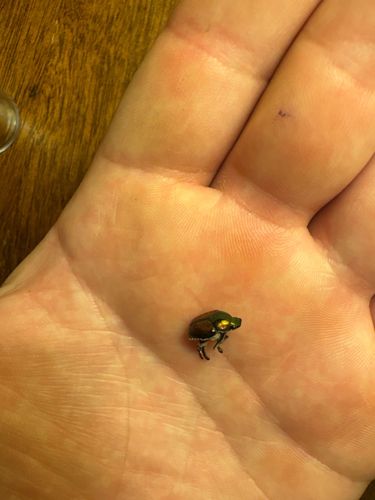
Japanese Beetle
Popillia japonica
- Order & Family
- Coleoptera, Scarabaeidae
- Size
- Approximately 8-11 mm (0.3-0.4 inches) in length
Natural Habitat
Japanese beetles prefer areas with ample turf grass for their larval stage, such as lawns, golf courses, and pastures. Adults are found in gardens, agricultural fields, and natural areas where host plants are abundant.
Diet & Feeding
Adult Japanese beetles are generalist feeders, consuming the foliage, flowers, and fruits of over 300 species of plants, including roses, grapes, beans, and corn. The grubs primarily feed on the roots of grasses.
Behavior Patterns
Japanese beetles emerge from the ground in late spring or early summer. They are active during the day, feeding on plants and mating. Females lay eggs in the soil, which hatch into grubs. These grubs feed on plant roots before overwintering and pupating the following spring.
Risks & Benefits
Japanese beetles are a significant agricultural and horticultural pest, causing extensive damage to crops and ornamental plants. Their feeding can skeletonize leaves and destroy flowers and fruits, leading to economic losses. While largely considered a pest, they do contribute to nutrient cycling through their feeding habits, though this benefit is dwarfed by their destructive potential.