
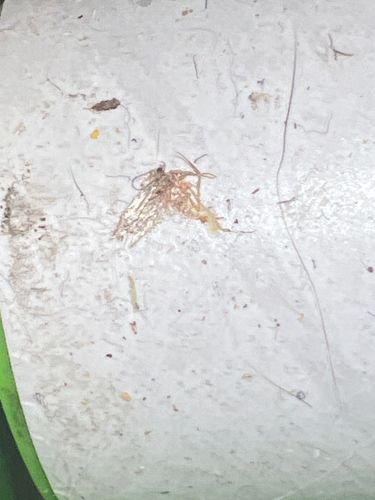
Community identification
Webbing clothes moth
Tineola bisselliella
- Order & Family
- Lepidoptera: Tineidae
- Size
- Wingspan of 12 to 16 mm; body length typically 6 to 8 mm.
Natural Habitat
Inhabits buildings, specifically in dark, undisturbed areas like closets, attics, and storage bins where natural fibers are stored.
Diet & Feeding
Larvae feed on animal-derived materials containing keratin, such as wool, fur, silk, feathers, felt, and leather. Adults do not eat.
Behavior Patterns
Adults are weak fliers and prefer darkness, often running rather than flying when disturbed. Women lay eggs on suitable food sources; life cycle varies from month to years based on temperature and humidity.
Risks & Benefits
Significant household pest that causes physical damage to clothing, upholstery, and rugs. They pose no direct health risk to humans but can be economically destructive to textile collections.