
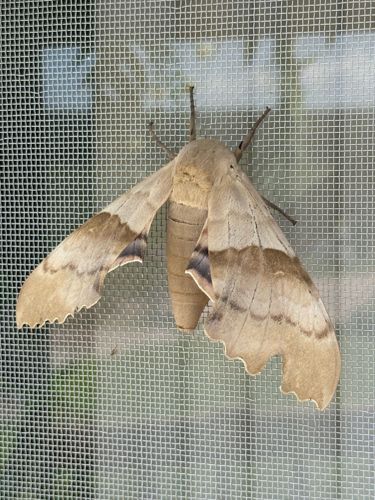
Blinded Sphinx (Moth)
Paonias excaecata
- Order & Family
- Order: Lepidoptera, Family: Sphingidae
- Size
- Wingspan typically ranges from 2.5 to 3.75 inches (6.5 to 9.5 cm).
Natural Habitat
Forests, woodlands, suburban areas, and anywhere its host plants are present. They are commonly found near lights at night.
Diet & Feeding
Adults: Non-feeding (atrophied mouthparts). Larvae (caterpillars): Leaves of various trees and shrubs, including willow (Salix), birch (Betula), aspen (Populus), and cherry (Prunus).
Behavior Patterns
Adult Blinded Sphinx moths are nocturnal and are attracted to lights. They typically feed on nectar, but the Blinded Sphinx is one of the few sphinx moths that do not feed as adults; their mouthparts are atrophied. The caterpillars are active feeders on host plants. Adults generally live only for a few weeks.
Risks & Benefits
Risks: Generally none to humans. The caterpillars can cause minor defoliation of host trees, but rarely to a significant extent that would damage healthy plants. Benefits: As with other moths, they are a food source for birds, bats, and other insectivores. The caterpillars play a role in nutrient cycling as primary consumers.