
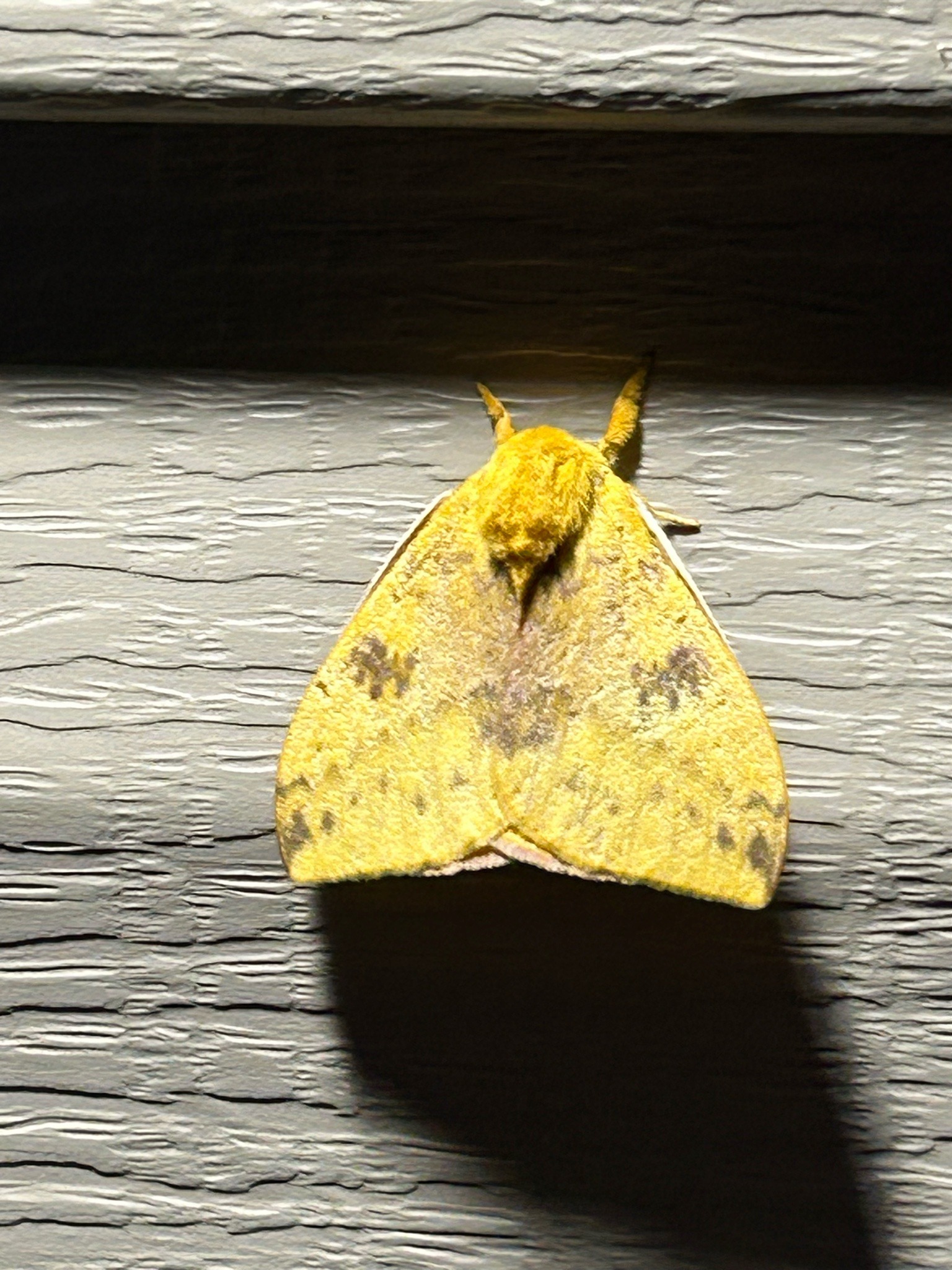
Community identification
Imperial Moth
Eacles imperialis
- Order & Family
- Lepidoptera, Saturniidae
- Size
- Wingspan of 3 to 7 inches (8 to 17.5 cm)
Natural Habitat
Deciduous forests, mixed woodlands, suburban areas, and gardens across North America.
Diet & Feeding
Caterpillars feed on a variety of trees including pine, oak, maple, and sweetgum; adults have vestigial mouthparts and do not eat.
Behavior Patterns
Nocturnal insects that are often attracted to artificial lights at night. They pupate in the soil rather than spinning a cocoon.
Risks & Benefits
Harmless to humans; serves as a vital food source for birds and bats, and caterpillars help recycle nutrients in forest ecosystems.