
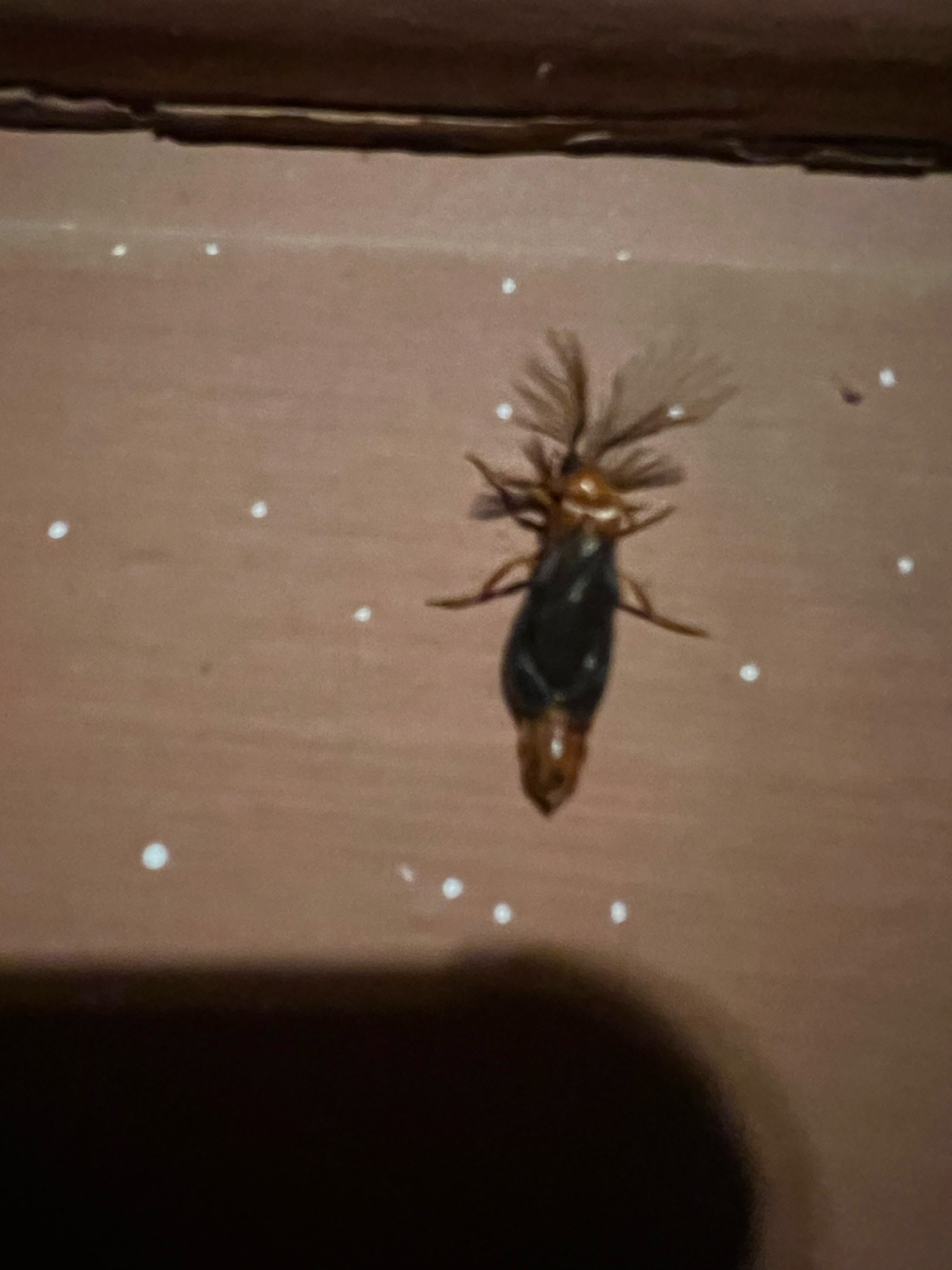
Community identification
Twisted-wing Parasite (Male)
Xenos peckii (typical representative)
- Order & Family
- Strepsiptera: Stylopidae
- Size
- 1 to 4 mm (males)
Natural Habitat
Found worldwide in proximity to their hosts, which are most commonly wasps and bees; adults are often found near lights at night.
Diet & Feeding
Adult males do not eat as they lack functional mouthparts; larvae and females are endoparasites that consume the hemolymph of their host.
Behavior Patterns
Males have very short lives (hours) dedicated to finding a female to mate with. Females are often wingless and never leave the host's body. Males use their unique raspberry-like eyes and branched antennae to detect female pheromones.
Risks & Benefits
They pose no risk to humans. They act as a natural biological control by parasitizing and effectively castrating certain species of wasps and bees, which can impact local pollinator populations.