
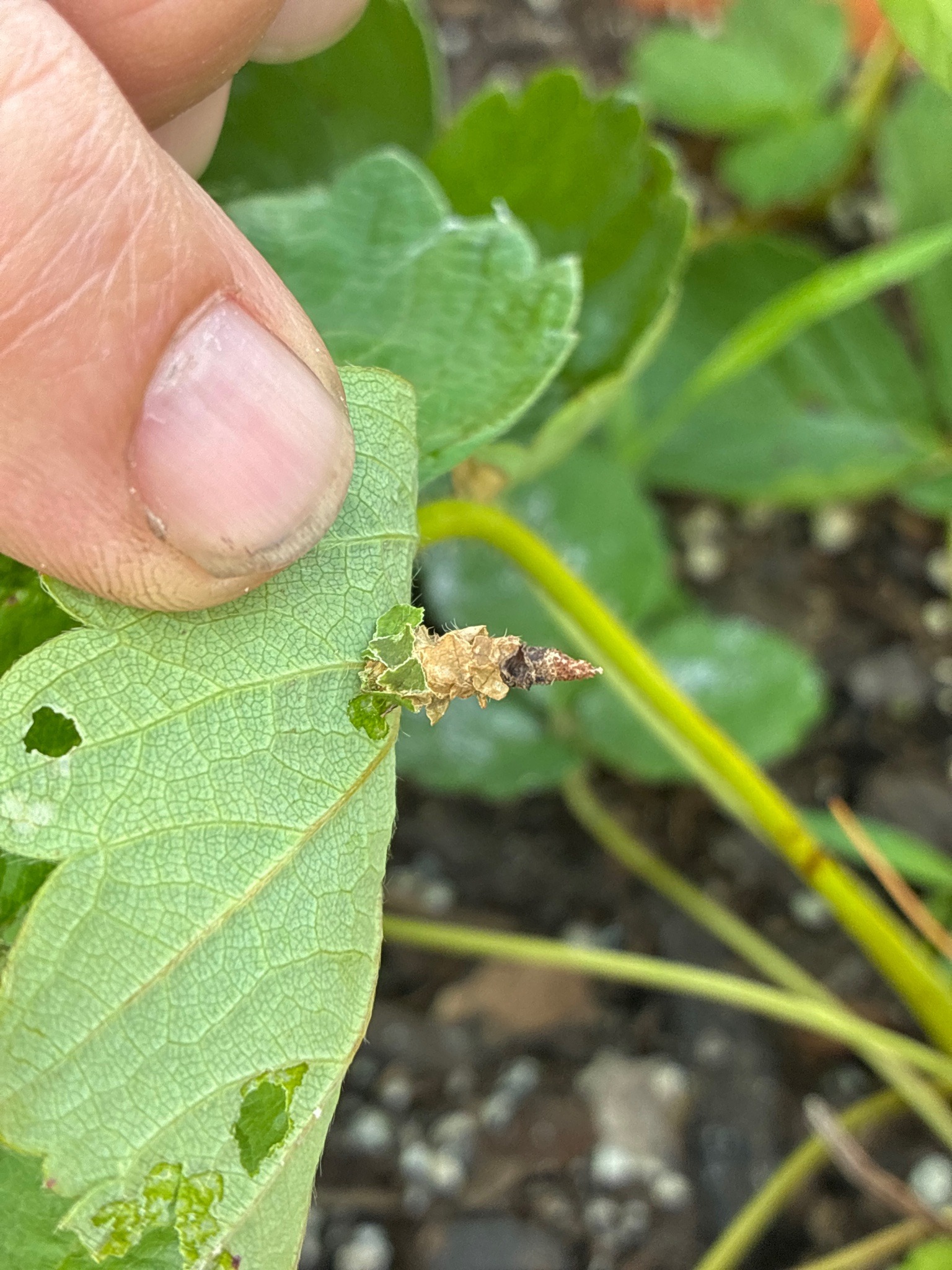
Bagworm
Family Psychidae
- Order & Family
- Lepidoptera, Psychidae
- Size
- 10 mm to 50 mm depending on species and age
Natural Habitat
Gardens, orchards, and wooded areas, commonly found on deciduous trees, conifers, and perennial garden plants like strawberries.
Diet & Feeding
The larvae are generalist herbivores, feeding on the leaves or needles of a wide variety of host plants, including dozens of tree and shrub species.
Behavior Patterns
Larvae construct spindle-shaped cases using silk and debris from their host plant (twigs, leaves, bark) for protection and camouflage. They carry these bags as they feed. Females are wingless and stay in the bag to lay eggs, while males develop into moths and search for mates.
Risks & Benefits
They are considered garden pests as they can cause significant defoliation to host plants. Large infestations can weaken or kill trees and shrubs. They provide a benefit to the ecosystem as a food source for birds, spiders, and parasitic wasps.