
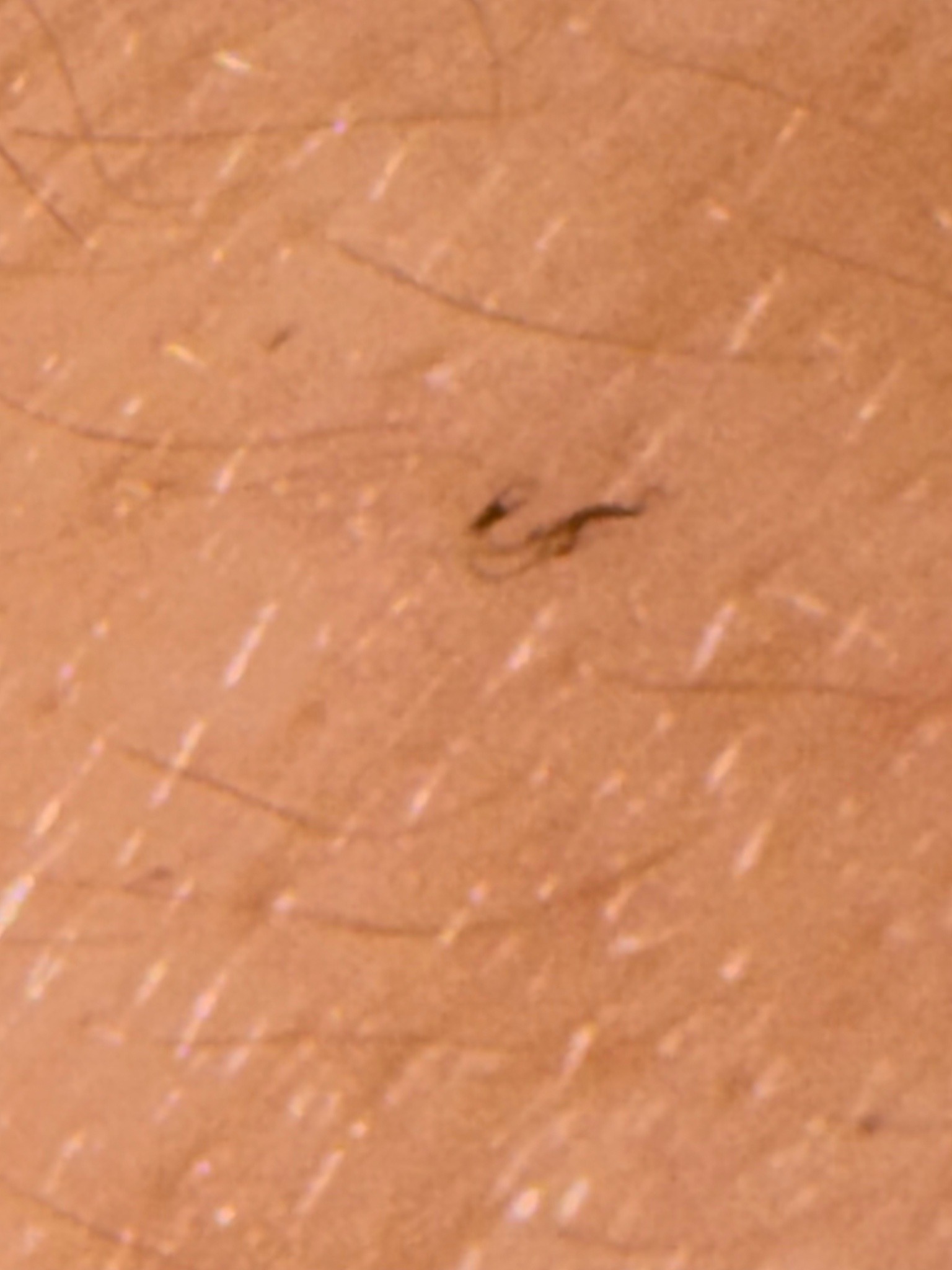
Community identification
Louse (likely head louse)
Pediculus humanus capitis
- Order & Family
- Phthiraptera (often classified within Psocodea); Pediculidae
- Size
- Adults are about 2–3 mm long; nymphs are smaller and pale, often difficult to see clearly.
Natural Habitat
Lives on human scalp hair, close to the skin, where it obtains blood meals and lays eggs (nits) on hair shafts.
Diet & Feeding
Feeds exclusively on human blood several times daily using piercing-sucking mouthparts.
Behavior Patterns
Wingless and unable to jump or fly; spreads mainly through prolonged hair-to-hair contact or shared personal items. Eggs hatch in roughly 7–10 days, and the life cycle typically takes 3–4 weeks.
Risks & Benefits
Causes itching, irritation, and occasional secondary skin infection from scratching; head lice are not known to transmit major human diseases. They provide little recognized ecosystem benefit.