
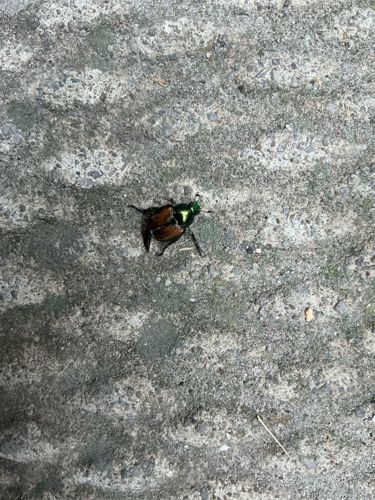
Japanese Beetle
Popillia japonica
- Order & Family
- Order: Coleoptera, Family: Scarabaeidae
- Size
- Adults typically range from 10 to 15 mm (0.4 to 0.6 inches) in length.
Natural Habitat
Originally from Japan, Japanese beetles thrive in temperate climates. They are commonly found in lawns, gardens, agricultural fields, nurseries, and urban landscapes where host plants are abundant. The larval stage lives in the soil.
Diet & Feeding
Adult Japanese beetles are polyphagous, feeding on the leaves, flowers, and fruits of over 300 species of plants, including roses, grapes, and various shade trees. Larvae (grubs) feed on the roots of grasses and other plants.
Behavior Patterns
Adult Japanese beetles are most active during the day, feeding on plants. They are strong fliers and can travel considerable distances. Females lay eggs in the soil, and the larvae (grubs) overwinter underground, feeding on plant roots. They emerge as adults in late spring/early summer.
Risks & Benefits
Risks: Japanese beetles are significant agricultural and horticultural pests. Adults cause widespread defoliation and damage to ornamental plants, fruit trees, and field crops. Larvae damage turf by feeding on roots. Benefits: There are few direct benefits of Japanese beetles; however, they serve as a food source for some predators and parasites in their native range, and in some integrated pest management strategies, beneficial nematodes or parasitic wasps are used to control their populations.