
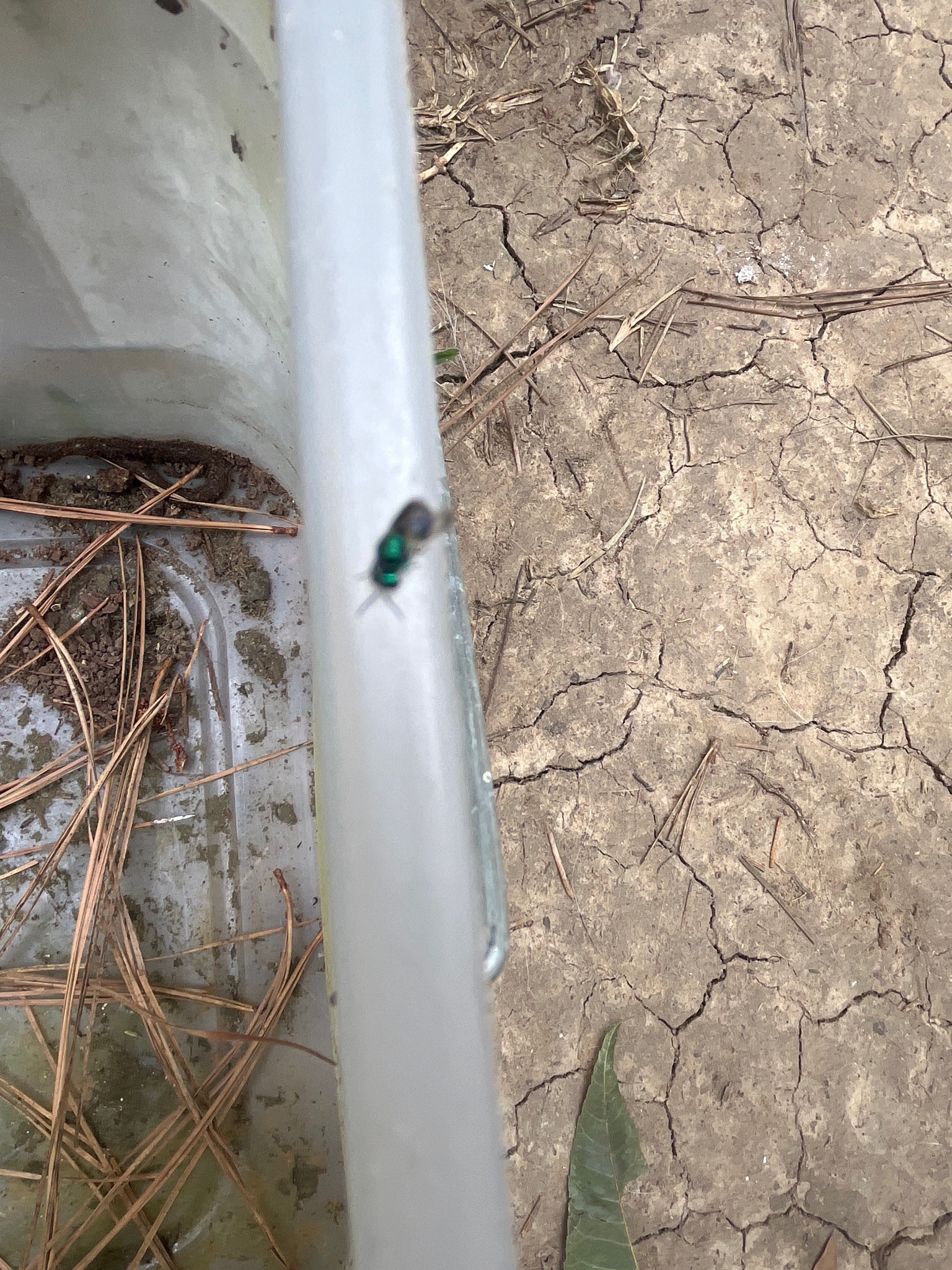
Community identification
Common Green Bottle Fly
Lucilia sericata
- Order & Family
- Order: Diptera; Family: Calliphoridae
- Size
- 10-14 mm in length
Natural Habitat
Widely distributed worldwide in association with humans, livestock, and decomposing organic matter in urban and rural environments.
Diet & Feeding
Adults feed on nectar and fluids from decomposing matter; larvae (maggots) feed on necrotic flesh and decaying animal or vegetable matter.
Behavior Patterns
Diurnal and highly active in sunny conditions. They have a rapid life cycle and are among the first insects to arrive at a carcass to lay eggs.
Risks & Benefits
Risks include the mechanical transmission of pathogens (like Salmonella) to food. Benefits include ecological decomposition and medical use in 'maggot therapy' to clean non-healing wounds.