
Community identification
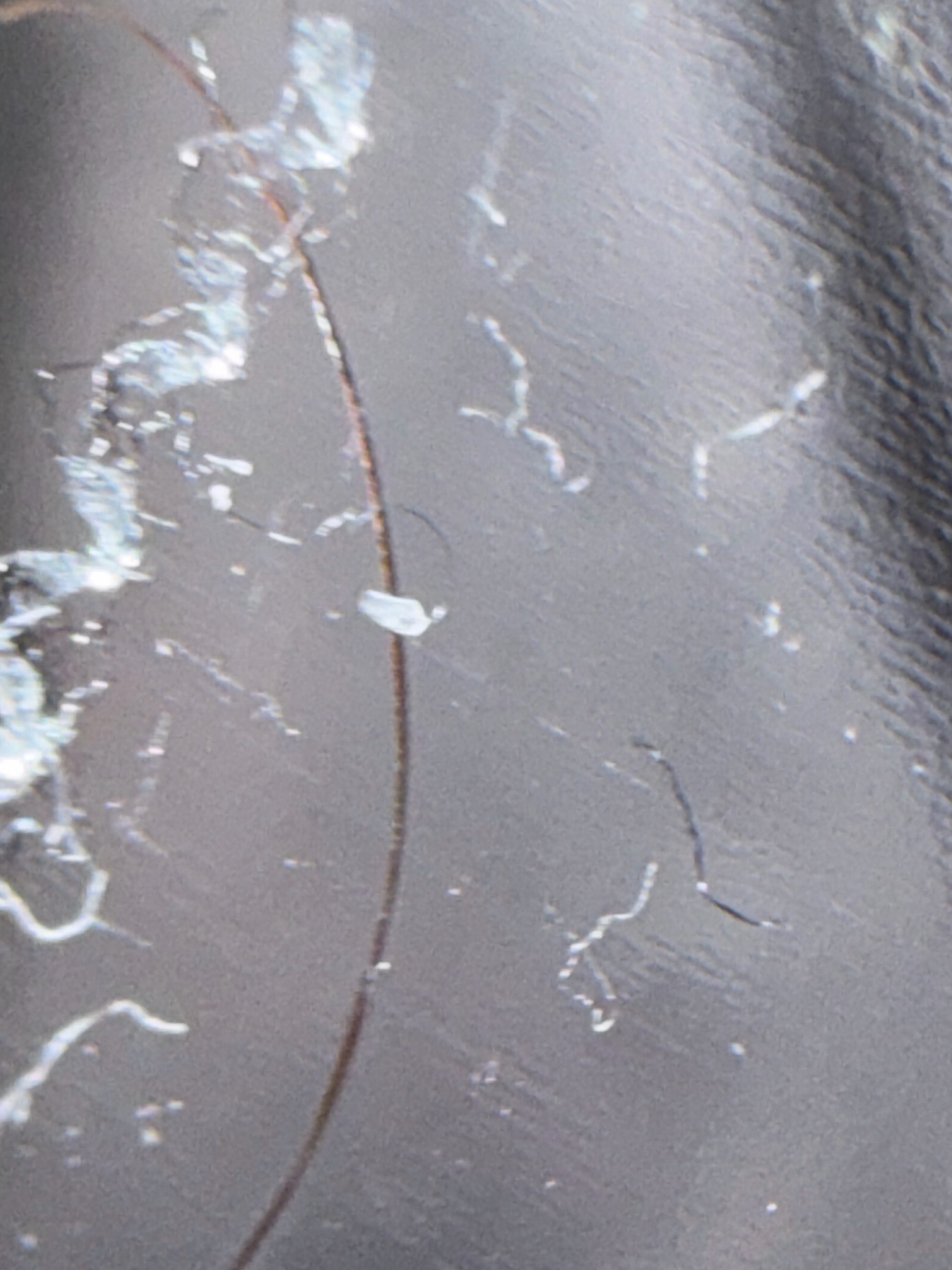
Parasitic hairworm (horsehair worm)
Likely Gordius sp. (identification uncertain from image)
- Order & Family
- Gordiida; family Gordiusidae
- Size
- Typically 10–50 cm long but only about 0.5–2 mm wide; this specimen appears unusually long and threadlike.
Natural Habitat
Adults occur in freshwater, including ponds, puddles, streams, and water containers. Juveniles develop inside terrestrial insects, especially crickets and grasshoppers.
Diet & Feeding
Adults generally do not feed, relying on stored energy. Larvae absorb nutrients from their insect hosts.
Behavior Patterns
Larvae parasitize insects and manipulate infected hosts into entering water, where the worms emerge, mate, and reproduce. Adults are free-living and harmless.
Risks & Benefits
Not dangerous to people, pets, plants, or fish, and they do not parasitize humans. They help regulate cricket and grasshopper populations and indicate freshwater presence.