
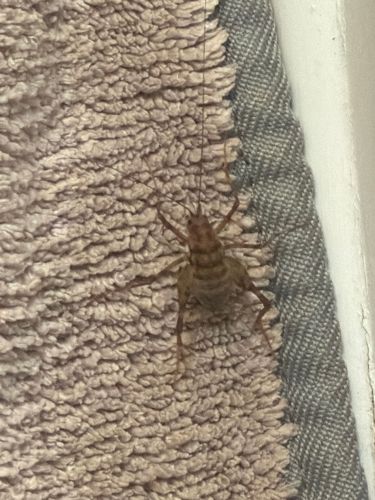
Camel Cricket
Ceuthophilus spp.
- Order & Family
- Orthoptera, Rhaphidophoridae
- Size
- 1/2 inch to 1 1/2 inches (1.5 to 3.5 cm) in body length, not including their long antennae.
Natural Habitat
Damp, dark environments like caves, cellars, basements, crawlspaces, hollow logs, and under rocks. They are often found in homes seeking moisture.
Diet & Feeding
Omnivorous scavengers. They feed on decaying organic matter, fungi, plants, and sometimes other small insects. Indoors, they may chew on fabrics, wood, or food items. They will also eat their own dead.
Behavior Patterns
Nocturnal and highly sensitive to light. They are wingless and cannot chirp like true crickets. When startled, they jump erratically and often quite high, which can be unsettling. They are known for their long antennae and powerful jumping legs. They often congregate in areas of high humidity.
Risks & Benefits
They are generally harmless to humans, as they do not bite or transmit diseases. However, they can be considered a nuisance pest indoors due to their presence and potential to damage fabrics or food items if infestations are severe. They offer a minor benefit in consuming decaying organic matter as part of the ecosystem role.