
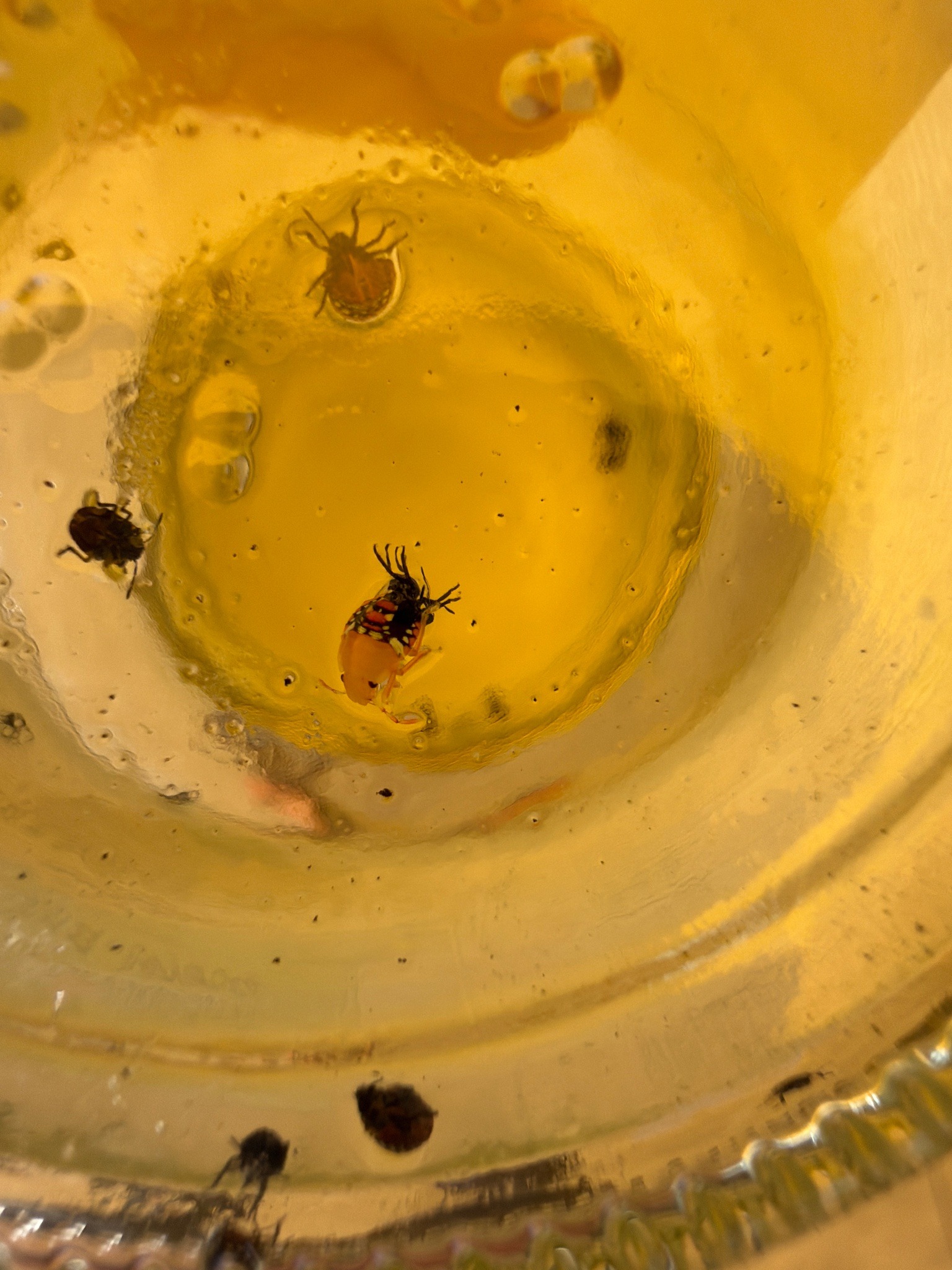
Community identification
Seed ticks (unfed tick nymphs/larvae), possibly with a small beetle or mite
Ixodidae (likely Ixodes or Amblyomma; exact species cannot be confirmed from this image)
- Order & Family
- Acari, family Ixodidae (hard ticks)
- Size
- Larvae are about 0.5–1 mm; nymphs are roughly 1–2 mm before feeding, increasing substantially after a blood meal.
Natural Habitat
Leaf litter, tall grass, woodland edges, and animal-host environments; the pictured specimens appear submerged in liquid.
Diet & Feeding
They are obligate blood-feeders, taking blood from mammals, birds, reptiles, or amphibians; they do not eat plant material.
Behavior Patterns
Ticks quest by climbing vegetation and attaching to passing hosts, then remain feeding for days. They develop through larva, nymph, and adult stages, usually requiring a host blood meal between stages.
Risks & Benefits
Some species transmit pathogens causing Lyme disease, ehrlichiosis, babesiosis, and other illnesses; avoid handling and remove attached ticks promptly. They are also natural wildlife parasites and part of food webs.