
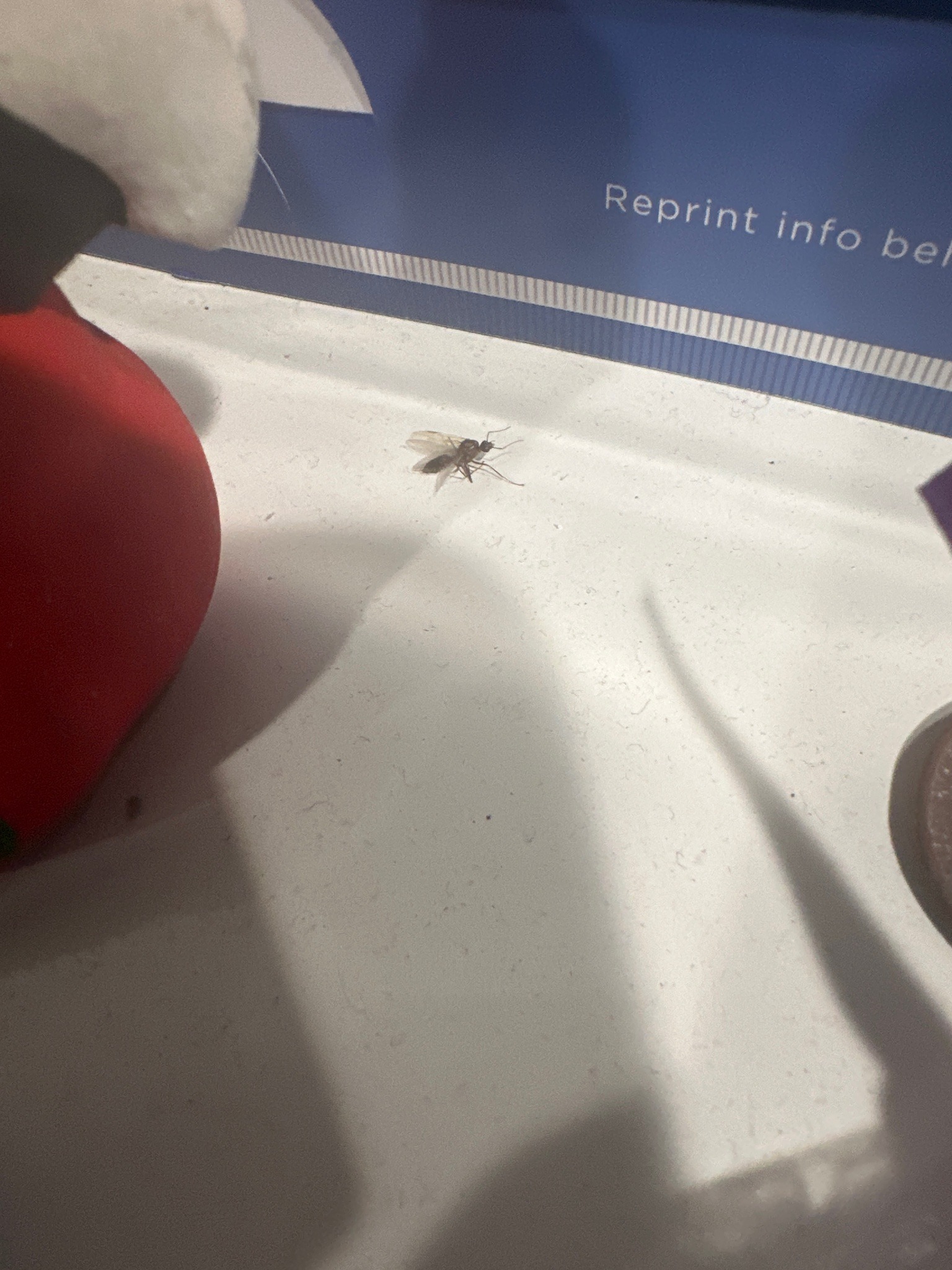
Community identification
Flying Ant (Alate)
Formicidae (genus/species varies)
- Order & Family
- Order: Hymenoptera; Family: Formicidae
- Size
- 5 mm to 15 mm (depends on species)
Natural Habitat
Underground nests, rotting wood, or within wall voids; they emerge during nuptial flights to start new colonies.
Diet & Feeding
Nectar, sugar, and protein from other insects or food waste; alates often do not eat during their flight period.
Behavior Patterns
These are winged reproductive members of an ant colony. They take part in 'nuptial flights' where they swarm to mate, after which the males die and the females shed their wings to seek a nesting site.
Risks & Benefits
Generally harmless to humans but can be a nuisance indoors; their presence inside may indicate a nearby or internal nest (potentially wood-destroying if they are Carpenter Ants). They benefit ecosystems by aerating soil.