
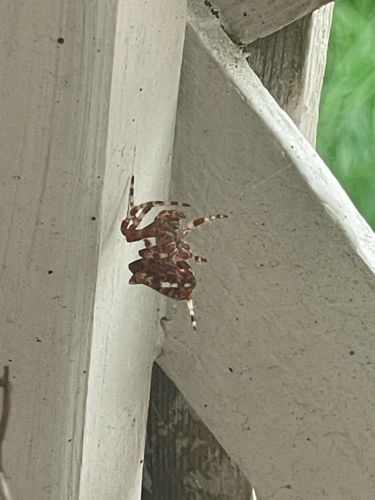
European Garden Spider or Cross Orb-weaver
Araneus diadematus
- Order & Family
- Order: Araneae, Family: Araneidae
- Size
- Female body length: 10-18 mm; Male body length: 5-8 mm. Leg span can be significantly larger.
Natural Habitat
Commonly found in gardens, fields, forests, and urban areas. They prefer areas with vegetation or structures where they can easily build their large orb webs, such as between plants, on fences, or near eaves of buildings.
Diet & Feeding
Mainly flying insects caught in their webs, such as flies, mosquitoes, moths, beetles, and wasps.
Behavior Patterns
Garden spiders are nocturnal, often rebuilding their webs daily, typically in the evening. They are orb-weaver spiders, meaning they construct classic spiral wheel-shaped webs to catch prey. The female is generally much larger than the male. During the day, they often rest in the center of their web or in a retreat nearby.
Risks & Benefits
Risks: Bites are rare and generally only occur if the spider feels threatened, such as being squeezed. The venom is not considered dangerous to humans, causing only mild, localized pain, redness, and swelling, similar to a bee sting. Benefits: They are natural pest controllers, helping to reduce populations of various nuisance insects in gardens and agricultural settings.