
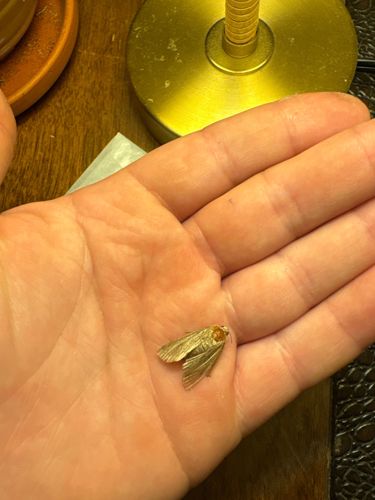
Moth (likely a species of Cutworm Moth or "Miller Moth")
Not definitively identifiable from the image, but many common "miller moths" belong to genera like "Agrotis" or "Platysenta".
- Order & Family
- Order: Lepidoptera, Family: Noctuidae (likely)
- Size
- Typically, the wingspan can range from 2.5 cm to 5 cm (1 to 2 inches) for many common species.
Natural Habitat
Moths are found in a wide variety of habitats, including forests, grasslands, deserts, urban areas, and agricultural fields. They are often found near their larval host plants.
Diet & Feeding
Adult moths often feed on nectar from flowers, or sometimes sap, decaying fruit, or are non-feeding. The larval stage (caterpillars) of many species are herbivorous, feeding on plant leaves, stems, or roots.
Behavior Patterns
Moths are typically nocturnal, attracted to light. Their larvae (caterpillars) are often herbivorous and can be found on host plants. Adults generally live for a short period, primarily to mate and lay eggs.
Risks & Benefits
Potential risks include being a nuisance, especially when large numbers enter homes (often attracted to lights). Some moth larvae can be agricultural pests, damaging crops or garden plants. Benefits include being important pollinators for various plants and serving as a food source for other animals like birds and bats. They also play a role in decomposition.