
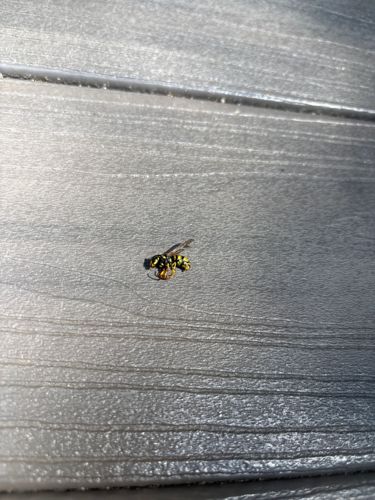
Yellowjacket
Vespula spp. or Dolichovespula spp.
- Order & Family
- Hymenoptera, Vespidae
- Size
- Typically 10-16 mm (0.4-0.6 inches) long.
Natural Habitat
Yellowjackets can be found in various habitats, including forests, urban areas, and suburban gardens. They often build their nests underground (in old rodent burrows), in cavities in walls or attics, under eaves, or in dense bushes and trees.
Diet & Feeding
Adult yellowjackets primarily feed on sugars from nectar, fruit, and sugary human foods. They also hunt other insects like flies, caterpillars, and spiders to feed their larvae, which require protein to grow.
Behavior Patterns
Yellowjackets are social insects living in colonies that can number in the thousands. They are most active during the day, foraging for food and building their nests. Their nests are typically made of chewed wood fibers mixed with saliva, giving them a papery texture. They can be aggressive when their nest is disturbed or when individual wasps feel threatened.
Risks & Benefits
Risks: Yellowjackets can sting multiple times and their stings are painful, potentially causing allergic reactions (anaphylaxis) in sensitive individuals. They are considered pests due to their attraction to human food and aggressive defensive behavior near nests. Benefits: As predators of other insects, yellowjackets help control populations of pests like caterpillars and flies. They can also aid in pollination to a minor extent by visiting flowers for nectar.