
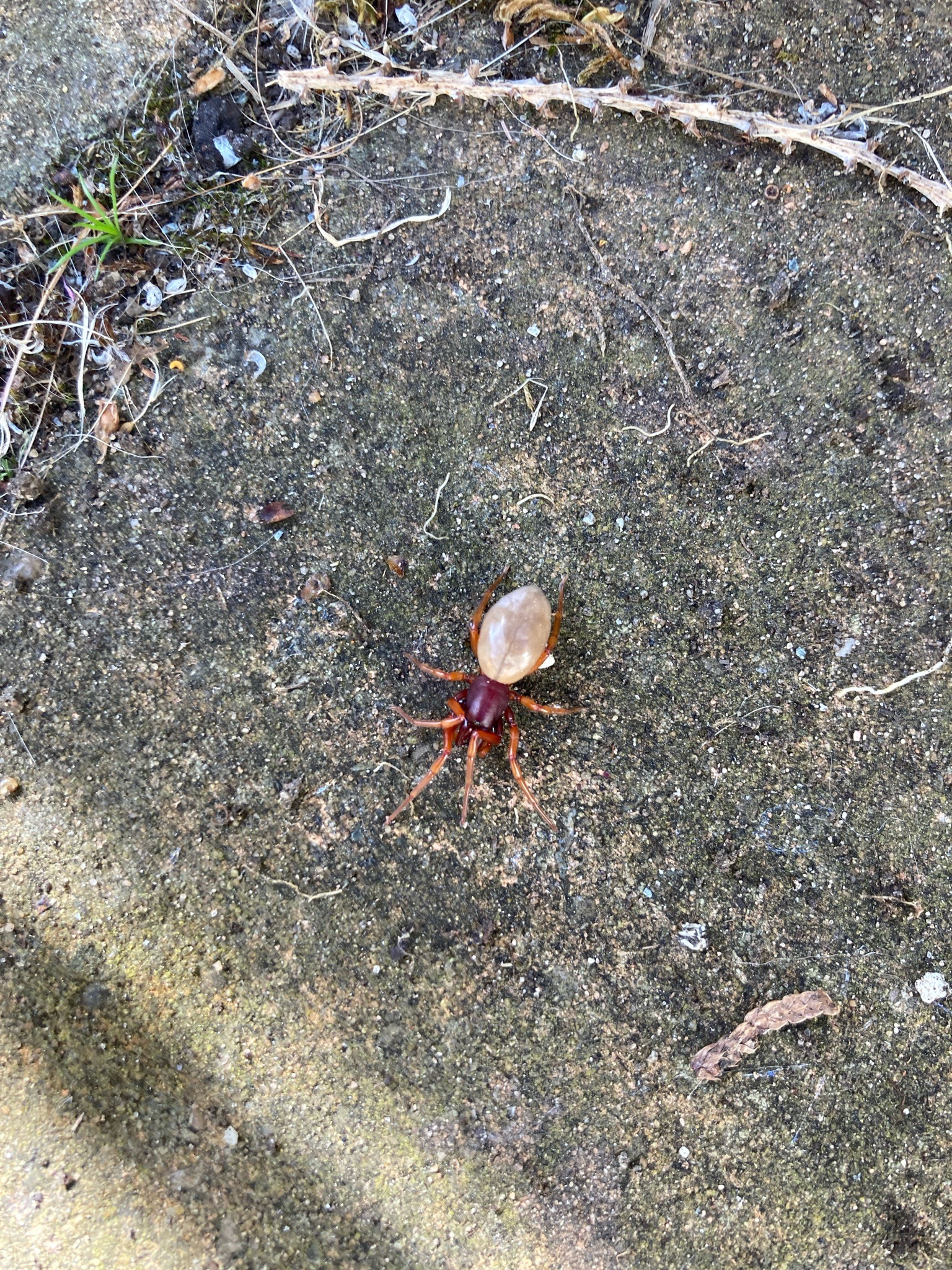
Community identification
Woodlouse Hunter Spider
Dysdera crocata
- Order & Family
- Araneae: Dysderidae
- Size
- Body length 9–15 mm (excluding legs); females are generally larger than males.
Natural Habitat
Typically found in damp, dark locations such as under rocks, logs, leaf litter, and bricks close to woodlouse populations.
Diet & Feeding
Specializes in eating woodlice (sowbugs/pillbugs), using its large chelicerae to pierce their hard exoskeletons.
Behavior Patterns
A nocturnal ground hunter that does not spin webs to catch prey. It spends daylight hours in a silk retreat.
Risks & Benefits
Benefits the ecosystem by controlling crustacean populations. While its large fangs can deliver a painful bite to humans if handled, its venom is not medically significant.