
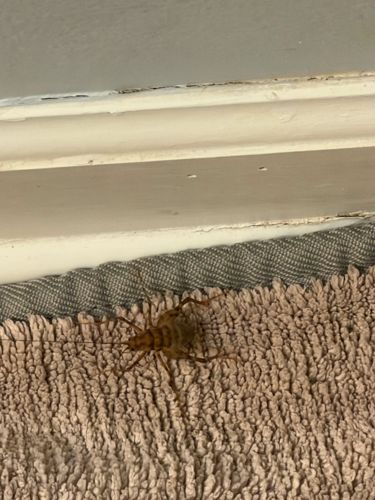
Antlion larva (or 'doodlebug')
Myrmeleontidae (larva)
- Order & Family
- Neuroptera, Myrmeleontidae
- Size
- Typically 0.5 - 1.5 cm (0.2 - 0.6 inches) in length, depending on the species and developmental stage.
Natural Habitat
Sandy or dusty areas, often under overhangs, eaves, or in loose soil where they can construct their pitfall traps. Indoors, they might be found in dusty, undisturbed areas.
Diet & Feeding
Predatory; they feed on small insects, primarily ants, that fall into their pitfall traps. They lie in wait at the bottom of the cone-shaped pit and ambush prey with their large, sickle-shaped jaws.
Behavior Patterns
Antlion larvae are known for their unique pitfall trap construction. They dig a conical pit in loose soil or sand and bury themselves at the bottom, leaving only their jaws exposed. When an insect (such as an ant) tumbles into the pit, the antlion larva grabs it. They are largely sedentary once a pit is established, but will move to a new location if disturbed or if prey is scarce. They undergo complete metamorphosis, turning into a winged adult that resembles a dragonfly.
Risks & Benefits
No risks to humans; they do not bite or sting people. Their primary benefit is as a natural predator of ants and other small insects, making them beneficial in controlling pest populations in their natural habitats.