
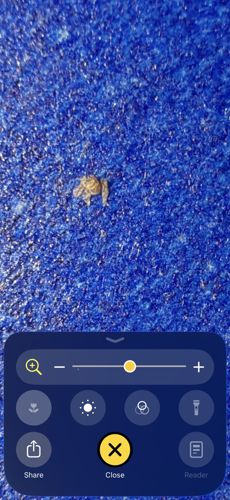
Jumping Spider
Salticidae (Family level identification)
- Order & Family
- Araneae: Salticidae
- Size
- 1 mm to 25 mm (0.04 to 1.0 inch) depending on the species.
Natural Habitat
Widely distributed across many environments including gardens, forests, grasslands, and frequently found inside residential homes on walls, ceilings, and windowsills.
Diet & Feeding
Strictly carnivorous; they primarily hunt small insects like flies, moths, and other small spiders.
Behavior Patterns
Unlike most spiders, they do not build webs to catch food. They are active daylight hunters with excellent vision and use a silk 'safety line' before jumping on prey. They are known for their curiosity toward humans.
Risks & Benefits
Benefits: Significant natural pest control as they eat various indoor insects. Risks: Effectively harmless to humans; while they can bite if extremely provoked or handled roughly, their venom is not medically significant and is generally less painful than a bee sting.