
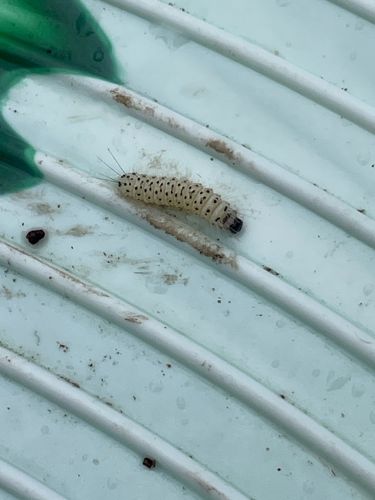
European Corn Borer (larva)
Ostrinia nubilalis
- Order & Family
- Lepidoptera, Crambidae
- Size
- Larvae can grow up to 20-30 mm (0.8-1.2 inches) in length.
Natural Habitat
Agricultural fields, particularly cornfields, and areas where host plants are cultivated.
Diet & Feeding
The larvae primarily feed on corn, but can also infest other thick-stemmed plants such as peppers, potatoes, beans, celery, cotton, and various weeds.
Behavior Patterns
The European corn borer typically has 1-4 generations per year, depending on the climate. Larvae bore into plant stems, especially corn, causing damage. They overwinter as mature larvae inside host plant residues. Pupation occurs in the spring, and moths emerge to lay eggs on host plants. The larvae are known for their boring behavior.
Risks & Benefits
Risks: The European corn borer is a significant agricultural pest, causing considerable economic damage to corn crops and other susceptible vegetables by reducing yield and quality. Benefits: While a pest, it is also a food source for natural predators and parasites, contributing to local food webs. However, its overall impact is negative due to crop damage.