
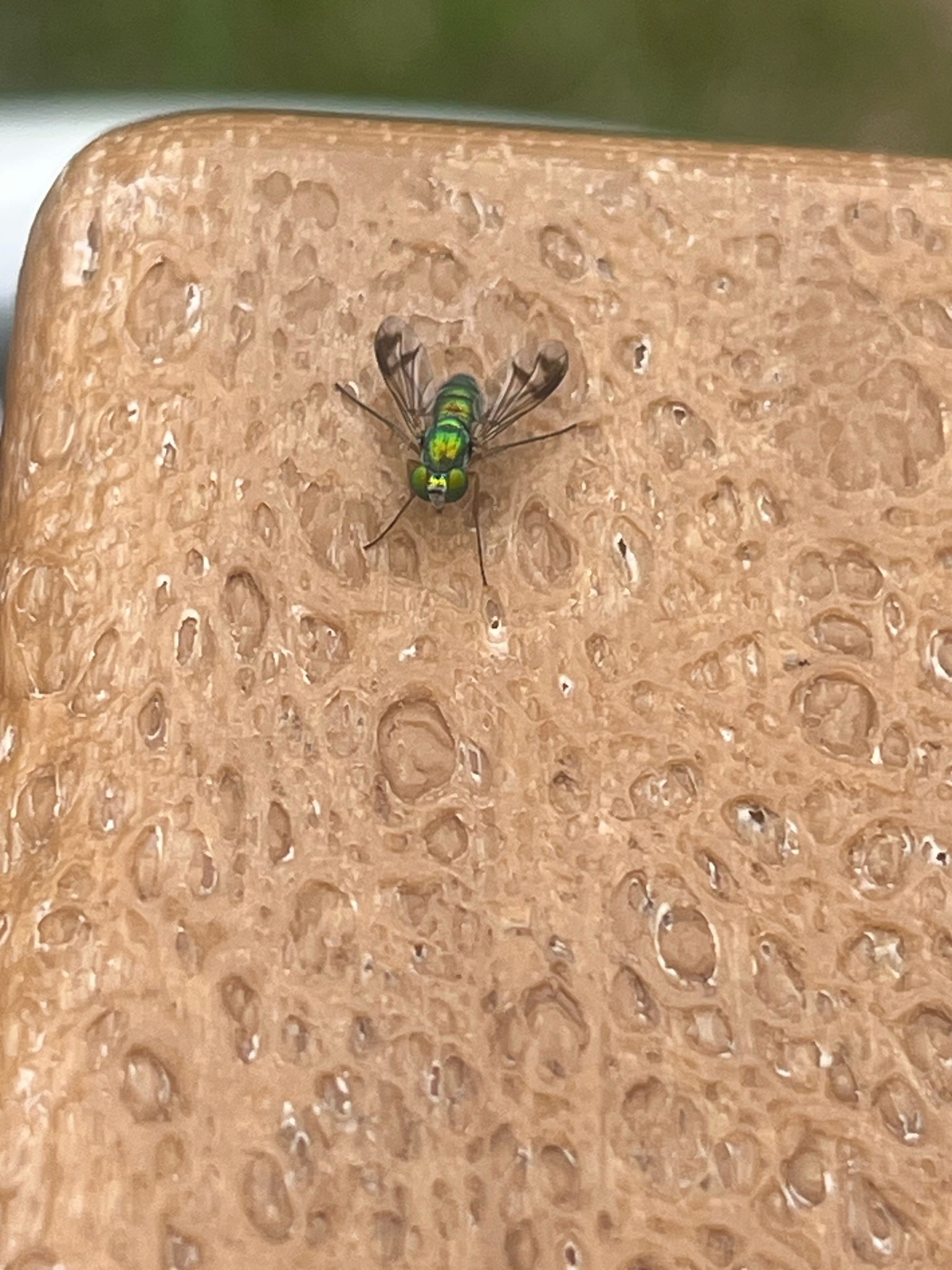
Community identification
Long-legged Fly
Condylostylus spp.
- Order & Family
- Order: Diptera; Family: Dolichopodidae
- Size
- 3mm to 9mm in length
Natural Habitat
Typically found in moist environments such as gardens, meadows, and areas near swamps or woodlands, often seen on broad leaves
Diet & Feeding
Predatory; adults feed on small, soft-bodied insects like aphids, thrips, midges, and mites
Behavior Patterns
Diurnal and highly active; they use their long legs to stand tall while scanning for prey and are known for their fast, darting flight patterns and elaborate mating displays
Risks & Benefits
Harmless to humans as they do not bite or sting; highly beneficial to the ecosystem and gardens as they provide natural pest control by eating agricultural pests