
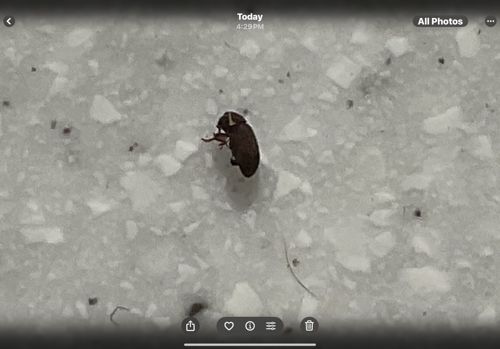
Drugstore Beetle, Bread Beetle, Biscuit Beetle
Stegobium paniceum
- Order & Family
- Order: Coleoptera, Family: Ptinidae (formerly in Anobiidae)
- Size
- Typically 2.25 - 3.5 mm (0.09 - 0.14 inches) in length.
Natural Habitat
Primarily found indoors in human dwellings, pantries, food storage areas, warehouses, pharmacies, and museums. They thrive in warm, humid conditions near their food sources.
Diet & Feeding
Extremely varied diet, including grains, spices, processed food products (e.g., bread, pasta, cereals, cookies), dried pet food, drugs (hence 'drugstore' beetle), leather, hair, and even books.
Behavior Patterns
Drugstore beetles fly readily and are attracted to light. They are often found around food sources, especially those that are dried or stored. Females lay eggs directly on food materials. Larvae bore into food items, consuming them as they grow. The entire life cycle can be completed in about 2-3 months under optimal conditions (warm temperatures and high humidity). They are nocturnal.
Risks & Benefits
Risks: Significant nuisance and destructive pest of stored food products, museum collections, and pharmaceutical goods. Can cause considerable economic losses due to contamination and destruction of products. They do not bite or sting and are not known to transmit diseases to humans. Benefits: Generally none associated with human environments; in natural ecosystems, they play a minor role as decomposers of dried organic matter.