
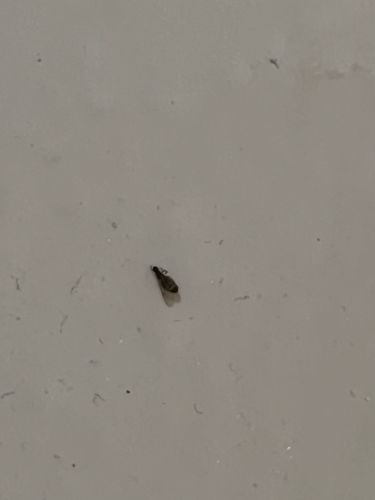
Winged Termite (Alate)
Various species, depending on location and type (e.g., Reticulitermes flavipes for Eastern Subterranean Termite, Cryptotermes cavifrons for typically encountered drywood termites). Without more detail or geographical context, a specific scientific name isn't possible.
- Order & Family
- Order Isoptera (now subsumed under Blattodea, the order of cockroaches); Family Rhinotermitidae (subterranean termites) or Kalotermitidae (drywood termites) are common families for pest species.
- Size
- Typically 1/4 to 1/2 inch (6-12 mm) including wings, though specific species can vary slightly.
Natural Habitat
Found globally in many terrestrial environments, often in close proximity to human dwellings as they seek out wooden structures to establish new colonies. Alates are seen outdoors during swarming events but are looking for protected, moist wood within which to nest.
Diet & Feeding
Cellulose from wood and other plant materials. They do not feed during their swarming stage. The primary diet of a termite colony includes wood, paper, fabric, and other cellulose-containing materials.
Behavior Patterns
Termite alates (winged reproductives) emerge from established colonies in large swarms, typically after rain, to mate and establish new colonies. They are attracted to light. Once they find a mate and a suitable location, they shed their wings and begin to excavate a new nest.
Risks & Benefits
Risks: Significant economic pests, causing extensive damage to homes, furniture, and other wooden structures by consuming cellulose. They can compromise the structural integrity of buildings. Benefits: In natural ecosystems, termites play a crucial role as decomposers, breaking down dead wood and plant matter, thereby recycling nutrients in the environment.