
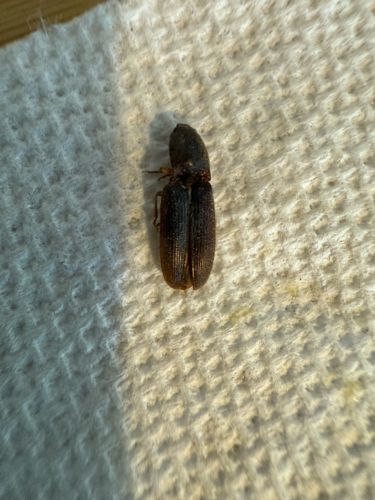
Click Beetle
Elateridae (family)
- Order & Family
- Order: Coleoptera, Family: Elateridae
- Size
- Most click beetles range from 2 to 60 mm (approximately 0.08 to 2.4 inches) in length, with the majority being in the 10-30 mm range.
Natural Habitat
Click beetles are found in a wide variety of habitats, including forests, grasslands, agricultural fields, gardens, and urban areas. Adults are often found on vegetation or near lights at night. Larvae (wireworms) live underground in soil, rotten wood, or under bark, depending on the species.
Diet & Feeding
Adult click beetles generally feed on nectar, pollen, decaying plant matter, or sometimes small insects. The larvae, commonly known as wireworms, have a more varied diet; many are omnivorous, feeding on plant roots (including crops), seeds, and organic matter in the soil. Some wireworm species are predatory on other soil invertebrates.
Behavior Patterns
Click beetles are known for their unique 'clicking' mechanism. When disturbed or overturned, they can arch their back and forcefully snap a spine on their prosternum into a groove on their mesosternum, producing an audible 'click' and causing them to flip into the air. This behavior helps them right themselves or escape predators. Larvae typically live in soil or decaying wood and are usually nocturnal.
Risks & Benefits
The main risk associated with click beetles comes from their larval stage, wireworms. Certain wireworm species can be significant agricultural pests, damaging crops by feeding on roots, tubers, and seeds, leading to economic losses. Some adult click beetles may be attracted to homes by lights but are harmless to humans. Environmentally, some species play a role in decomposition, and predatory wireworms can help control other soil pests.