
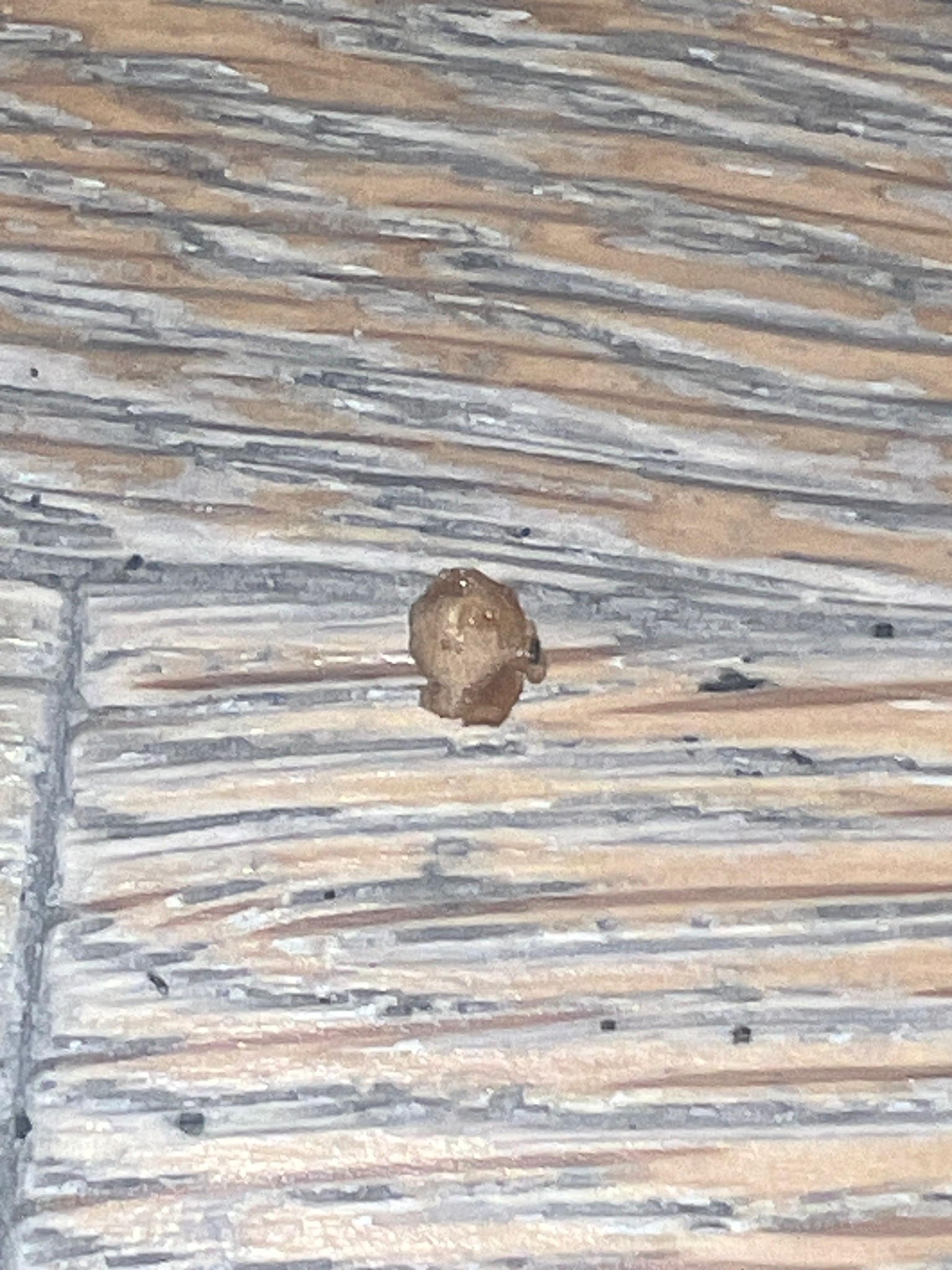
Community identification
Tick (likely an engorged hard tick)
Ixodidae; species indeterminate from the image
- Order & Family
- Order Ixodida; family Ixodidae
- Size
- About 2–3 mm unfed, expanding to roughly 5–10 mm or more when engorged, depending on species and sex.
Natural Habitat
Leaf litter, grasses, shrubs, woodland edges, and areas frequented by mammals or birds. It may appear indoors after being carried in by a host.
Diet & Feeding
Feeds exclusively on blood from vertebrate hosts, including mammals, birds, and reptiles. The enlarged abdomen indicates recent or ongoing feeding.
Behavior Patterns
Typically waits on vegetation and attaches to passing hosts; adults and nymphs may remain attached for several days. After feeding, females detach and lay a large egg batch.
Risks & Benefits
Some species transmit pathogens such as Lyme disease bacteria, babesiae, or ehrlichiae; avoid handling and remove promptly with fine-tipped tweezers. Ticks also serve as food for predators and are part of parasite-host ecosystem dynamics.