
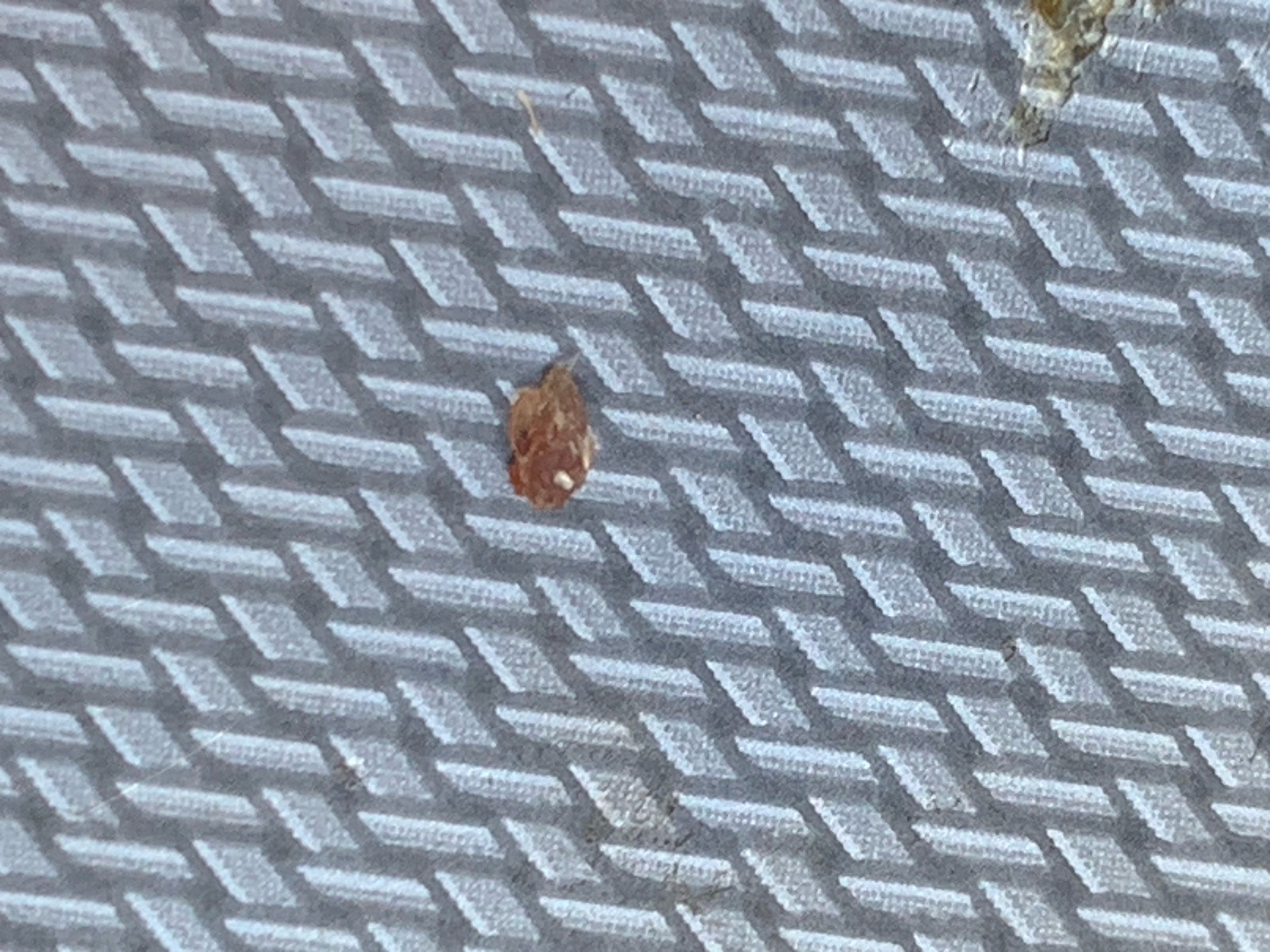
Community identification
Bed bug
Cimex lectularius
- Order & Family
- Hemiptera; Cimicidae
- Size
- Adults are about 4–7 mm long, broadly oval, and flattened; they enlarge and redden after feeding.
Natural Habitat
Beds, furniture seams, luggage, and cracks near sleeping areas; widespread in homes, hotels, and shelters.
Diet & Feeding
Feeds exclusively on blood, primarily from humans, using piercing-sucking mouthparts; it usually feeds at night.
Behavior Patterns
Nocturnal and hiding-oriented, bed bugs shelter in crevices during daylight. Females lay eggs in protected cracks, and multiple nymphal stages require blood meals to molt.
Risks & Benefits
Bites cause itchy, sometimes blistering skin reactions but bed bugs are not established vectors of disease. They provide little meaningful ecological benefit and can cause substantial anxiety, expense, and infestations.