
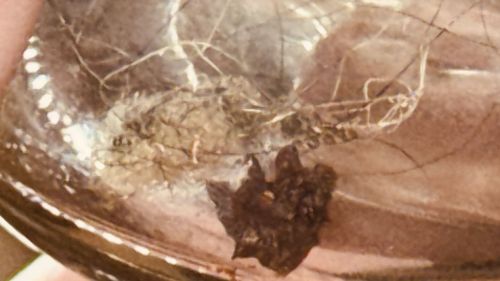
Case-bearing Clothes Moth Larva
Tinea pellionella
- Order & Family
- Lepidoptera (moths and butterflies), Tineidae (fungus moths, clothes moths, etc.)
- Size
- Larvae are typically 10-14 mm (0.4-0.55 inches) long when fully grown. Adults have a wingspan of 9-16 mm (0.35-0.63 inches).
Natural Habitat
Indoors, particularly in dark, undisturbed areas such as closets, attics, storage chests. They prefer natural fibers like wool, silk, fur, feathers, and lint.
Diet & Feeding
Keratin-containing materials, including wool, fur, feathers, silk, felt, lint, and sometimes synthetic blends if mixed with natural fibers. They also feed on dead insects and hair.
Behavior Patterns
The larva constructs a portable silken case, often incorporating bits of the material it is feeding on, which it carries with it for protection. It can retreat entirely into this case if disturbed. They move slowly and are typically found in dark, undisturbed areas. The entire lifecycle from egg to adult can take 2-3 months under optimal conditions.
Risks & Benefits
Potential risks: Significant pests of stored natural fibers, causing damage to clothing, carpets, upholstery, and museum specimens. They do not pose a direct health risk to humans (e.g., bites or stings). Benefits: None noted in human-dominated environments; they are considered purely a pest.