
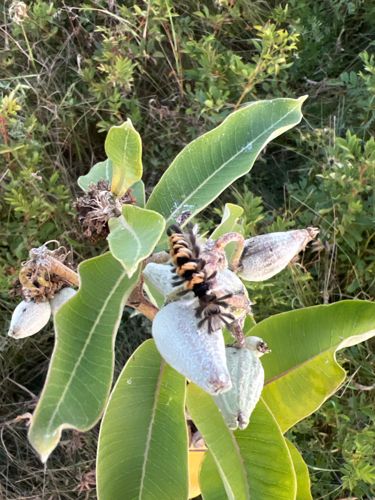
Milkweed Tussock Moth Caterpillar (also known as Milkweed Tiger Moth Caterpillar)
Euchaetes egle
- Order & Family
- Order: Lepidoptera, Family: Erebidae (formerly Arctiidae)
- Size
- Caterpillars can grow up to 1-1.5 inches (2.5-3.8 cm) in length. Adult moths have a wingspan of about 1.4-1.8 inches (3.5-4.5 cm).
Natural Habitat
Found in areas where milkweed plants grow, including meadows, fields, roadsides, gardens, and open woodlands. The plant in the image appears to be a type of milkweed.
Diet & Feeding
Caterpillars primarily feed on milkweed plants (Asclepias species). Adult moths feed on nectar from various flowers.
Behavior Patterns
As caterpillars, they feed on milkweed plants. This sequestration of toxins makes them unpalatable to predators. After pupating, they emerge as robust adult moths. Adults are nocturnal, active during the night, and are attracted to lights. They are known for their distinct 'click' sound produced by specialized organs, thought to be used in defense or communication.
Risks & Benefits
Potential Risks: The caterpillars are often fuzzy and brightly colored, which can sometimes lead people to want to touch them. However, their hairs can cause skin irritation or allergic reactions in sensitive individuals. The toxins they ingest from milkweed can also make them mildly toxic if ingested by pets or small children, though this is rare. Potential Benefits: They contribute to the ecosystem as herbivores, converting plant material into animal biomass. While they can defoliate milkweed, they typically do not cause significant harm to the overall milkweed population. Adult moths can act as pollinators.