
Achemon Sphinx Moth Identification Guide
A large, streamlined hawk moth with olive-pink mottled wings, often seen hovering at flowers near grapevines at dusk.
Read the full Achemon Sphinx Moth encyclopedia entry →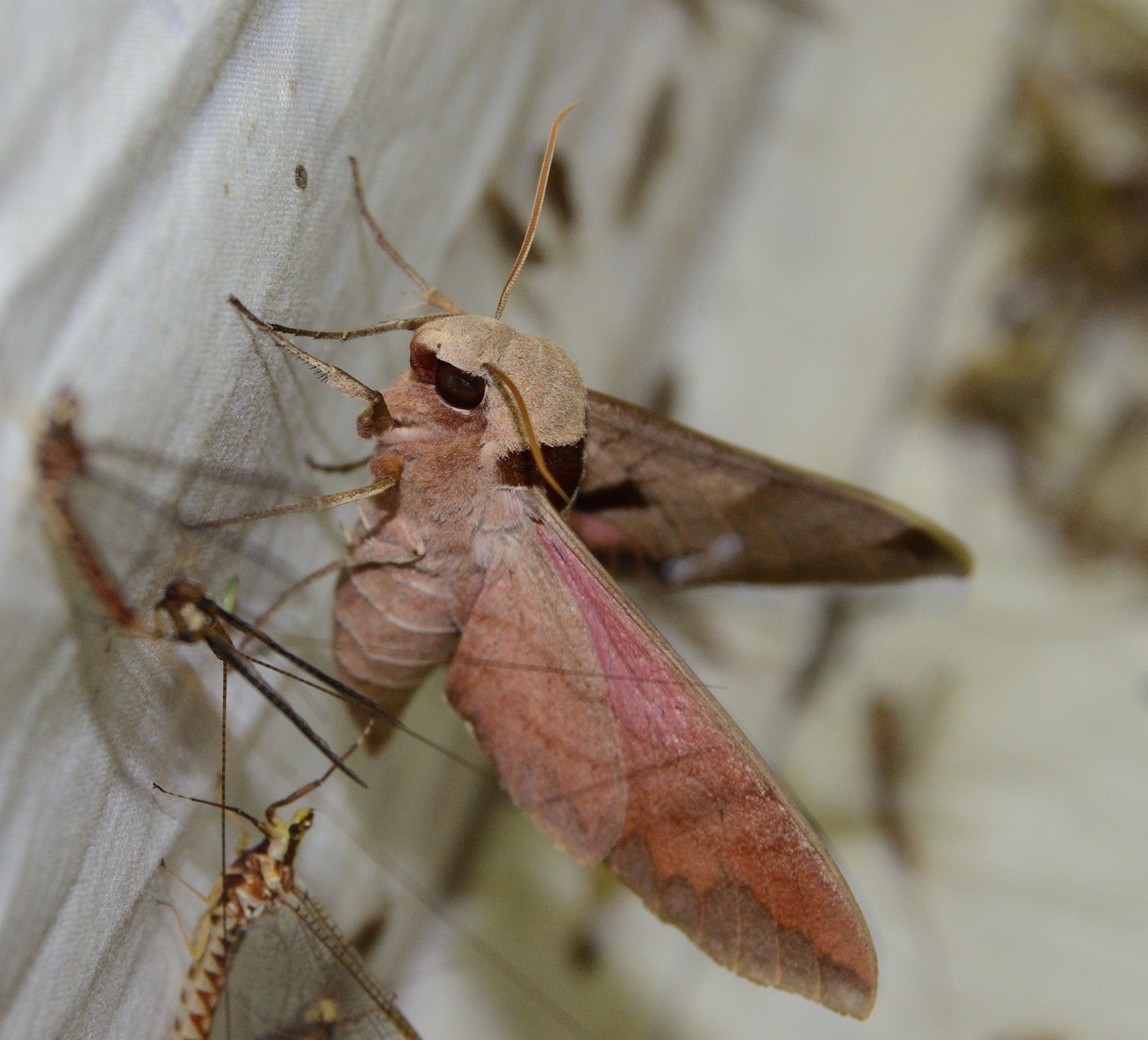
Key Visual Features
The Achemon Sphinx Moth is a large, heavy-bodied hawk moth with a wingspan of about 75-95mm.
- Forewings: Mottled olive-brown to pinkish-tan, marked with darker brown scalloped patches and a pale, somewhat translucent spot near the center of the wing.
- Hindwings: Pink to rosy, crossed by two or three dark wavy bands near the outer margin - usually only visible in flight or when the moth is disturbed.
- Body: Robust and streamlined, with a tapered abdomen typical of sphinx moths, built for fast, powerful flight.
- Antennae: Thick and tapered rather than feathery, a feature shared by all hawk moths.
- Wing shape: Long, narrow, and swept-back, suited to rapid, hovering flight.
Where and When You'll See It
This moth is closely associated with grapevines and Virginia creeper, its larval host plants, and is often found in vineyards, woodland edges, and gardens where these plants grow. Adults are strong-flying and strictly nocturnal, hovering at flowers to feed at dusk and after dark much like a hummingbird. The main flight period runs from late spring through summer, with adults regularly drawn to lights at night.
Similar-Looking Species
- Other Eumorpha sphinx moths - share a similar overall shape and size, distinguished mainly by subtle differences in wing pattern and color intensity.
- Pandorus Sphinx - shows more greenish tones overall and a different hindwing coloration compared to the pinker, olive-brown Achemon.
- Waved Sphinx - has grey, finely lined wings rather than the pink and olive-brown tones of the Achemon Sphinx.
Life Cycle & Behavior
Caterpillars are large, smooth-bodied, and often green or pinkish-brown with diagonal side stripes, feeding on the leaves of grapevine and Virginia creeper through summer. When mature, they burrow into loose soil to pupate, overwintering underground as a pupa before emerging as adults the following season. In warmer parts of the range, a partial second generation may occur, extending the flight period into early autumn.
Quick ID Checklist
- Large hawk moth, wingspan up to about 9.5cm
- Olive-brown to pinkish-tan mottled forewings with a pale central spot
- Pink hindwings with dark wavy bands (visible mainly in flight)
- Robust, streamlined body with a tapered abdomen and thick antennae
- Found near grapevines, hovers at flowers at dusk
Frequently asked questions
What is the easiest way to recognize an Achemon Sphinx Moth?
Look for a large, robust moth with mottled olive-brown and pink forewings, a pale central wing spot, and pink hindwings crossed by dark wavy bands, often seen hovering at flowers at dusk.
Where is this moth most likely to be found?
It is closely tied to grapevines and Virginia creeper, so vineyards, gardens, and woodland edges with these plants are the best places to look.
How can I tell it apart from other sphinx moths?
The combination of olive-pink mottled forewings and pink, dark-banded hindwings helps separate it from greener or greyer relatives like the Pandorus or Waved Sphinx.
When are Achemon Sphinx Moths active?
They are nocturnal, most active from late spring through summer, and are frequently seen hovering at flowers after dusk or attracted to lights at night.