Ailanthus Silkmoth (Cynthia Moth) Identification Guide
Identify this large brown silk moth by its crescent-shaped wing markings and pale wavy border bands.
Read the full Ailanthus Silkmoth (Cynthia Moth) encyclopedia entry →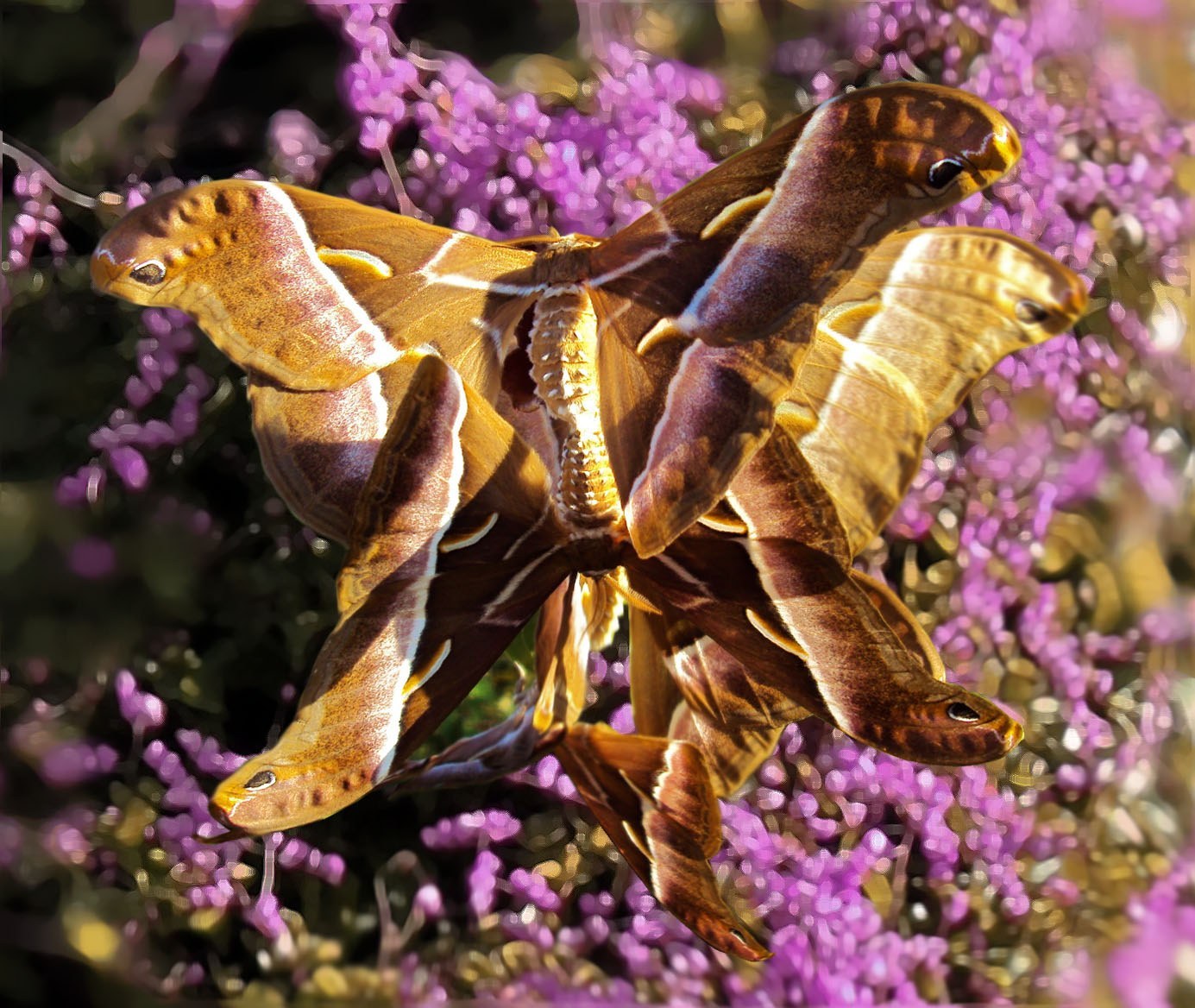
Key Visual Features
The Ailanthus Silkmoth (Samia cynthia), also called the Cynthia Moth, is a large silk moth with a wingspan of about 3.5 to 5.5 inches (9 to 14 cm). Key features include:
- Broad wings in shades of olive-brown to gray-brown, each marked with a pale, crescent-moon or comma-shaped translucent spot near the center
- A wavy, pale band (often whitish to cream) running parallel to the outer wing margin on both forewings and hindwings, bordered by darker brown shading
- Pointed, slightly hooked forewing tips, giving the wings an angular rather than fully rounded outline
- A robust, furry brown-gray body
- Large, feathery (bipectinate) antennae, notably broader and more comb-like in males than females
- Overall muted, earth-toned coloring without the bright eyespots seen in some other giant silk moths
At rest, the wings are held flat and spread, prominently displaying the pale crescent markings and wavy border bands used for camouflage against bark and dry leaves.
Where and When You'll See It
Native to Asia, the Ailanthus Silkmoth was introduced to parts of North America and Europe, where it has become established in areas with its namesake host tree, the tree-of-heaven (Ailanthus altissima), as well as other trees like lilac and sumac. It favors urban and suburban areas, parks, vacant lots, and woodland edges — anywhere its host trees have taken root. Adults are nocturnal, do not feed, and are typically seen from mid-summer into early fall, with timing varying by region and generation number (some areas see two generations per year).
Similar-Looking Moths
- Chinese Oak Silkmoth: Similarly large and brownish, but usually shows more prominent, rounder eyespots with distinct colored rings rather than the Ailanthus Silkmoth's simpler crescent-shaped markings.
- Polyphemus Moth: Tan-brown with large, bold purple-blue and yellow eyespots, quite different from the more subdued crescent markings of the Ailanthus Silkmoth.
- Promethea Moth: Smaller overall, with more reddish-brown coloring and a different wing shape, lacking the Ailanthus Silkmoth's pale wavy border band.
Quick ID Checklist
- Large moth, wingspan roughly 3.5–5.5 inches, olive-brown to gray-brown wings
- Pale crescent-shaped translucent spot on each wing (not a full round eyespot)
- Wavy pale band running near the outer wing edge
- Angular, slightly hooked forewing tips
- Found near tree-of-heaven and similar host trees, active at night in summer into early fall
Frequently asked questions
Why is it called the Ailanthus Silkmoth?
It gets this name because its caterpillars commonly feed on the tree-of-heaven (Ailanthus altissima), one of its main host plants in areas where the species has become established.
How can I tell this species apart from other large brown silk moths?
Look closely at the wing markings: the Ailanthus Silkmoth shows pale crescent-moon or comma-shaped translucent spots rather than the fuller round eyespots seen in relatives like the Polyphemus or Chinese Oak Silkmoth.
Is the Ailanthus Silkmoth native to North America?
No, it originates from Asia and was introduced to parts of North America and Europe, where it has since become established in areas with suitable host trees.
When during the year are adults most commonly seen?
Adults are typically observed from mid-summer into early fall, with the exact timing depending on region and whether the local population produces one or two generations per year.
Ailanthus Silkmoth (Cynthia Moth) identified by the community
Recent Ailanthus Silkmoth (Cynthia Moth) finds identified with Bug Identifier.