
Amazonian Giant Centipede Identification Guide
Identify the world's largest centipede species by its enormous size and dark, glossy segmented body.
Read the full Amazonian Giant Centipede encyclopedia entry →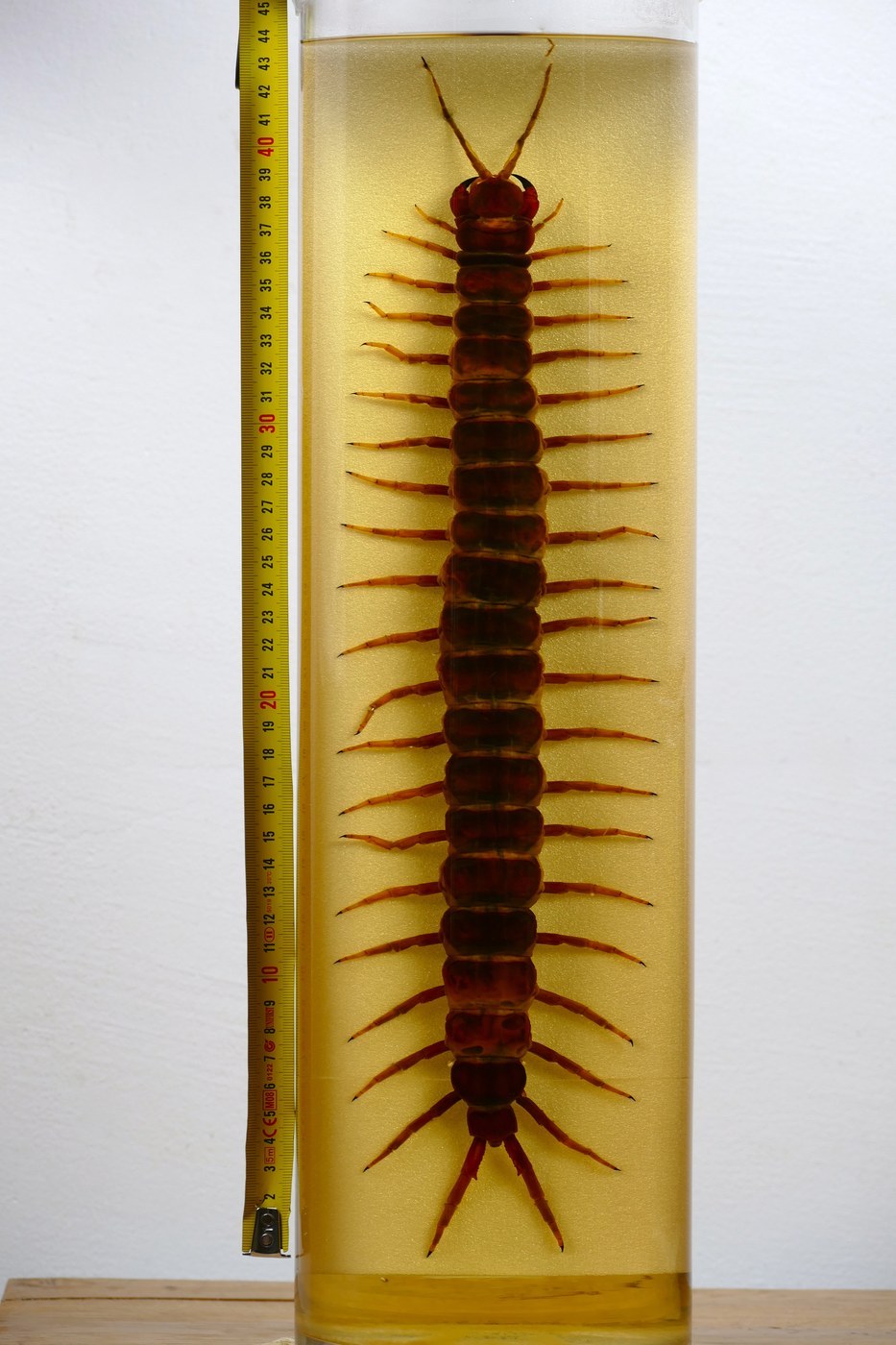
Key Visual Features
The Amazonian giant centipede (Scolopendra gigantea) is recognized as the largest centipede species in the world, and its sheer scale is the first identifying clue.
- Size: Can reach 12 inches (30 cm) or more in length, dwarfing most other centipede species.
- Color: Typically dark reddish-brown to nearly black body segments, often with pale yellow-orange legs that contrast sharply against the dark body.
- Body shape: Long, flattened, and heavily segmented, with a robust, muscular build suited to its large size.
- Legs: One pair of legs per body segment, around 21 to 23 pairs total, with the rear pair notably thickened and elongated.
- Wings/antennae: No wings; one pair of long, thick antennae at the head.
- Markings: The strong contrast between dark body plates and pale legs is especially pronounced in this species, along with a glossy, armored-looking exoskeleton.
Where and When You'd See Them
This species is native to tropical forests and caves of northern South America and nearby Caribbean islands. It shelters in burrows, under rocks and logs, and in cave systems by day, emerging at night to move across the forest floor or cave surfaces. It favors warm, humid environments year-round and is most often encountered after dark or after rainfall, when humidity is highest.
Similar-Looking Bugs
- Other giant centipedes (Scolopendra species) share the same general body plan but are smaller, rarely exceeding 8 inches, making overall size a useful distinguishing factor.
- House centipedes are far smaller with much longer, thinner legs relative to body length and a shorter body overall.
- Millipedes have two leg pairs per segment, a rounder body, and slower movement, unlike the flattened, fast-moving Amazonian giant centipede.
- Whip scorpions and vinegaroons lack the many-segmented, many-legged body plan entirely, having instead a small number of long limbs and pincers.
Quick ID Checklist
- Exceptionally large size, up to 12 inches or more
- Dark reddish-brown to black body with pale yellow-orange legs
- One pair of legs per segment, thickened and elongated rear legs
- Long, thick antennae at the head
- Found in tropical forests and caves of northern South America, active at night
Frequently asked questions
How big can an Amazonian giant centipede get?
It can reach roughly 12 inches (30 cm) or more in length, making it the largest known centipede species.
What colors help identify this centipede?
A dark reddish-brown to black body paired with noticeably paler yellow-orange legs is a strong identifying combination for this species.
Where does the Amazonian giant centipede live?
It is native to tropical forests and cave systems of northern South America and some nearby Caribbean islands.
How is it different from smaller Scolopendra centipedes?
The main distinguishing factor is size — it substantially exceeds the length of most other giant centipede species, which rarely surpass about 8 inches.