
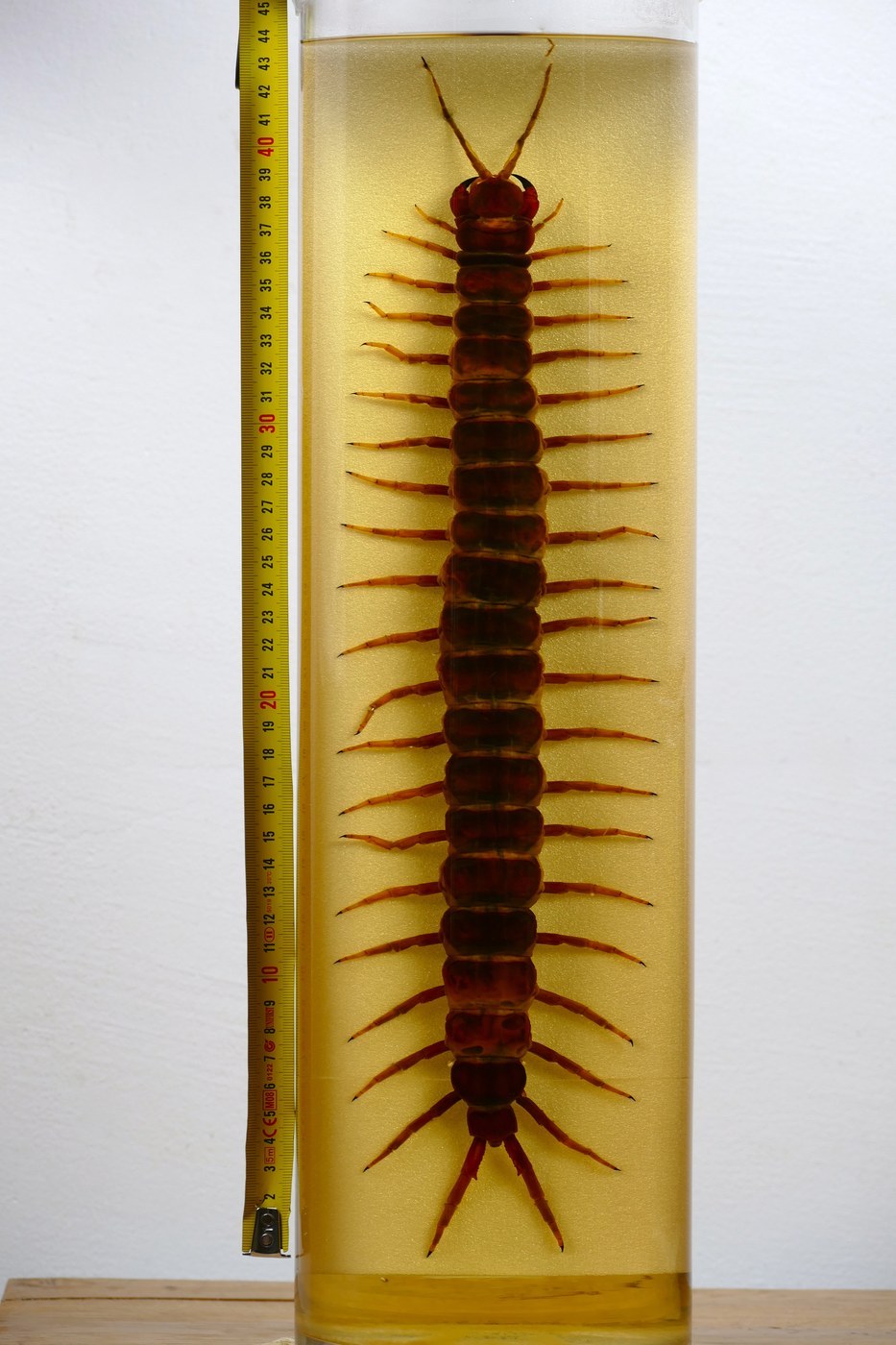
Amazonian Giant Centipede
Scolopendra gigantea
The largest centipede on the planet, a formidable dark reddish-brown predator from South American rainforests capable of capturing prey as large as bats and small reptiles.
- Size
- 26-30 cm (up to 12 in), the largest centipede species in the world
- Habitat
- Tropical rainforests and caves of northern South America and nearby Caribbean islands
- Danger
- Bites
Spotted a bug like this?
Identify any bug or insect from a photo, free.
Overview
The Amazonian giant centipede holds the distinction of being the largest centipede species in the world, with some individuals approaching 30 centimeters in length. Native to the tropical rainforests of northern South America, this powerful predator is a striking example of how large invertebrate predators can become in warm, humid environments.
Its imposing size allows it to prey on animals far larger than most other centipede species can manage, and it has been documented capturing and consuming small bats by climbing cave walls and ceilings to ambush them mid-flight or at rest. This extraordinary predatory behavior has made the species notable among researchers studying invertebrate ecology.
Despite its fearsome hunting capabilities, the Amazonian giant centipede plays a natural role as an apex invertebrate predator within its rainforest and cave ecosystems, helping to regulate populations of amphibians, reptiles, insects, and small mammals.
How to Identify
- Extremely long body, reaching up to 30 cm, making it the largest centipede species known
- Dark reddish-brown to blackish body with lighter, often yellowish or orange legs
- 21 to 23 pairs of legs, one pair per body segment, ending in sharp claws
- Large, prominent forcipules (venom claws) near the head, proportionally powerful for its size
- Long antennae used to detect prey through vibration and touch
- Segmented, armored exoskeleton that appears glossy and leathery
Habitat & Range
This species is native to tropical rainforest regions of Venezuela, Colombia, and other parts of northern South America, as well as some Caribbean islands such as Trinidad. It inhabits humid forest floor leaf litter, caves, and rocky crevices where consistent moisture and shelter are available.
Cave-dwelling populations are especially well documented for their unusual foraging behavior, using cave walls and ceilings to access flying prey. Outside of caves, individuals shelter under logs, rocks, and dense vegetation during the day, emerging to hunt at night.
Behavior & Diet
The Amazonian giant centipede is an aggressive nocturnal predator with an unusually broad diet for a centipede, including large insects, spiders, frogs, lizards, small snakes, rodents, and, most famously, bats. In caves, individuals have been observed climbing to cave ceilings, anchoring several rear legs to the rock surface, and striking upward to seize roosting or flying bats with their forcipules.
It relies on speed, powerful venom-injecting claws, and strong grip to subdue prey considerably larger than typical invertebrate quarry. As one of the top invertebrate predators in its rainforest and cave habitats, it exerts meaningful influence on local prey populations, including some vertebrate species.
Life Cycle
Females lay eggs in a concealed, humid location such as a burrow or crevice and coil protectively around the clutch, guarding and grooming the eggs to prevent fungal growth until they hatch. Hatchlings emerge as miniature versions of adults and begin adding leg pairs and segments through successive molts.
Growth to full adult size takes place over multiple molts across several years, reflecting the substantial size this species ultimately reaches. Adults can live for a number of years, continuing to molt periodically throughout their lifespan.
Frequently asked questions
Is the Amazonian giant centipede really the largest centipede in the world?
Yes, it holds the record as the largest known centipede species, with mature individuals reaching lengths of up to about 30 centimeters.
Is it true this centipede eats bats?
Yes, cave-dwelling individuals have been documented climbing cave ceilings and capturing bats using their powerful forcipules, a rare example of an invertebrate preying on flying mammals.
Where does the Amazonian giant centipede live?
It is native to tropical rainforests and caves of northern South America, including Venezuela and Colombia, as well as some nearby Caribbean islands.
What color is the Amazonian giant centipede?
It typically has a dark reddish-brown to blackish body with contrasting lighter yellowish or orange legs along its many segments.
Amazonian Giant Centipede guides
In-depth guides for identifying, understanding, and living alongside Amazonian Giant Centipede.
Other bugs you may enjoy
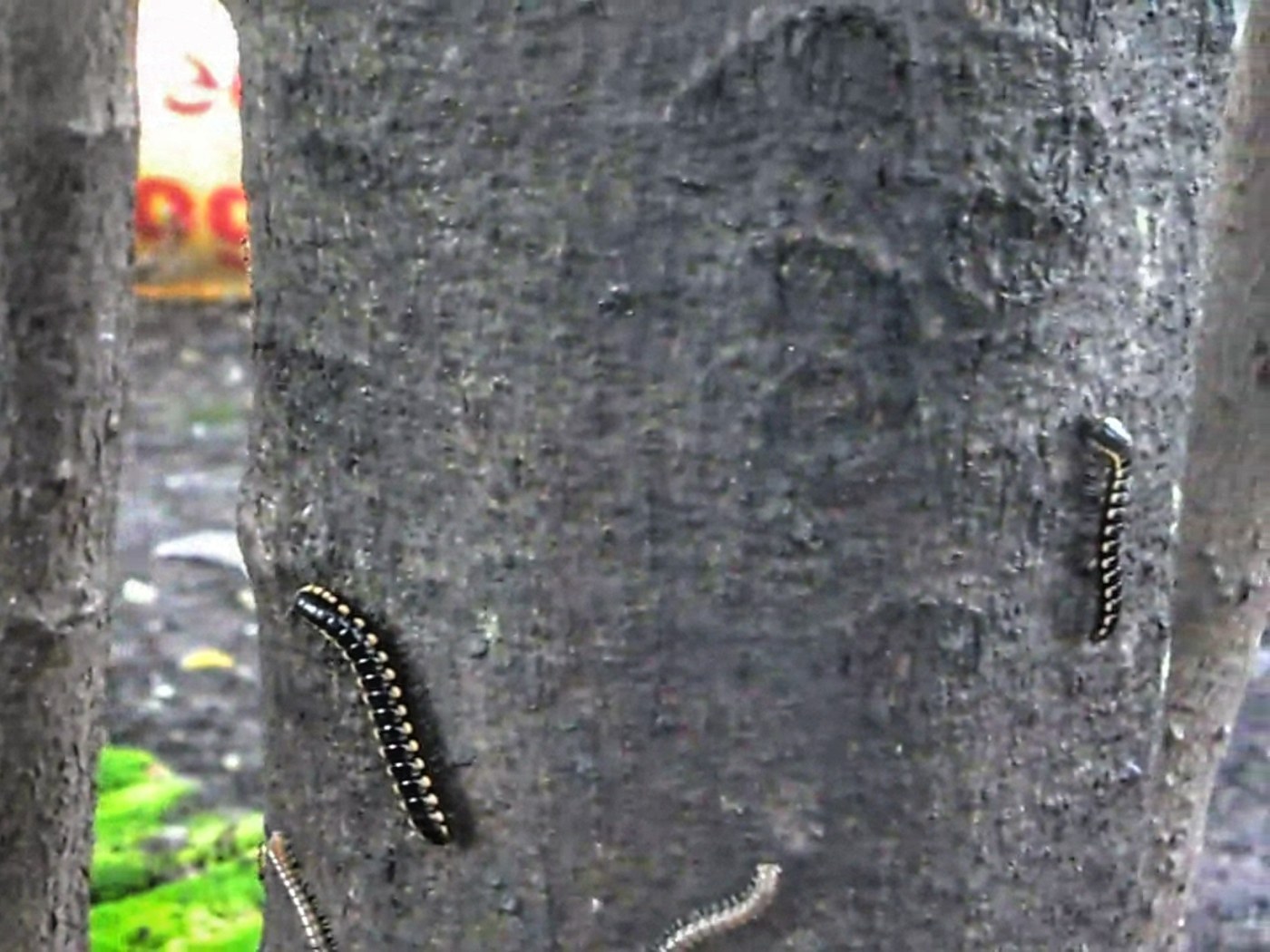
Yellow-spotted Millipede
Moist coniferous and mixed forests of the Pacific Northwest
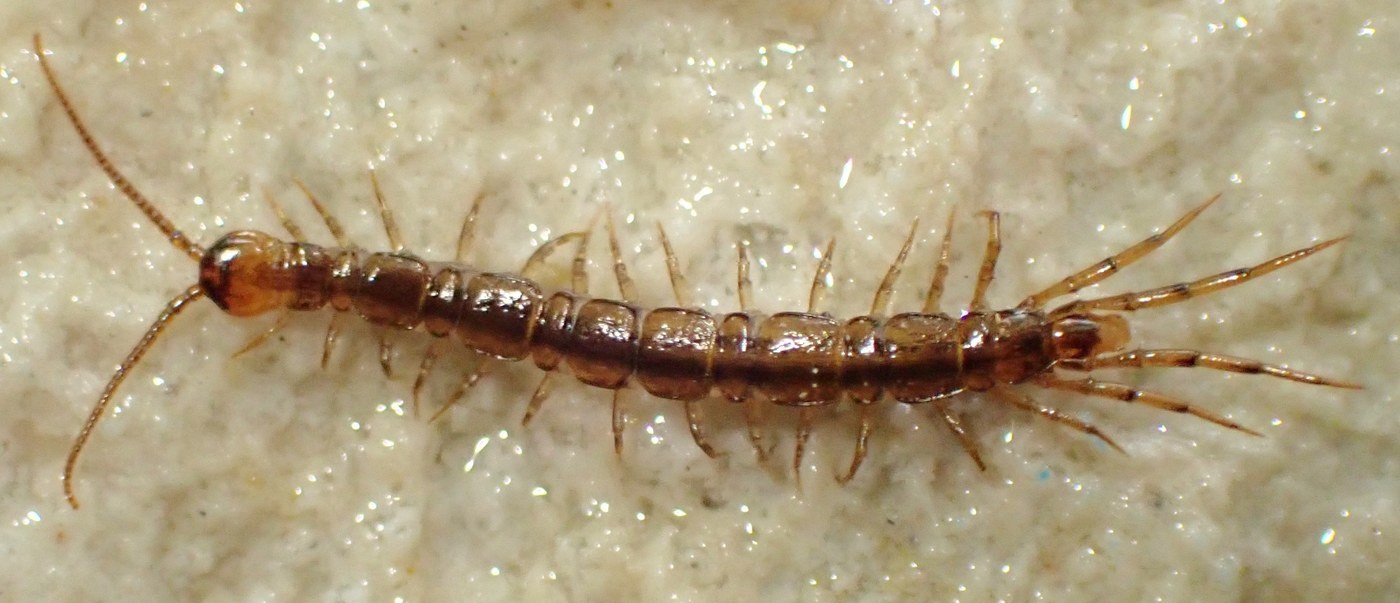
Stone Centipede
Under stones, bark, and soil in gardens and woodlands
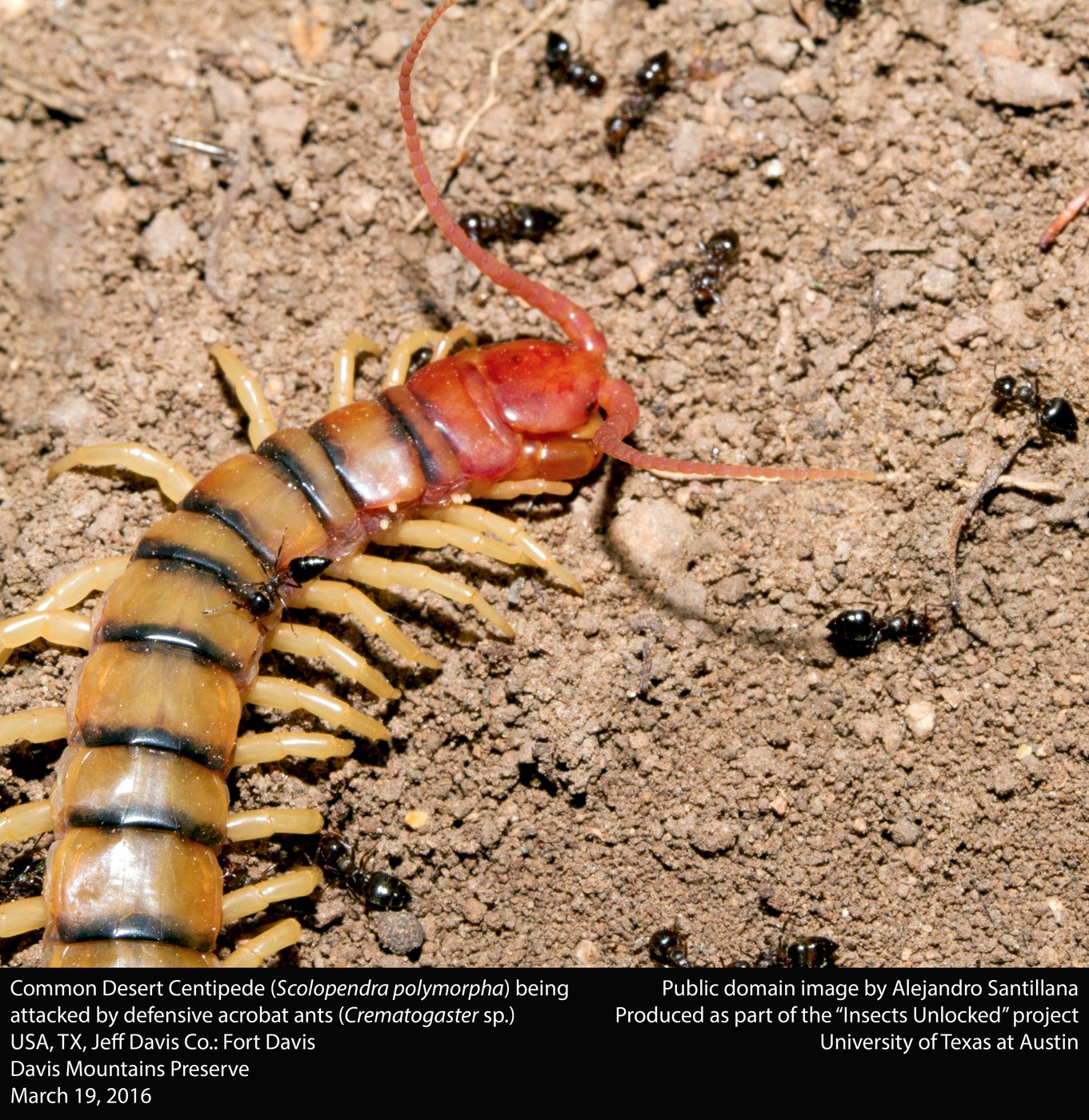
Tiger Centipede
Arid deserts, scrubland, and rocky terrain of the southwestern US and Mexico
Pill Millipede
Leaf litter, forest floors, and moist soil in temperate and tropical regions
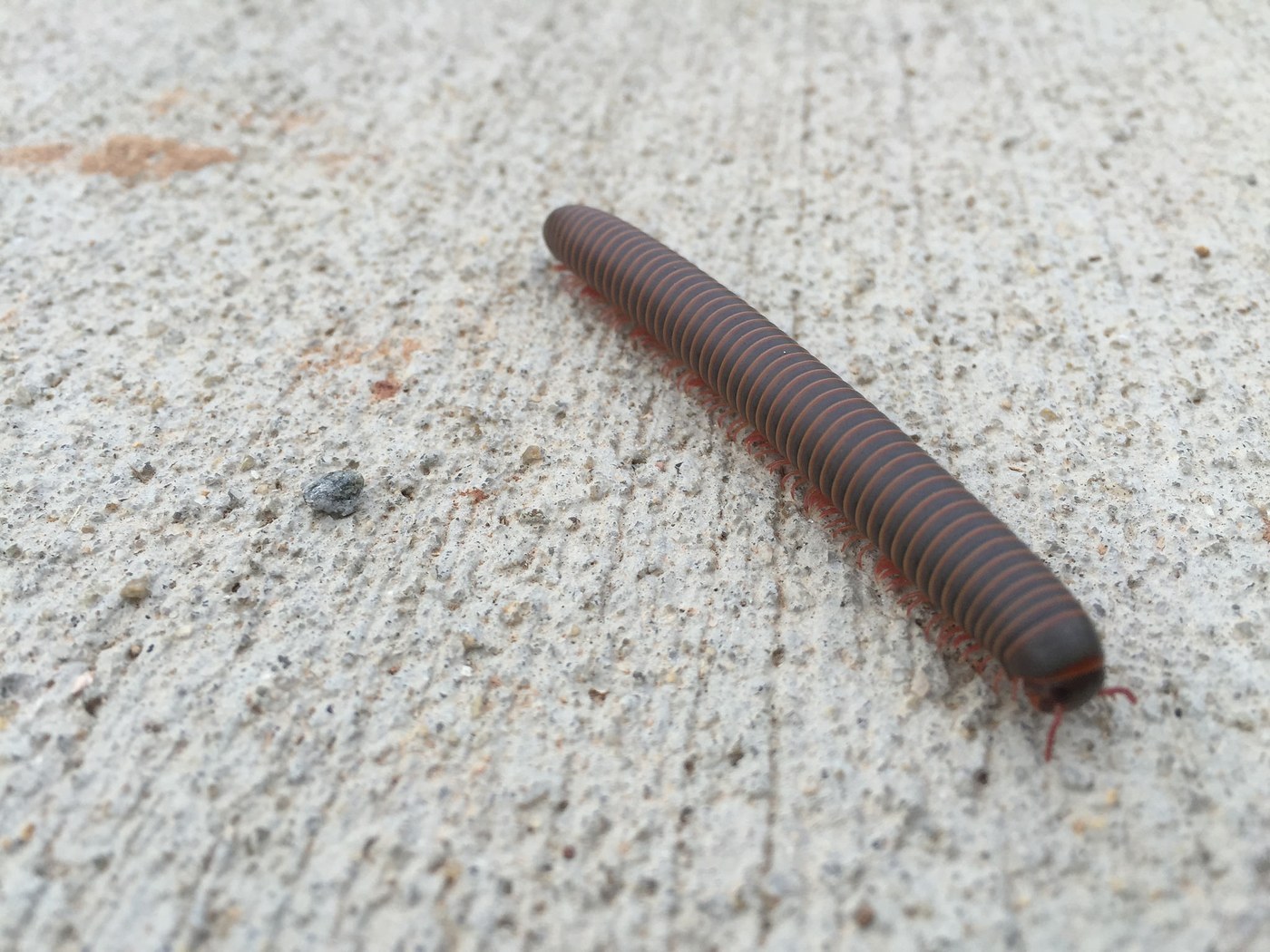
Millipede
Leaf litter, mulch, damp soil, and under logs, bark, and stones
Soil Centipede
Deep soil, leaf litter, and decaying wood
Snake Millipede
Moist soil, leaf litter, and decaying plant material
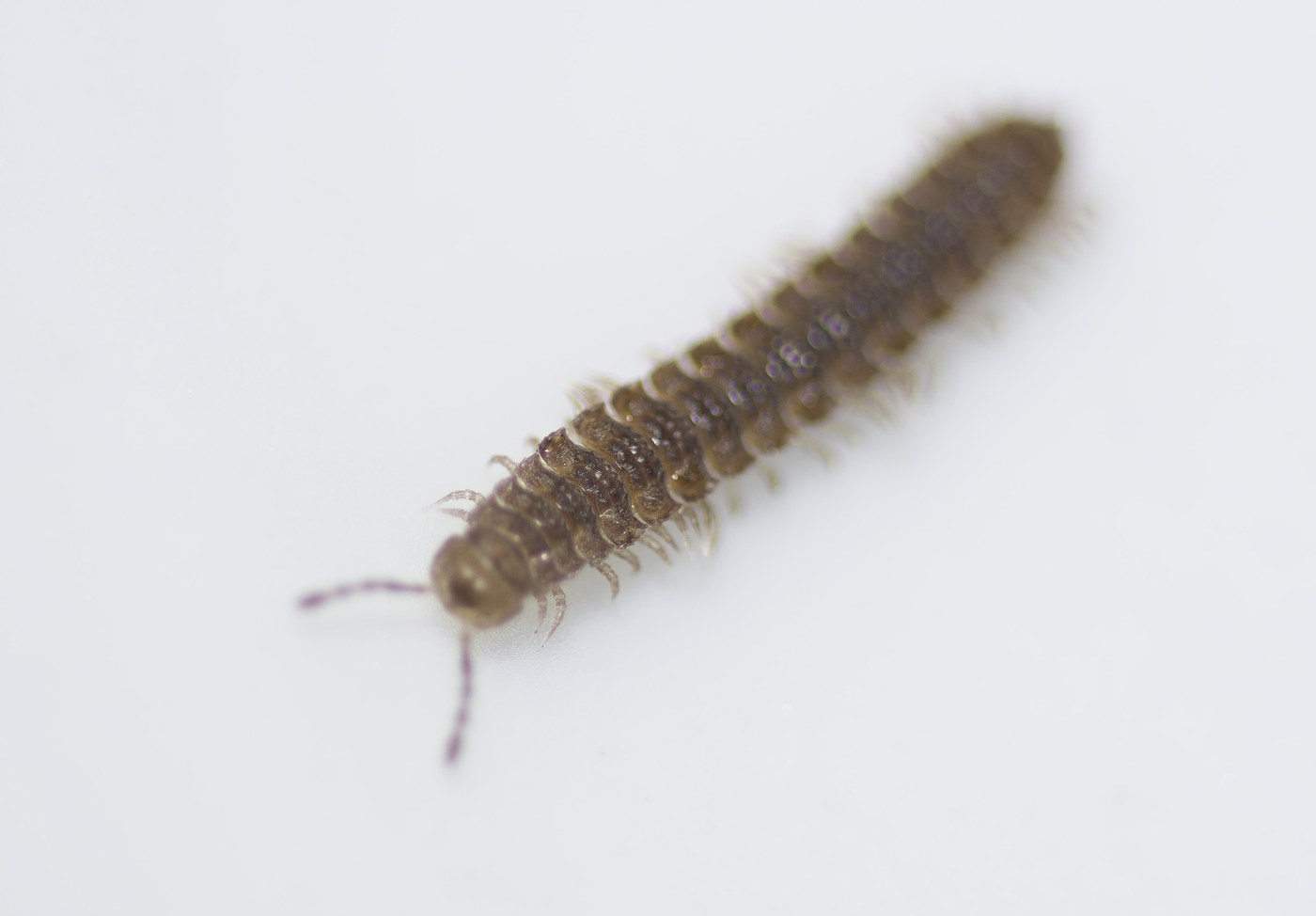
Flat-backed Millipede
Leaf litter, mulch, and damp soil in gardens and woodlands
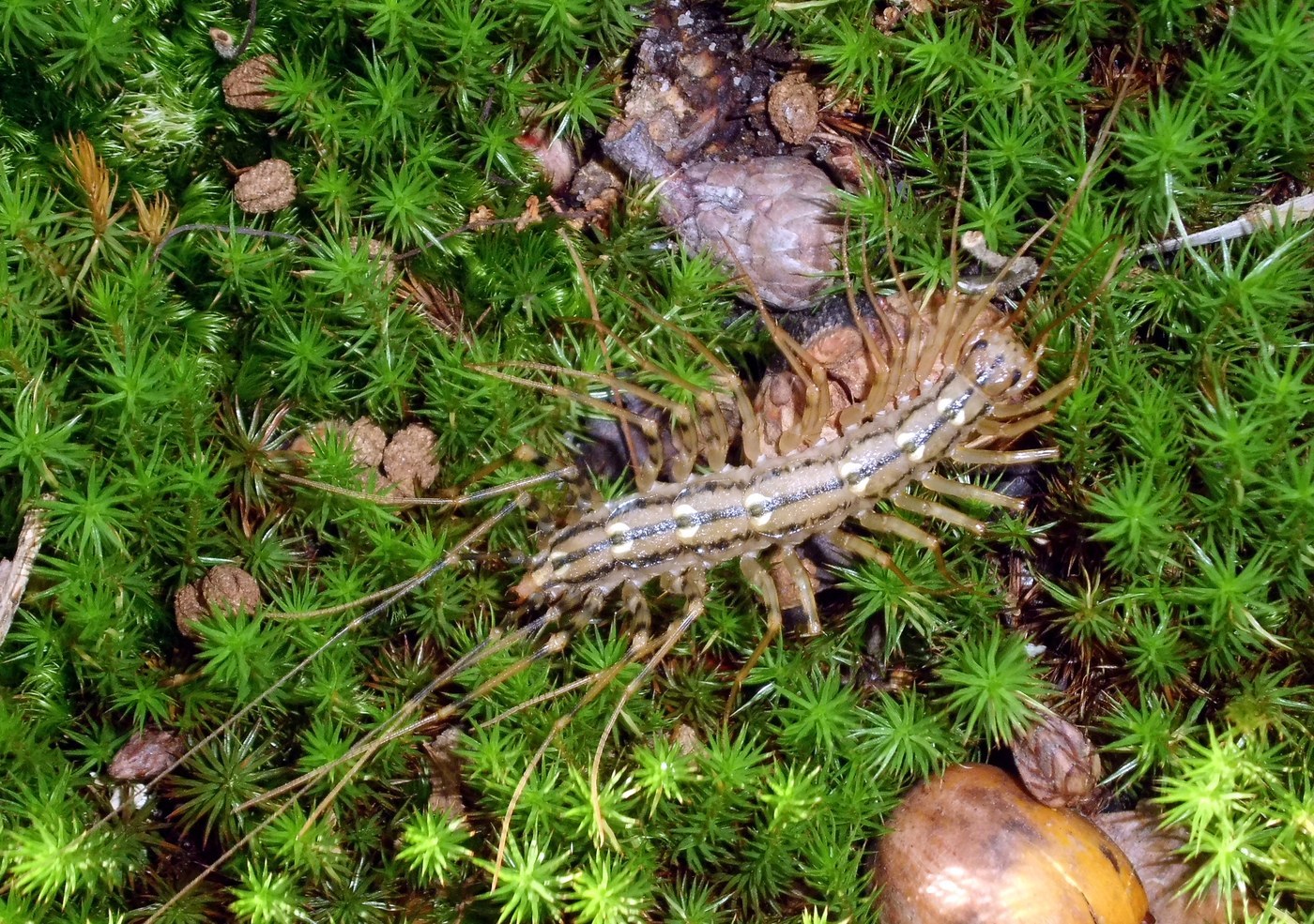
House Centipede
Damp basements, bathrooms, leaf litter
Giant Centipede
Tropical, subtropical, and warm temperate forests, deserts, and grasslands worldwide
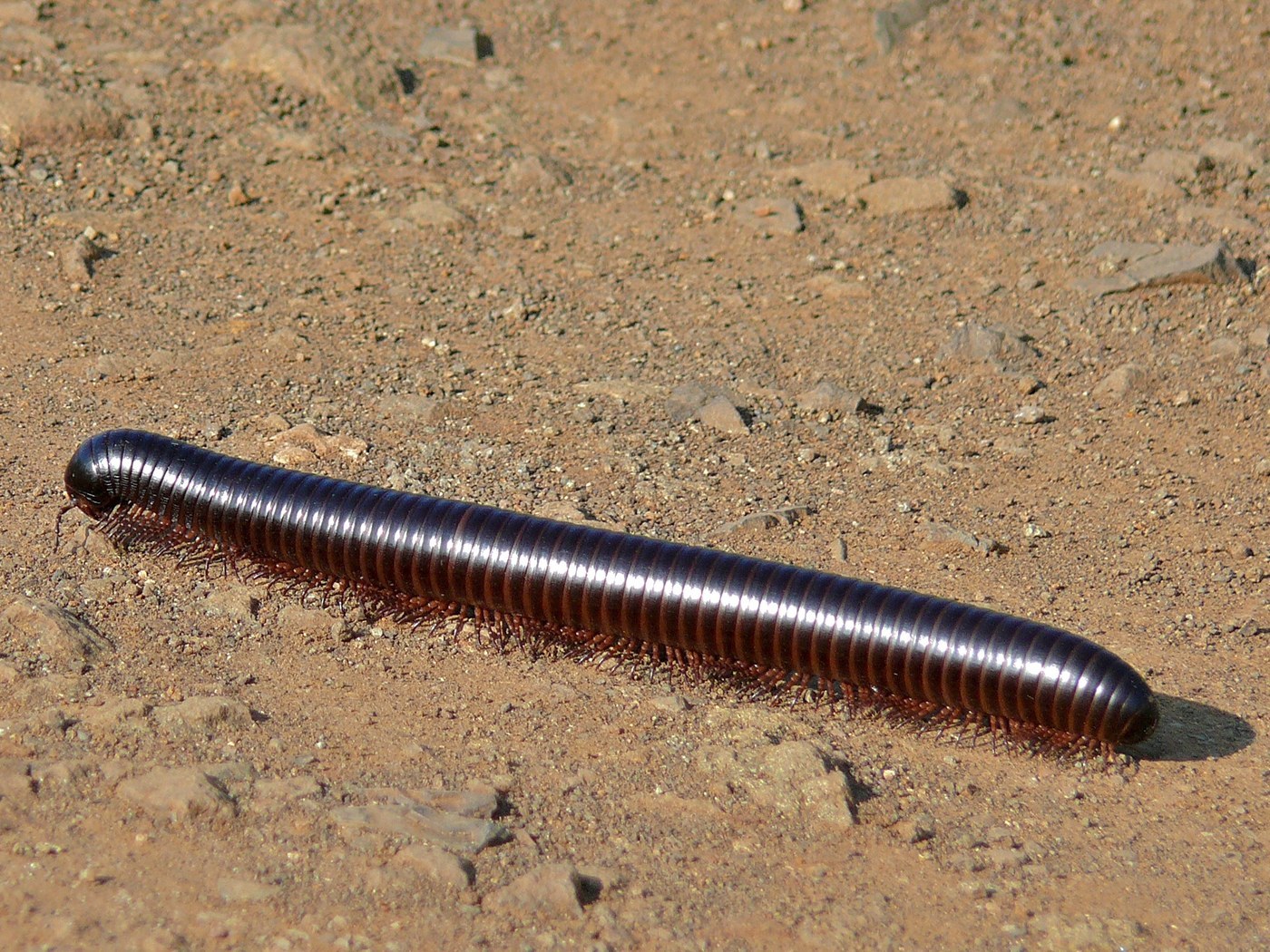
Giant African Millipede
Tropical forests and moist lowlands of East Africa
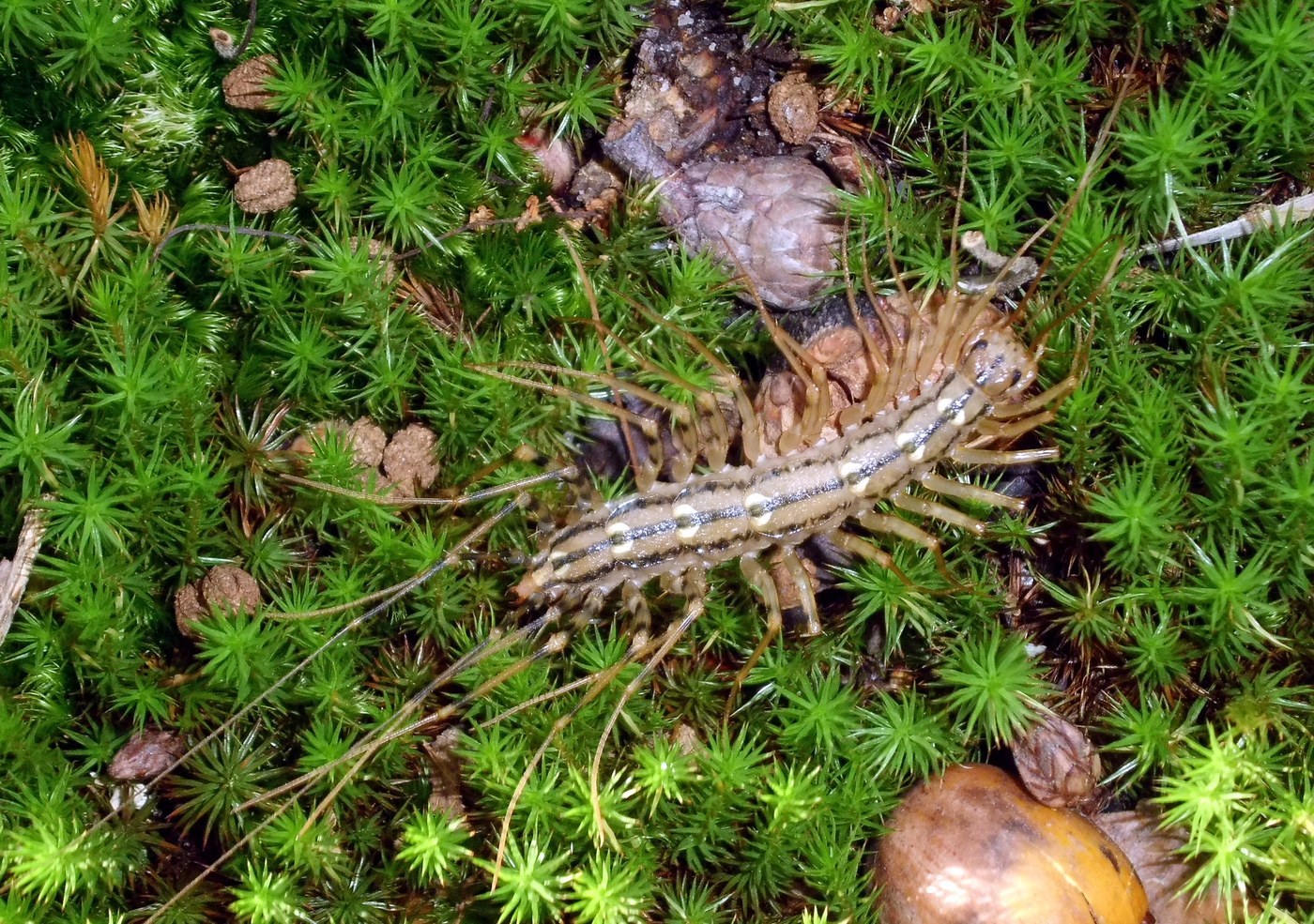
Centipede
Damp, dark places such as basements, bathrooms, leaf litter, and under rocks and logs