American Carrion Beetle Identification Guide
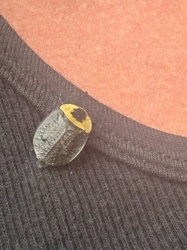
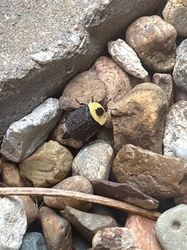
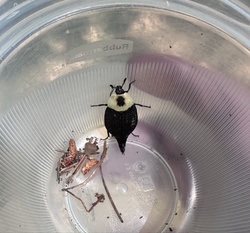
Spot this flattened woodland beetle by its pale yellow pronotum with a bold black center patch.
Read the full American Carrion Beetle encyclopedia entry →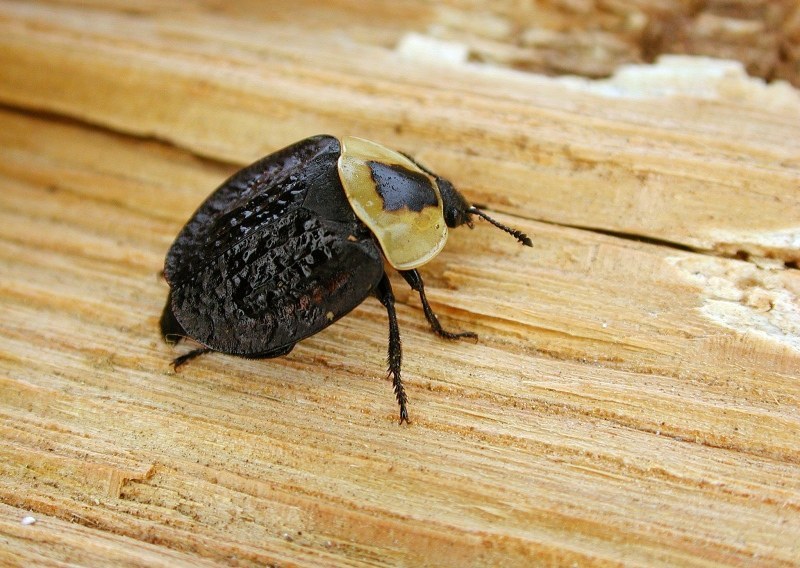
Key Visual Features
The American carrion beetle (Necrophila americana) has a distinctive two-part color pattern that makes it easy to recognize:
- Size: A broad, flattened body about 0.6-0.9 inches (14-22mm) long.
- Pronotum: A pale yellow to cream-colored shield behind the head, marked with a bold black patch or spot roughly in the center, creating strong contrast.
- Elytra: Black wing covers with a somewhat rough, ridged, or textured surface, duller than the glossy pronotum.
- Body shape: Distinctly flattened and oval, an adaptation shared by many beetles that move through leaf litter and under debris.
- Antennae: Short, clubbed antennae with a noticeably enlarged, dark tip.
Where and When You'll See One
American carrion beetles are widespread across North America, particularly in wooded and forested areas. They are active from spring through fall and can be seen during both day and dusk hours, most often found on the ground near leaf litter, under logs, or moving across open woodland trails. As their name suggests, they are part of a group of beetles ecologically associated with decomposing organic material in natural settings.
Similar-Looking Bugs
- Other carrion beetles (Silphidae family): Several relatives share a flattened body and similar habitat, but most lack the American carrion beetle's specific combination of a pale yellow pronotum with a bold black central patch.
- Burying beetles: Related but generally show orange or red banding across the elytra rather than the plain black wing covers of the American carrion beetle, along with clubbed antennae that are typically orange-tipped rather than dark-tipped.
- Rove beetles: Some large dark rove beetles can appear superficially similar, but have short elytra that expose most of the abdomen, unlike the carrion beetle's fully covering wing cases.
Quick ID Checklist
- Pale yellow to cream pronotum with a bold black center patch
- Black, somewhat rough-textured elytra
- Flattened, oval body about three-quarters of an inch long
- Short antennae with an enlarged, dark club tip
- Found on the ground in wooded areas, especially near leaf litter and logs
Frequently asked questions
What is the easiest way to identify an American carrion beetle?
Look for the pale yellow to cream-colored pronotum with a bold black patch near its center, contrasting against the darker, textured black elytra.
Where are American carrion beetles typically found?
They are common in wooded areas across North America, usually found on the ground near leaf litter, under logs, or crossing open woodland trails.
How can I distinguish an American carrion beetle from a burying beetle?
American carrion beetles have plain black elytra and dark-tipped antennae, while burying beetles typically show orange or red banding across the elytra and have orange-tipped antennae.
When during the year are American carrion beetles active?
They are active from spring through fall, with sightings possible during both daytime and dusk hours.
American Carrion Beetle identified by the community
Recent American Carrion Beetle finds identified with Bug Identifier.