
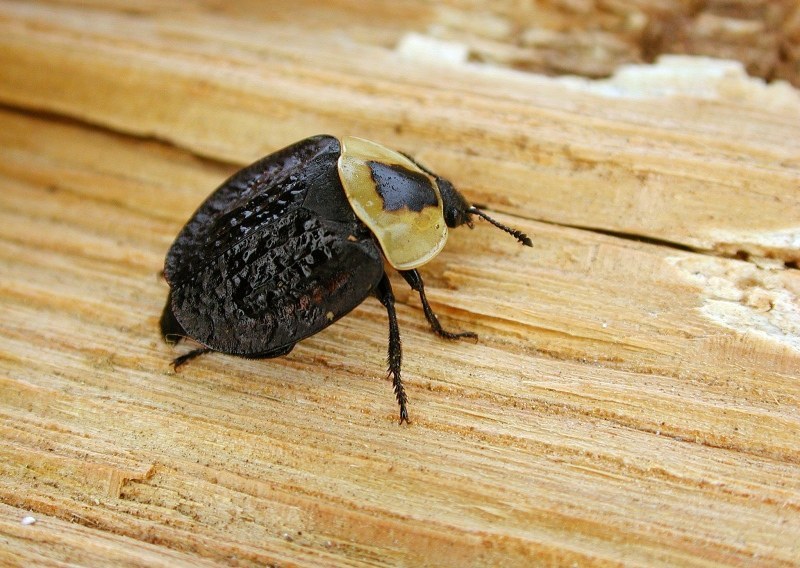
American Carrion Beetle
Necrophila americana
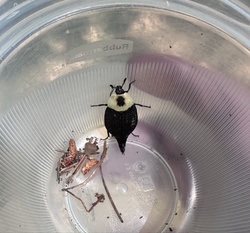
A broad, flattened black beetle with a striking pale yellow shield behind its head, commonly found on and around small animal carcasses where it feeds alongside fly larvae.
- Size
- 12–22 mm
- Habitat
- Forests, fields, and roadsides across North America, near decaying animal carcasses
- Danger
- Harmless
Spotted a bug like this?
Identify any bug or insect from a photo, free.
Overview
The American carrion beetle belongs to the family Silphidae, a group of beetles specialized in locating and exploiting animal carcasses as a food and breeding resource. It is one of the most frequently encountered members of this family in North America.
Its most distinctive feature is a broad, pale yellow pronotum — the shield-like plate behind the head — that contrasts sharply with its otherwise black body, making it easy to identify at a glance among the various insects drawn to carrion.
As a carrion specialist, this beetle plays an important ecological role in the decomposition process, helping break down and recycle nutrients from dead animals while also preying on the fly maggots that compete for the same resource.
How to Identify
- Broad, flattened, oval body with black elytra (wing covers) that may show subtle ridging.
- Pronotum is pale cream-yellow, usually with an irregular dark blotch near its center, creating strong two-tone contrast with the black body.
- Short clubbed antennae typical of Silphidae; legs are dark and moderately long.
- Lookalikes: distinguished from burying beetles (Nicrophorus) by its solid black elytra without the banded orange-red markings seen in that genus.
Habitat & Range
This beetle is found throughout much of North America, in forests, fields, roadsides, and other open or semi-open habitats wherever small animal carcasses are present. It is active from spring through fall, most often encountered on or near carrion, though adults also visit fungi and decaying plant matter.
Behavior & Diet
Adults are strongly attracted to the scent of decomposing animal carcasses, where they feed on the carrion tissue as well as on fly larvae and other small invertebrates competing for the same resource, making them both scavengers and incidental predators. They are capable fliers and can locate fresh carcasses quickly by scent. Larvae also develop at carcass sites, continuing the scavenging role and contributing to the breakdown of the carcass.
Life Cycle
The American carrion beetle undergoes complete metamorphosis. Eggs are laid in soil near or beneath a carcass, and the hatching larvae feed on the decomposing tissue, developing through several instars before pupating in the surrounding soil. Multiple generations can occur during the warmer months in many regions, with adults overwintering in sheltered ground litter.
Frequently asked questions
Why does it have a yellow shield?
The pale yellow pronotum is a natural coloring pattern of the species and helps distinguish it at a glance from other black carrion-associated beetles.
Is it the same as a burying beetle?
No, though both belong to the carrion beetle family, burying beetles (Nicrophorus) have orange-red banded elytra, while this species has solid black elytra.
What does it eat?
It feeds on decomposing animal tissue as well as fly larvae found at the same carcass.
Where would I encounter one?
Near small animal carcasses in forests, fields, or along roadsides, especially in spring through fall.
American Carrion Beetle guides
In-depth guides for identifying, understanding, and living alongside American Carrion Beetle.
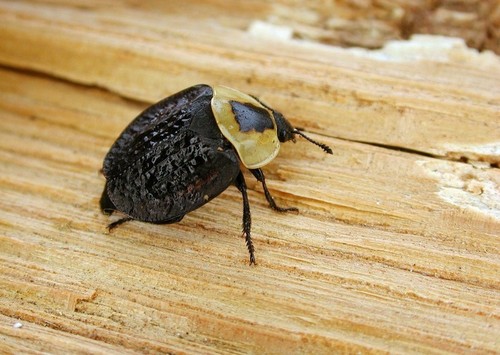
American Carrion Beetle identified by the community
Real finds identified with Bug Identifier.
Other bugs you may enjoy
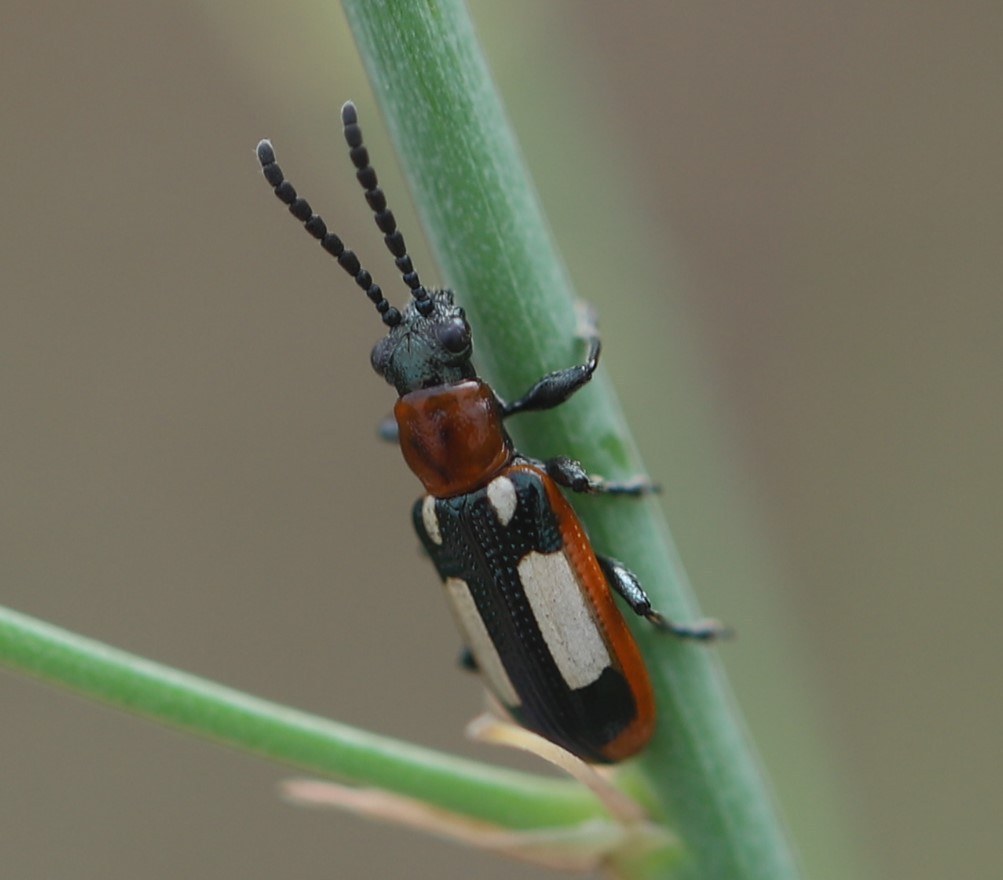
Asparagus Beetle
Asparagus patches, gardens, and farm fields
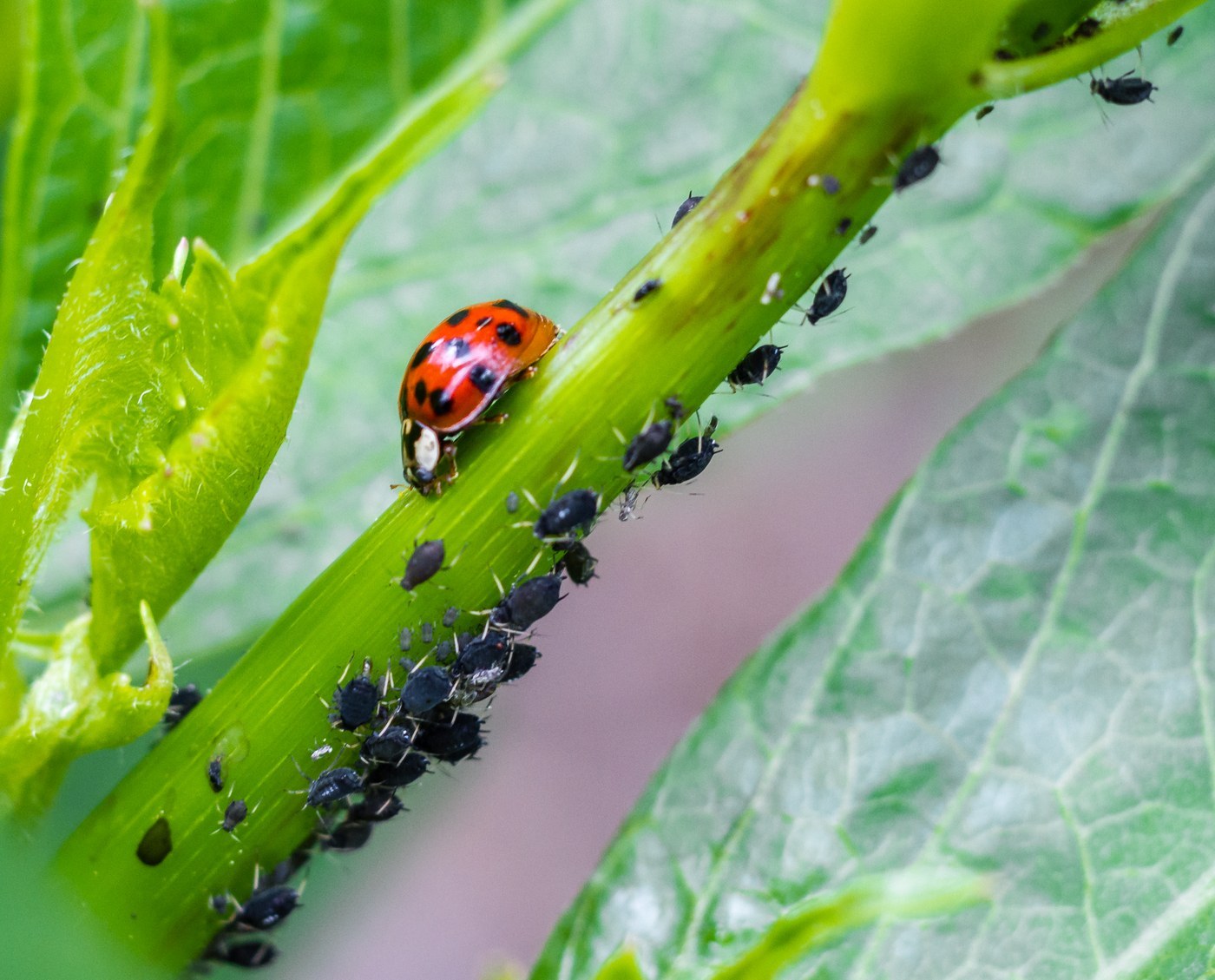
Asian Lady Beetle
Gardens, crop fields, woodlands, buildings
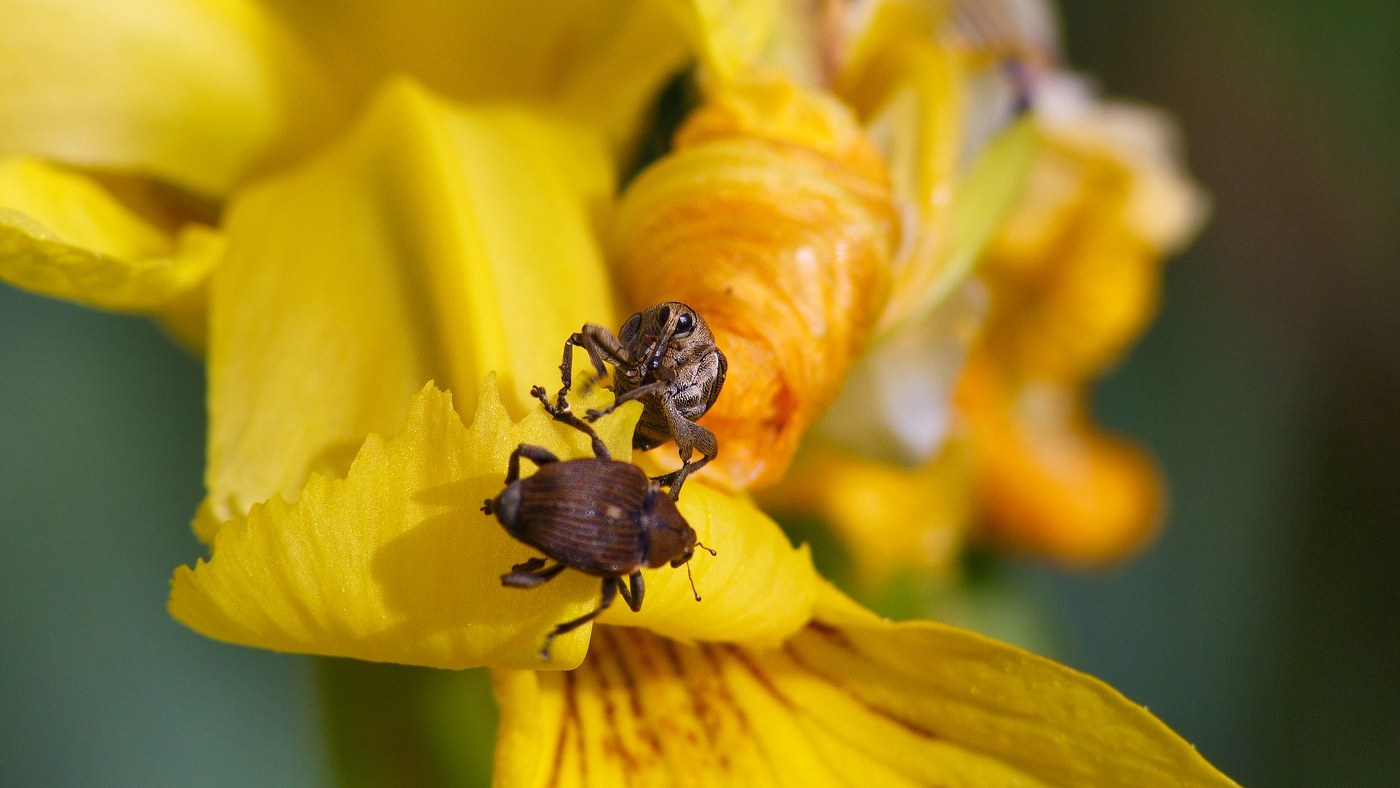
Acorn Weevil
Oak woodlands and forests, on and beneath oak trees
Wireworm
Soil of grasslands, gardens, and cultivated fields worldwide
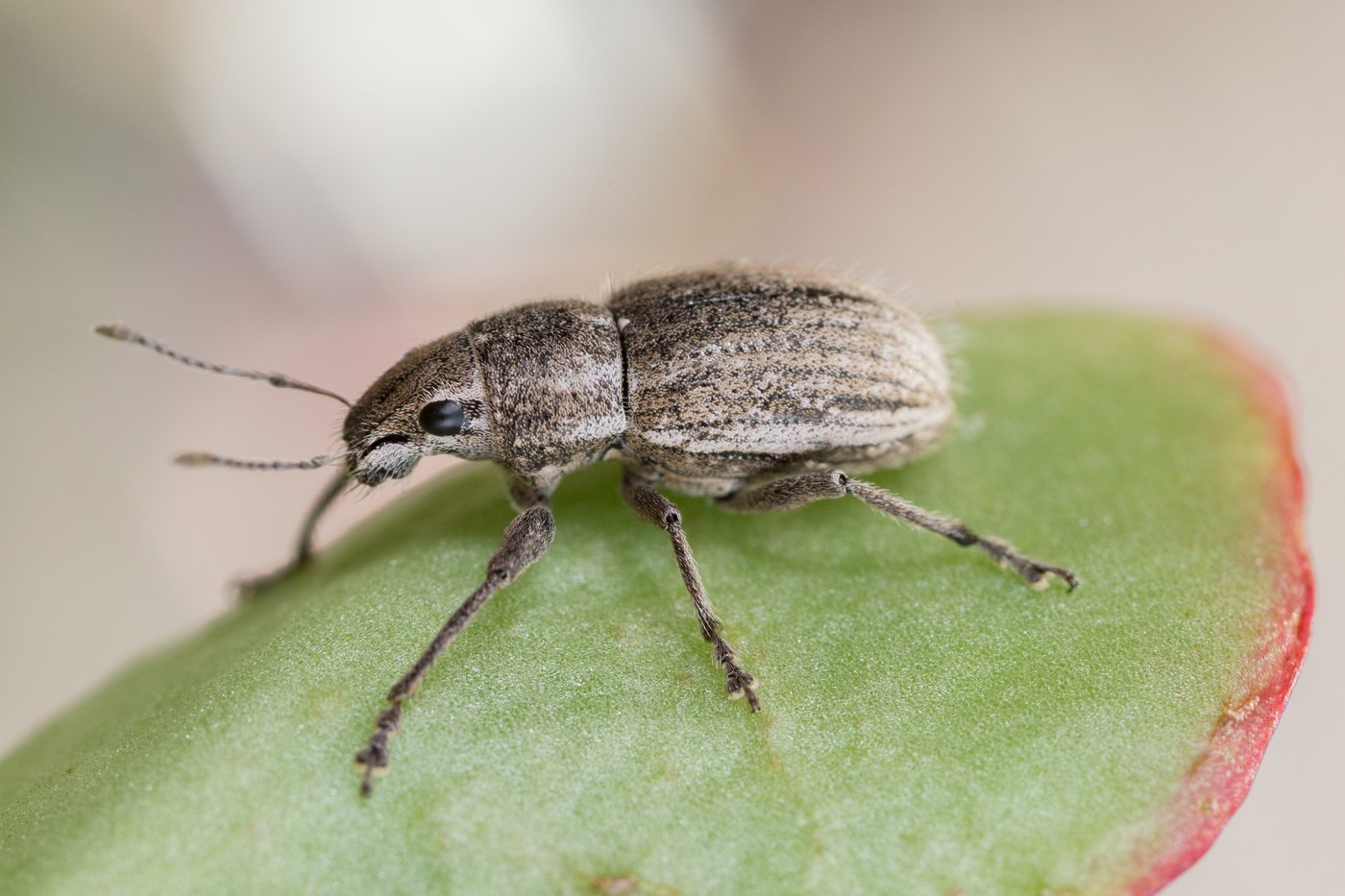
Whitefringed Beetle
Pastures, row crops, lawns, disturbed soils
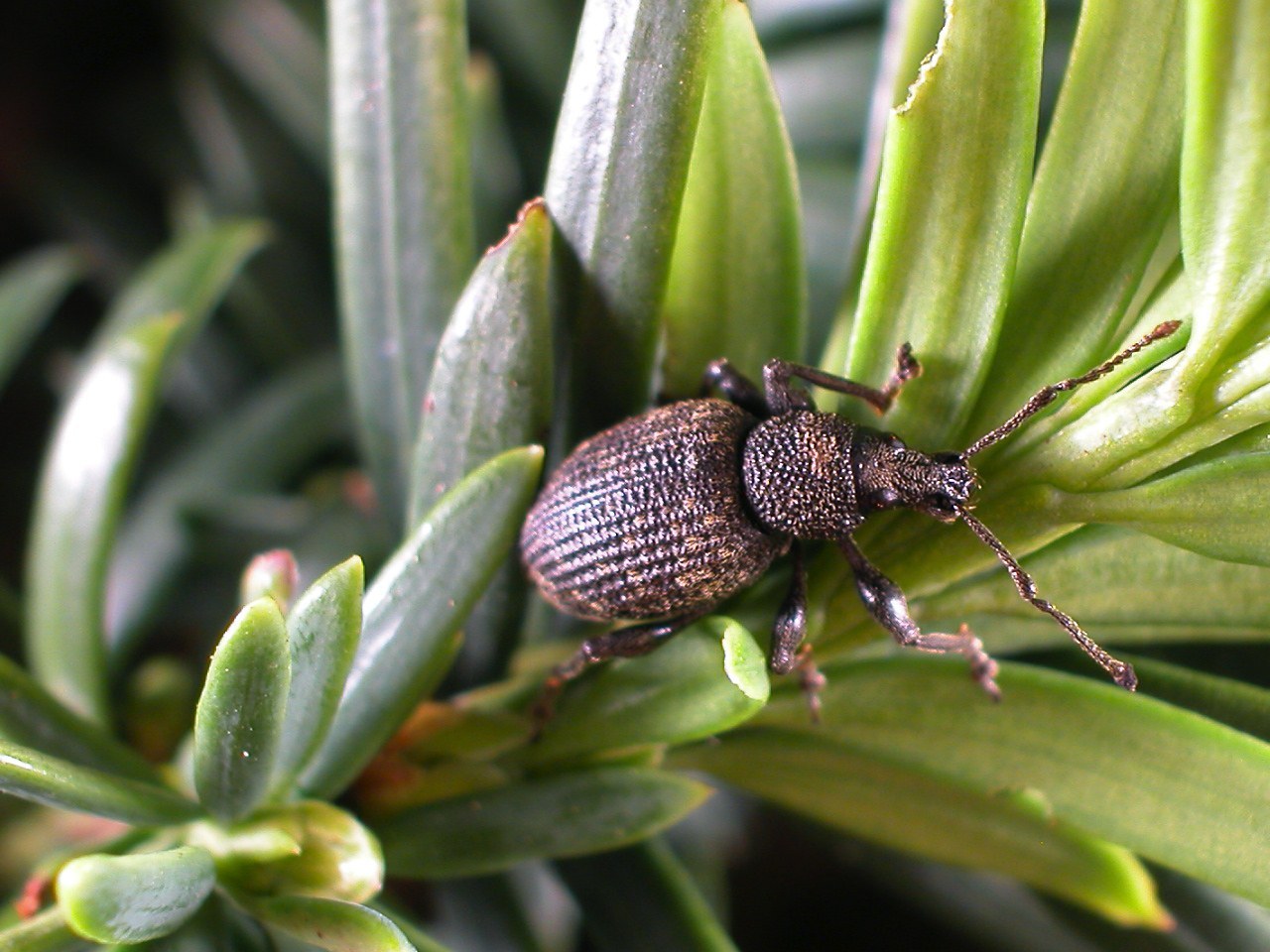
Vine Weevil
Gardens, nurseries, greenhouses, and container plantings
Varied Carpet Beetle
Homes, nests of birds and mammals, and flowers outdoors
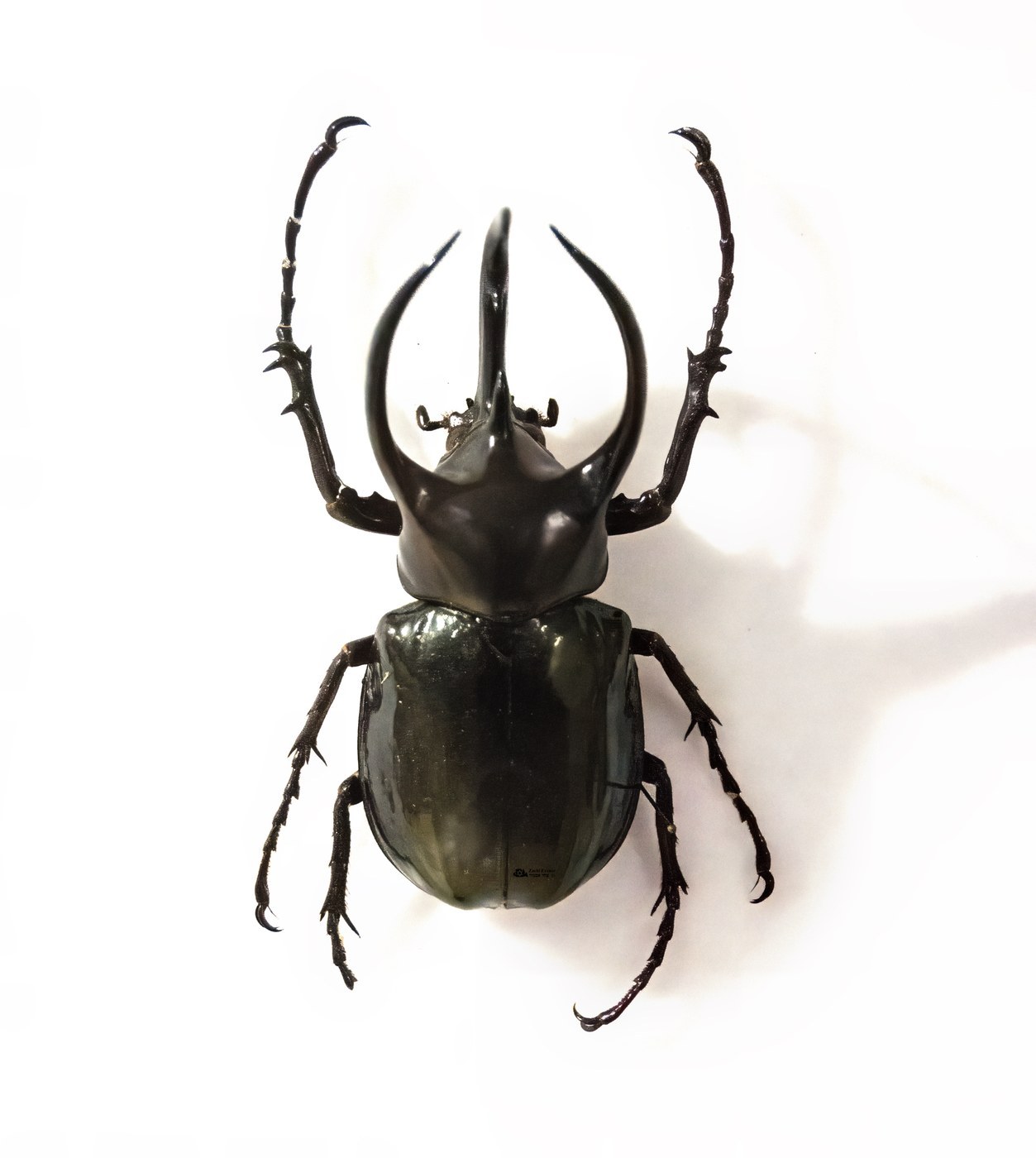
Atlas Beetle
Tropical forests of Southeast Asia
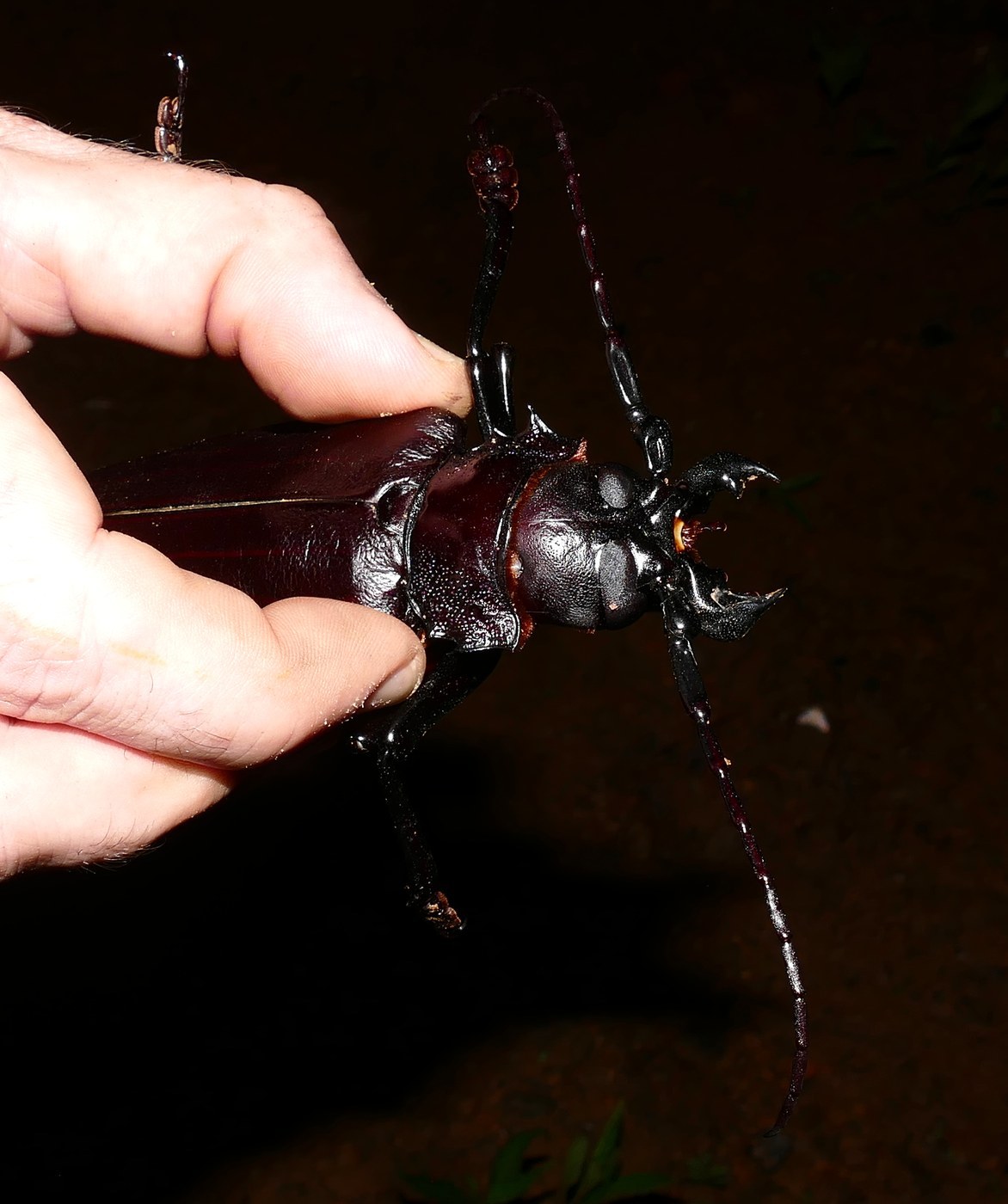
Titan Beetle
Amazon rainforest of South America
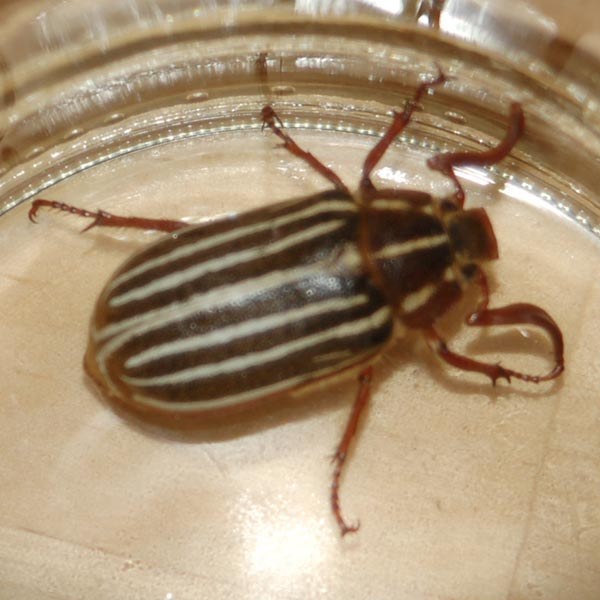
Ten-lined June Beetle
Sandy soils, pine forests, and orchards of western North America
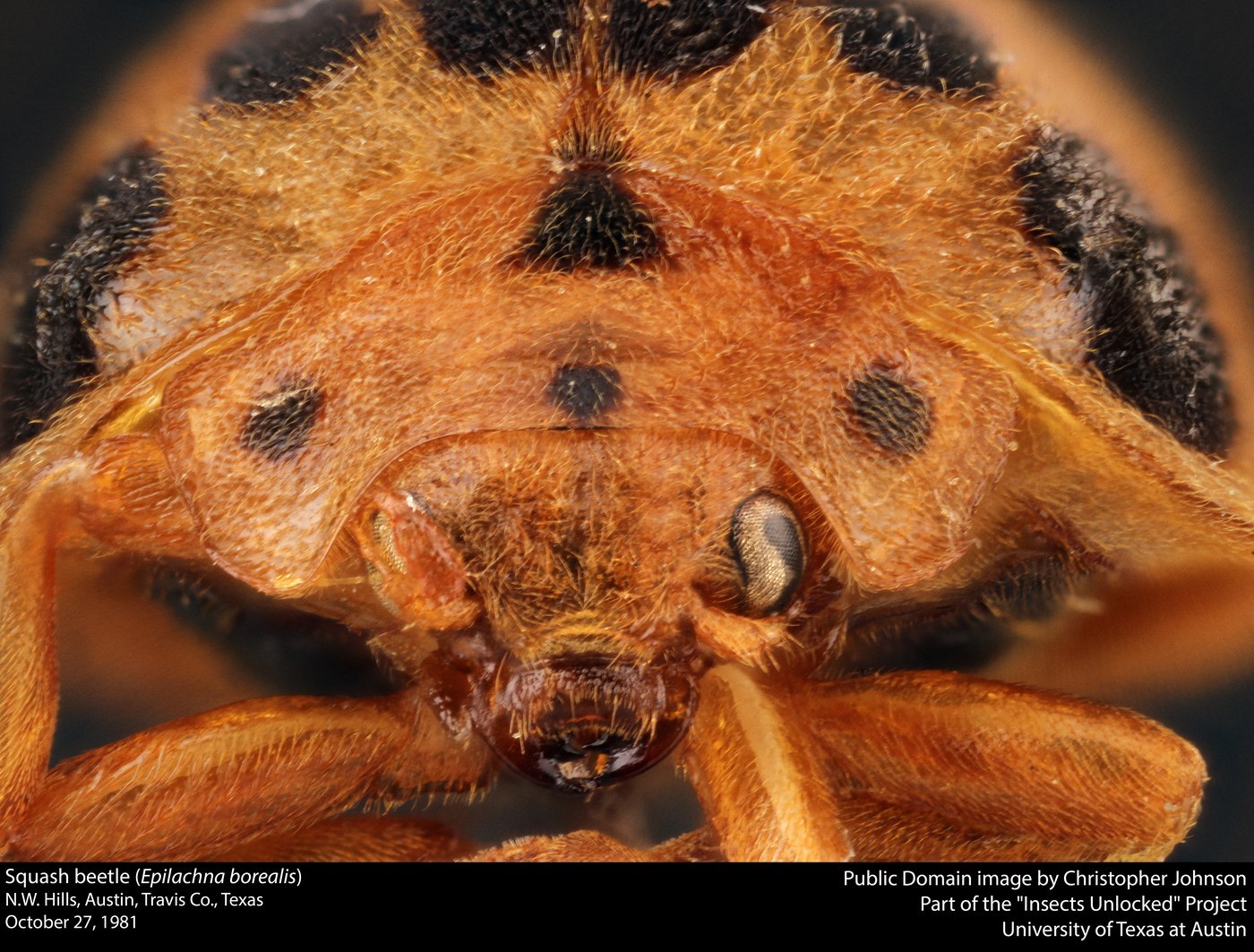
Squash Beetle
Vegetable gardens and fields growing squash, pumpkin, and other cucurbits
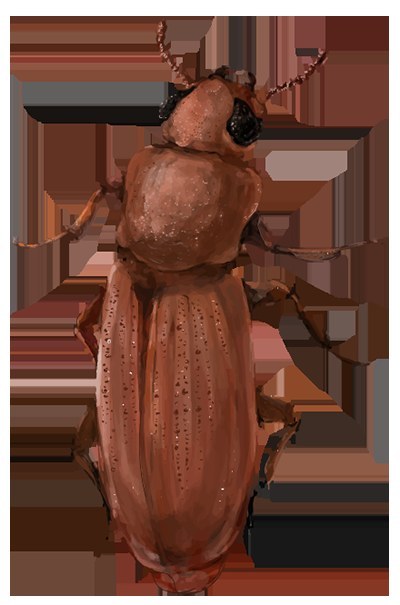
Red Flour Beetle
Stored grain, flour, and dry food products in mills, warehouses, and pantries worldwide