
American Lady Identification Guide
Distinguish the American lady from its lookalikes using the two large eyespots on its underwing.
Read the full American Lady encyclopedia entry →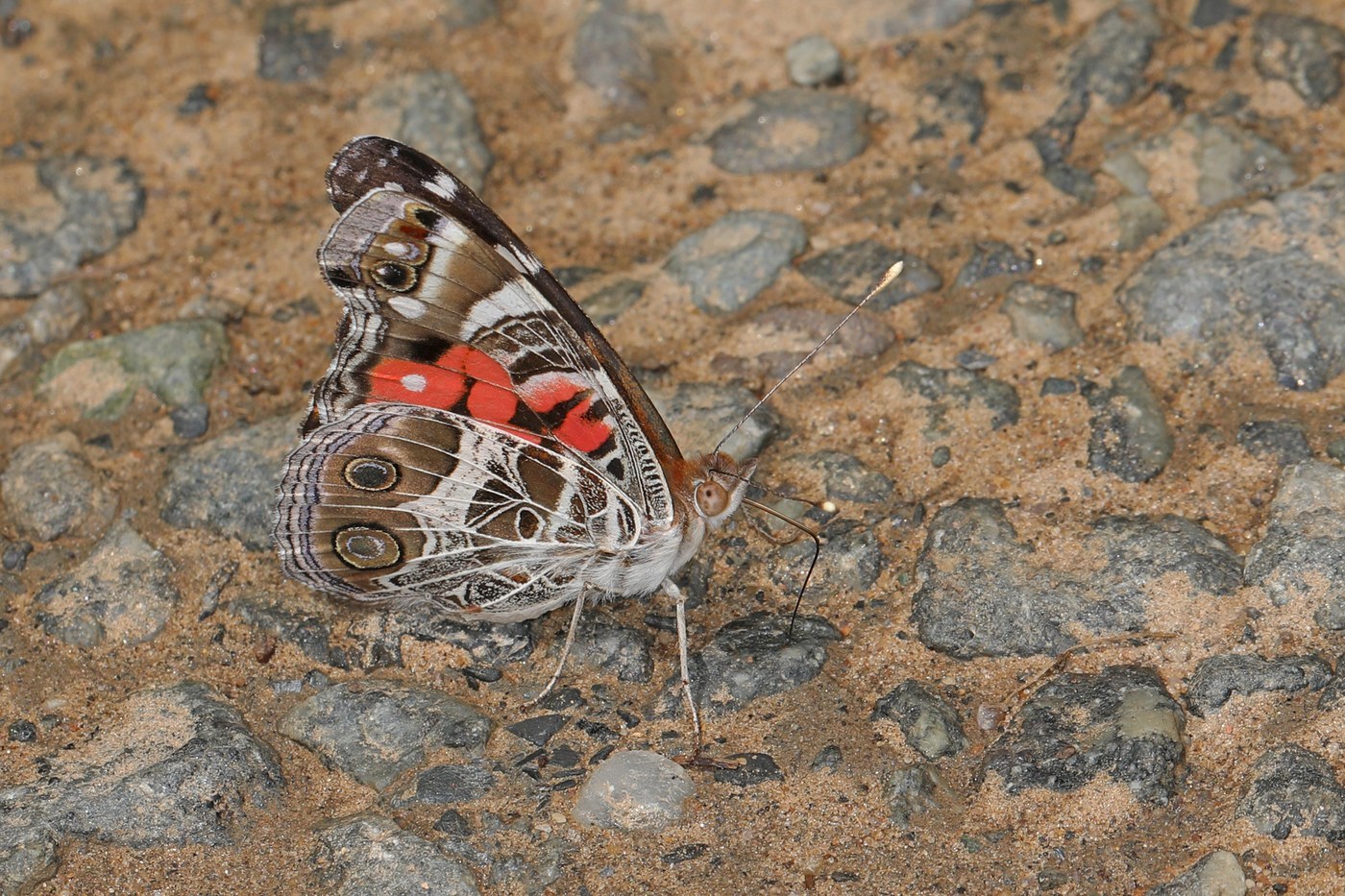
Key Visual Features
The American lady (Vanessa virginiensis) closely resembles the painted lady but has a couple of reliable differences once examined closely.
- Size: Wingspan of about 1 3/4 to 2 1/2 inches (4.5–6.5 cm).
- Color: Orange-pink upper wings with black markings and blotches, similar in overall tone to the painted lady.
- Forewing marking: A small, isolated white spot sits within an orange field near the tip of the forewing, a helpful detail visible even in flight.
- Underside: The most reliable identifying feature is on the underside of the hindwing, which shows two large, prominent eyespots rather than the painted lady's row of several smaller spots.
- Body shape: Slender body typical of brush-footed butterflies.
- Wings: Wing margins are less scalloped than an anglewing but still show gentle undulation; the overall wing outline is rounded.
- Antennae: Clubbed antennae, dark with pale banding.
Where and When You'll See One
American ladies are found throughout North America, favoring open, sunny habitats such as fields, meadows, gardens, and roadsides, often near host plants like pussytoes and everlasting (Antennaria and Anaphalis species). They are somewhat less migratory than the closely related painted lady but still range widely. Adults can be seen from spring through fall, nectaring at composite flowers such as asters and goldenrod, and basking with wings spread on bare ground or low vegetation.
Similar-Looking Bugs
- Painted lady: The best comparison point — painted ladies show a cobweb-like mottled underside hindwing with several small spots, while American ladies show just two large, bold eyespots.
- Red admiral: Has a mostly black wing background crossed by orange-red bands, quite distinct from the American lady's overall orange-pink coloring.
- Common buckeye: Also has large eyespots, but they appear on the upperside of the wings in multicolored rings, unlike the American lady's plain orange-black upperside with eyespots confined to the underside.
Quick ID Checklist
- Orange-pink wings with black markings, similar to a painted lady
- Small isolated white spot in the orange area near the forewing tip
- Two large, bold eyespots on the underside hindwing (key ID feature)
- Rounded wing outline with gentle undulation
- Found in open, sunny habitats across North America
Frequently asked questions
What's the fastest way to tell an American lady from a painted lady?
Turn to the underside of the hindwing: the American lady has just two large, bold eyespots, while the painted lady shows a busier, cobweb-like pattern with a row of several smaller spots.
Is there a marking visible from the topside that helps identify an American lady?
Yes, look for a small, isolated white spot sitting within an orange patch near the tip of the forewing — this is a helpful clue even when the butterfly is in flight and the underside isn't visible.
Where are American ladies commonly found?
They favor open, sunny areas such as fields, meadows, gardens, and roadsides, often near everlasting and pussytoes plants, and are found broadly across North America.
Do American ladies migrate like painted ladies?
They range widely and can move seasonally, but they are generally considered less strongly migratory than the painted lady, which is known for especially long-distance movements.